


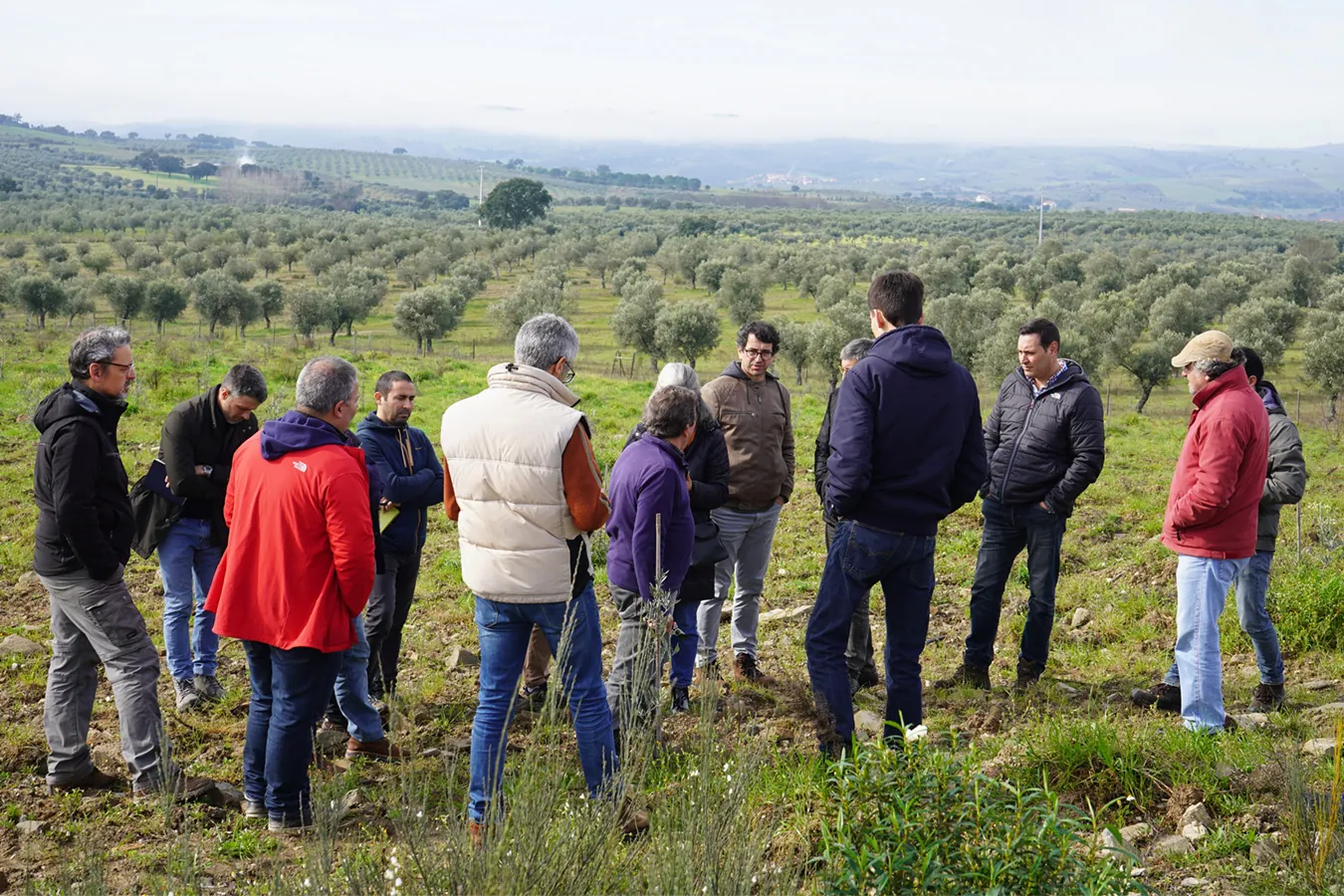
Pruning the olive tree: field training
The latest edition of the Field Training course on olive tree pruning took place on 19 February. Led by Eng. João Lopes, a technician at the Northern Regional Coordination and Development Commission – CCDR Norte (formerly DRAPN) and the officer responsible for the health and production of olive and almond crops, this new edition of the field session was held in Mirandela.
During the morning, the group travelled to a two-year-old olive grove, where the principles of pruning operations in the crop were first introduced. The minimum interventions to be carried out during the trees' early formative years were demonstrated, under the guidance of the trainer and the farm manager of Quinta Vale do Conde.
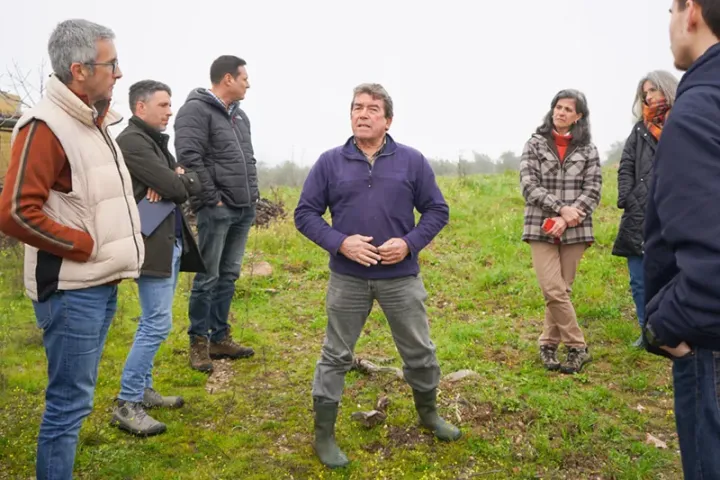
Figure: the principles of olive pruning explained by the trainer, Eng. João Lopes
While demonstrating formative pruning, the trainer drew attention to the points to consider at this stage of the trees' development, with particular focus on the balance needed between the root system and the aerial part of the plant. Several questions that are crucial when planning the establishment of the crop were discussed, along with how they shape the objectives of formative pruning: production systems (extensive, intensive, super-intensive), planting spacings and training the trees for the intended type of harvest (manual or mechanised). In this context, the group also had the opportunity to visit the machinery house at Quinta Vale do Conde, where they saw some of the equipment used in crop maintenance and harvesting.
Still during the morning, the group was able to see a mature olive grove that had not been worked on for some years and had undergone more severe pruning, looking at the advantages and disadvantages of this type of pruning. Questions were also raised here about the end use of the crop (oil or table olives), the crop's alternate bearing and the way pruning carried out over the years should take the intended final objectives into account.

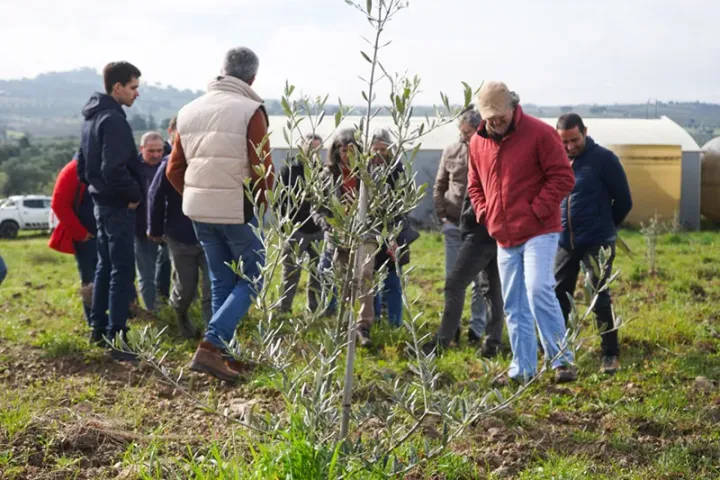
Figure: demonstration of formative pruning on the olive tree
After the lunch break, the training continued in a mature olive grove, where fruiting pruning operations were demonstrated. Participants were able to observe different olive varieties and some of the damage caused by mechanical harvesting, putting into practice the "3 cuts" technique adopted by Eng. João Lopes.
This technique seeks to optimise the time spent on fruiting pruning by suggesting only three cuts per tree. Since this is an evergreen crop, the trainer argued that more drastic cuts on the olive tree can jeopardise the plant's vegetative balance and become an entry point for disease, thereby reducing its productive capacity. He explained that olive leaves work like "solar panels", generating energy and distributing nutrients throughout the tree. The first step, then, is to look at the trees and decide which three branches to remove. In some cases it may be only two, in others as many as four. Finally, the water shoots that emerge on the bottom 50 cm of the trunk should be removed.


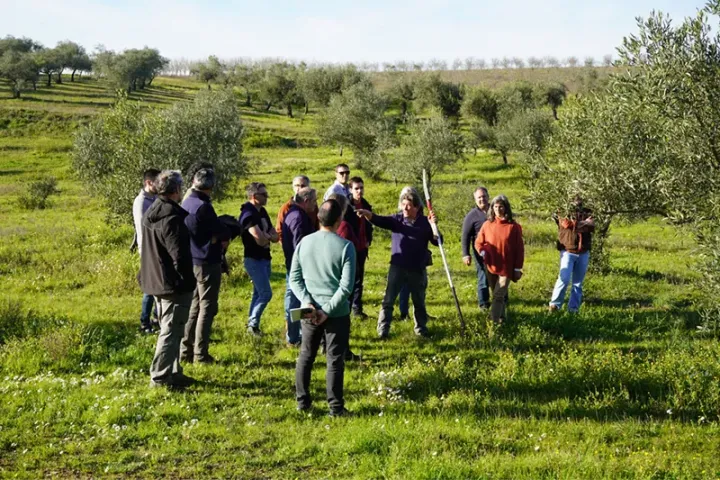
Figures: explanation and demonstration of fruiting pruning on the olive tree

Figure: an olive tree after fruiting pruning
Throughout the trainer's demonstrations and the participants' practical work, a number of subjects related to the crop were discussed, including fertilisation, plant health, the quality of the final product and the characteristics of the varieties used for oil and for table olives, ending with the importance of disinfecting cutting tools to prevent the spread of disease in the grove.


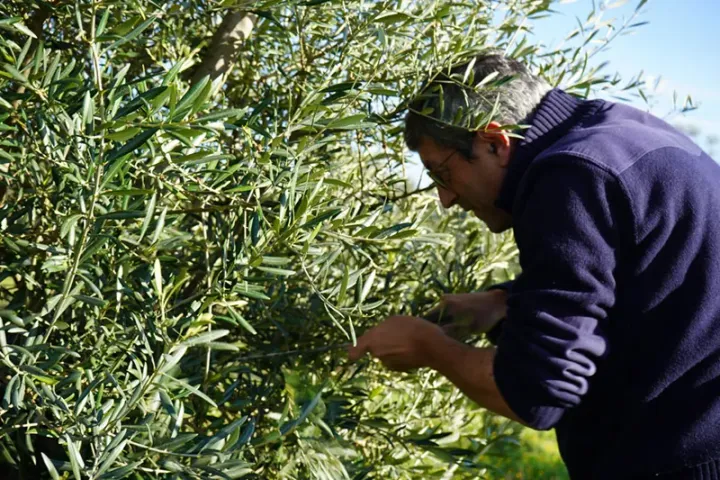


Figures: participants putting what they learned into practice
By way of conclusion, a brief review was held of the most important points raised during the day.
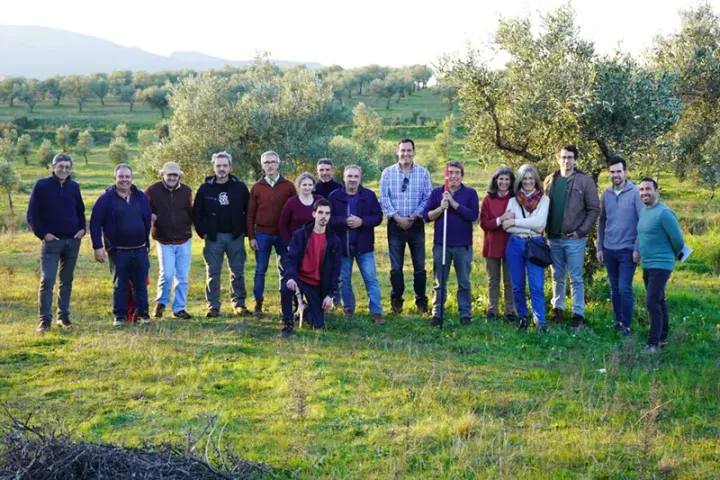
Figure: the olive pruning training group
If you were unable to take part in this field session and are interested in olive growing, take a look at the courses Cultura do Olival, Fertilização Sustentável no Olival and Tecnologia de Azeite e Azeitonas de Mesa. You can also learn at your own pace with the tutorial courses on Rega e Fertilização no Olival and Operações de Poda no Olival.
Keep exploring
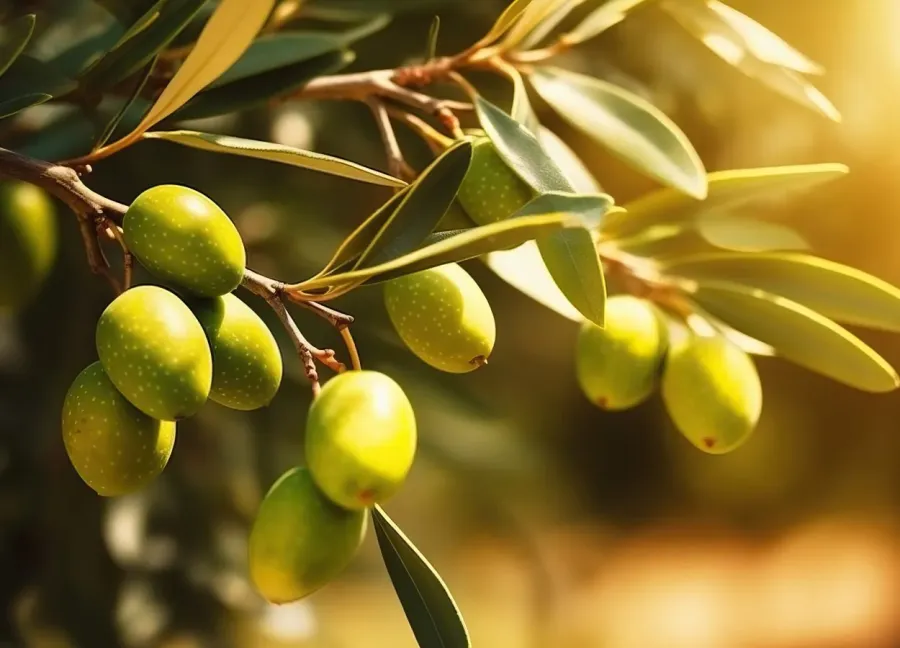
The Galega, the Cobrançosa and the Verdeal: The Portuguese Native Varieties Conquering the World
At a time when olive oil is establishing itself as one of the most studied and most highly valued foods of the Mediterranean diet, Portugal is emerging as one of the leading players in the global market.
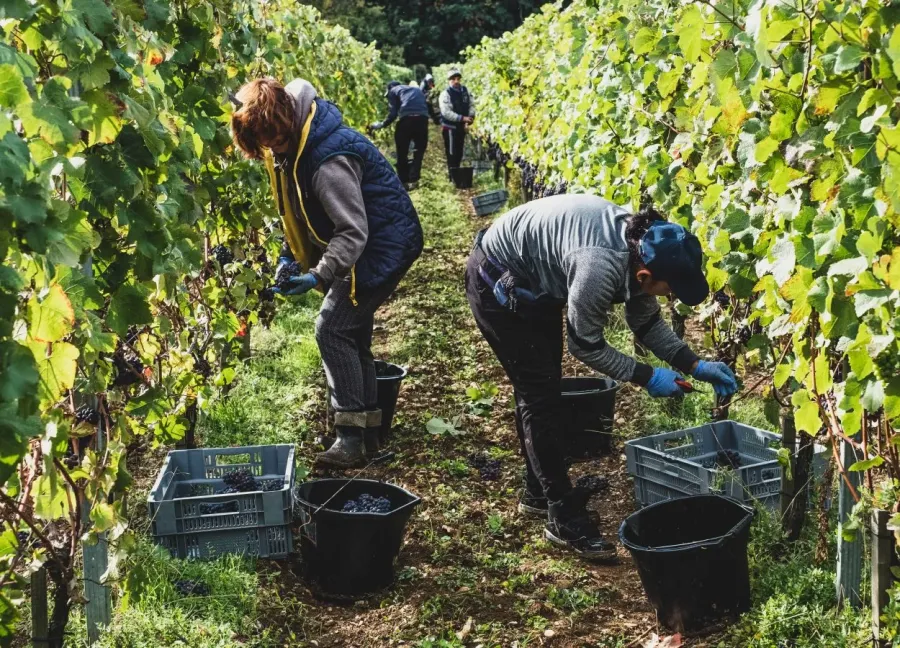
Climate change in Portuguese vineyards: what is changing and how to adapt?
In 2024, the International Organisation of Vine and Wine (OIV) recorded the lowest level of world production since 1961.

Frequently Asked Questions: Artificial Intelligence in Tourism Course
What is the aim of the AgroB Business School course on Artificial Intelligence in Tourism?