


The Galega, the Cobrançosa and the Verdeal: The Portuguese Native Varieties Conquering the World
At a time when olive oil is establishing itself as one of the most studied and most highly valued foods of the Mediterranean diet, Portugal is emerging as one of the leading players in the global market. In 2024, national production reached around 180,000 tonnes – the second highest on record – and exports passed the one billion euro mark for the second consecutive year, an achievement industry specialists describe as historic. The country is today the sixth largest producer in the world and the third largest European exporter, dominating markets as varied as Brazil, where it holds a 57 to 60% share of olive oil imports.
Behind these figures, however, lies a productive tension that the statistics do not always reveal: the expansion that turned Portugal into an olive oil power was built largely on high-yielding foreign cultivars, mostly Spanish and Greek, ideally suited to the hedgerow training systems that have colonised the Alentejo over the past two decades. It is precisely in this context that the promotion of Portugal's native varieties acquires its true strategic meaning – not as an alternative to modernity, but as a differentiating complement in a market that increasingly rewards singularity and authenticity. Galega Vulgar, Cobrançosa and Verdeal, in its Trás-os-Montes and Alentejo variants, are not merely symbols of a thousand-year-old tradition. They are cultivars of exclusively Portuguese origin, with unique chemical, nutritional and sensory characteristics that scientific research is now revealing and communicating to the world with growing rigour.
The country's main olive-growing regions are concentrated in Trás-os-Montes, the Beira Interior, the Ribatejo and the Alentejo, the last of these accounting for around 90% of national production, with more than 209,000 hectares of olive groves and over 116 mills. The share of olive oil classified as extra virgin stands above 95%, placing Portugal in a unique position within the global premium segment.
Note: In traditional, rain-fed olive groves, Galega Vulgar and Cobrançosa are the native cultivars with the largest historical planted area in Portugal. The strong growth in production over the past two decades, especially in the irrigated Alqueva area, was led by foreign varieties well suited to hedgerow systems. The central challenge for Portuguese olive growing today lies in the ability to adapt national cultivars to those systems, reconciling scale with identity.
The Varietal Landscape: Native and Foreign Cultivars in an Olive Sector Under Transformation
Portugal holds a genetic heritage of great richness in olive growing, recognised in six Protected Designations of Origin for olive oil. Beyond the trio examined in this article, that legacy includes Madural, Negrinha do Freixo, Cordovil de Serpa, Azeiteira, Carrasquenha de Elvas, Blanqueta and Cordovil de Castelo Branco, among other cultivars with a more localised distribution.
In terms of planted area, Galega Vulgar is historically the most widespread, followed by Cobrançosa. Together they dominate the traditional olive grove from north to south of the country. Verdeal – both Transmontana and Alentejana – completes the core group of native cultivars with the greatest territorial presence.
The olive-growing revolution of recent decades, anchored in the irrigated Alqueva area and in fully mechanised harvesting, was built mainly on varieties of foreign origin. These cultivars offer greater productive uniformity and a better fit with the hedgerow model, but they produce olive oils with a less intense phenolic profile and lower oxidative stability than their Portuguese counterparts. It is this asymmetry – high productivity versus high intrinsic quality – that the OLEAVALOR project seeks to resolve, demonstrating that native cultivars can match the profitability of foreign varieties when technically well managed, without giving up their singular chemical identity.
Galega Vulgar
Origin and Distribution
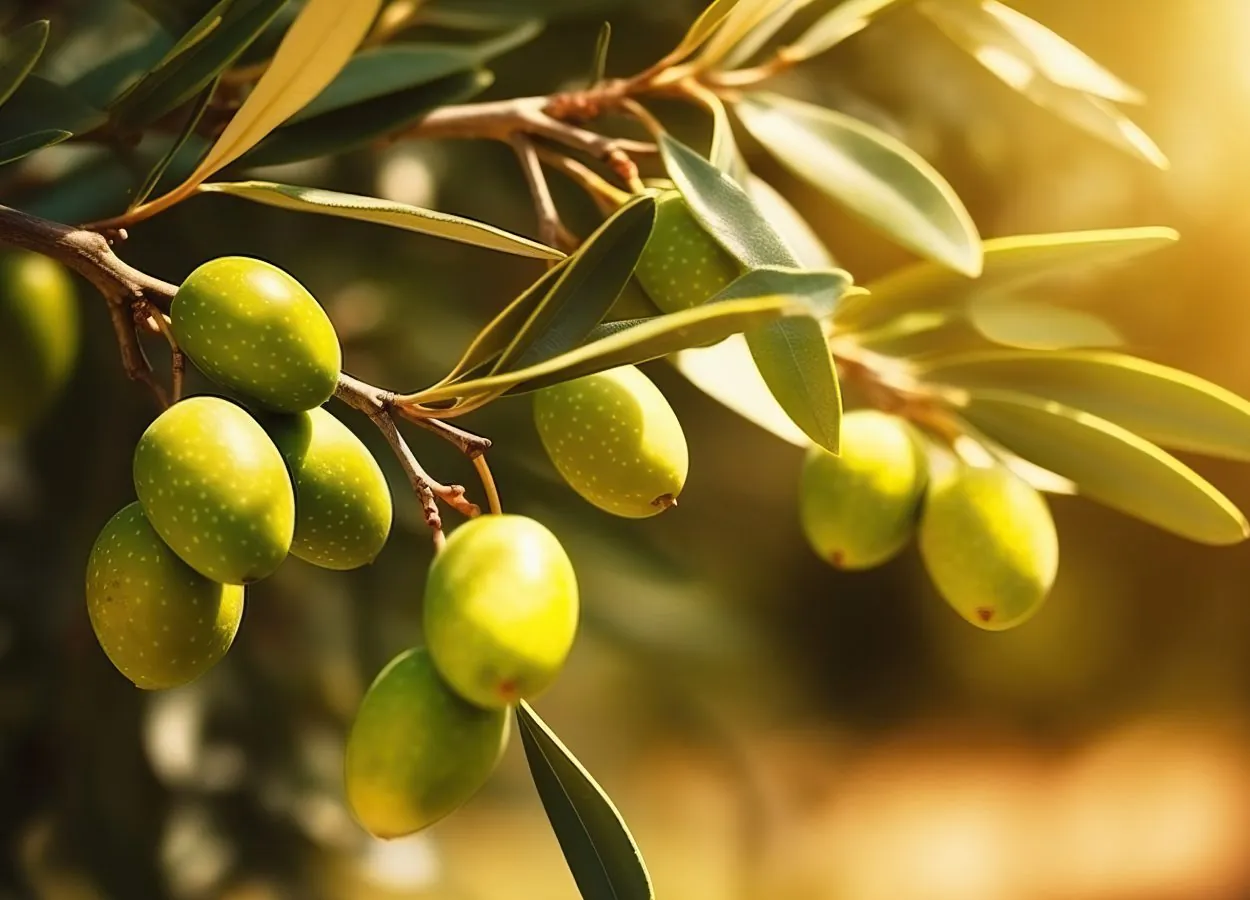
Galega vulgar – also known as Galega meuda or Molar – is an exclusively Portuguese cultivar and the most widely distributed across the national territory, present from the Beiras to the Algarve, with a significant presence in the Alentejo and the Ribatejo as well. It is recognisable by its small olive (1.5–2.5 g), cylindrical shape, medium green colour and elliptical, smooth-surfaced stone.
The olive oils from this cultivar have a highly characteristic sensory profile: thick in the mouth, with light fruitiness and soft notes of green leaf, ripe apple and nuts. Scientifically, a study published in the journal Food Chemistry (Peres et al., 2016), carried out by researchers from the Instituto Politécnico de Castelo Branco and the Instituto Superior de Agronomia of the Universidade de Lisboa, showed that oils harvested at early stages of ripening present concentrations of lipophilic phenols above 300 mg/kg and of hydrophilic phenols above 600 mg/kg – very high values, associated with the antioxidant, anti-inflammatory and antimicrobial properties recognised by EFSA.
In that same study, oleacein (3,4-DHPEA-EDA) – the dialdehydic form of elenolic acid linked to hydroxytyrosol – was identified as the main polyphenol, especially in the early stages of ripening. Gamma-tocopherol (vitamin E) levels are particularly high in this cultivar, giving the resulting oil greater oxidative stability and nutritional value.
Galega's main agronomic constraint is its low oil yield combined with susceptibility to diseases and pests, factors that historically accelerated its replacement in modern olive groves. Recent research shows, however, that with the right technical management – including integrated production and precise plant health management – this cultivar can be as profitable as high-yielding varieties, while preserving the genuineness and genetic identity of Portuguese olive oil.
Cobrançosa
Cobrançosa – also called Quebrançosa or Salgueira – is a Portuguese cultivar spread across the Alentejo, Trás-os-Montes, Ribatejo and Beira Alta. The fruit is medium-sized with a pointed apex, and the tree stands out for its remarkable climatic plasticity, withstanding both the cold of the north and the intense heat of the south.
Its olive oils are distinguished by their high antioxidant content and by a sensory profile that evolves with ripening: slightly bitter and pungent when the fruit is harvested greener, becoming sweeter and softer as ripening advances. They are classified as lightly to moderately fruity, with pronounced green grass notes.
Among the native cultivars, Cobrançosa is the one that today meets the best conditions for integration into intensive production systems: it offers good fat yield, greater ease of rooting from cuttings and good adaptation to mechanical harvesting. It is already used in combination with other varieties in several benchmark commercial projects in the Alentejo, and specialists frequently describe it as the national cultivar with the greatest vocation for modern olive growing – the "Touriga Nacional of olive oils", in the phrase that circulates in the sector.
Verdeal
The name "Verdeal" covers two Portuguese cultivars with distinct geographical distributions: Verdeal Transmontana and Verdeal Alentejana. Both belong to the Portuguese Protected Designations of Origin for olive oil and form part of the core group of cultivars studied under OLEAVALOR.
A longitudinal study published in the journal Foods (MDPI, 2021), covering five consecutive campaigns (2013–2017) in century-old olive groves in Trás-os-Montes, found that Verdeal Transmontana presents one of the highest proportions of oleic acid and of total monounsaturated fatty acids among the cultivars analysed – compounds associated with higher nutritional value, cardiovascular protection and greater resistance to oxidation, with direct implications for the product's shelf life. The authors concluded that the effect of the cultivar on the fatty acid profile outweighs that of the harvest year, underlining the importance of native genetic material as a factor of consistent quality – a weighty argument in the international premium olive oil market.
Verdeal Alentejana is part of the Portuguese Reference Collection of Olive Cultivars (CPRCO), housed at INIAV's Herdade do Reguengo in Elvas, where it is studied under controlled conditions for its morphological and agronomic characterisation.
The Role of Polyphenols: Chemical Identity as a Competitive Advantage
One of the most promising lines of research around native cultivars concerns their phenolic profile, which functions as a fingerprint of the variety and of its geographical origin. Studies on the geographical discrimination of Galega Vulgar olive oils, produced in seven Portuguese regions, showed that the composition in phenols, fatty acids and tocopherols makes it possible to classify oils by provenance with high analytical precision – a valuable tool for combating adulteration and certifying authenticity, in line with European Protected Designation of Origin regulations.
EFSA has approved a specific health claim for the phenolic compounds of virgin olive oil, recognising that their intake contributes to protecting LDL lipoproteins against oxidation. This regulatory recognition gives Portuguese cultivars – rich in oleacein and hydroxytyrosol, compounds whose concentration in national native varieties frequently exceeds that of high-yielding varieties – a health argument with considerable commercial value in the most demanding markets.
The Challenge of Adding Value
The body of scientific research built up around Portugal's native cultivars converges on a single conclusion: their intrinsic quality is not only worth preserving – it is communicable, certifiable and marketable. The OLEAVALOR project turned part of this potential into reality by publishing national and international scientific results and by developing biological tools to control olive anthracnose and Xylella fastidiosa, two of the main plant health threats to olive growing worldwide.
Galega, Cobrançosa and Verdeal are not merely cultivars – they are repositories of agricultural biodiversity with millennia of history and a biochemical profile that current science is able to measure, certify and project internationally. In a market that increasingly rewards authenticity and traceability, these varieties represent a long-term competitive advantage that no foreign cultivar can replicate: the irreducible identity of a territory and a culture.
The question, therefore, is not whether to choose between the scale of modern olive groves and the singularity of native varieties. It is how to integrate both – and that is perhaps the most sophisticated challenge facing Portuguese olive growing today.
Selected Scientific References
Peres, F., Martins, L.L., Mourato, M., Vitorino, C., Antunes, P. & Ferreira-Dias, S. (2016). Phenolic compounds of ‘Galega Vulgar’ and ‘Cobrançosa’ olive oils along early ripening stages. Food Chemistry, 211, 51–58. https://doi.org/10.1016/j.foodchem.2016.05.022
Pereira, J.A., Oliveira, M.B.P.P., Casal, S. & Alves, M.R. (2004). Discrimination of varietal olive oils of the Portuguese cultivars Cobrançosa, Madural and Verdeal based on their fatty acids composition. IV International Symposium on Olive Growing, ISHS.
Rodrigues, N. et al. (2021). Fatty Acid Composition from Olive Oils of Portuguese Centenarian Trees Is Highly Dependent on Olive Cultivar and Crop Year. Foods, 10(3), 496. https://doi.org/10.3390/foods10030496
Sousa, A. et al. (2006). Table Olives from Portugal: Phenolic Compounds, Antioxidant Potential, and Antimicrobial Activity. Journal of Agricultural and Food Chemistry. https://doi.org/10.1021/jf061769j
OLEAVALOR – Valorização das Variedades de Oliveira Portuguesas. Project co-financed by the Alentejo Regional Operational Programme (ALENTEJO 2020), ERDF. Entities: Universidade de Évora/ICAAM, INIAV, IPP/ESAE, CEBAL. (2016–2019).
International Olive Council (IOC). World Market of Olive Oil and Table Olives – Data from December 2024. https://www.internationaloliveoil.org
CEPAAL / INE. 8.º Congresso Nacional do Azeite – Production and Export Data 2024. Alentrium, June 2025.
Cordeiro, A. & França Inês, C.S. Recursos genéticos da oliveira e sua preservação no contexto das alterações climáticas. INIAV – Instituto Nacional de Investigação Agrária e Veterinária.
Keep exploring
Climate change in Portuguese vineyards: what is changing and how to adapt?
In 2024, the International Organisation of Vine and Wine (OIV) recorded the lowest level of world production since 1961.

Frequently Asked Questions: Artificial Intelligence in Tourism Course
What is the aim of the AgroB Business School course on Artificial Intelligence in Tourism?
Good practice for maintaining a healthy soil structure
Soil structure is one of the most critical factors in agricultural productivity.