


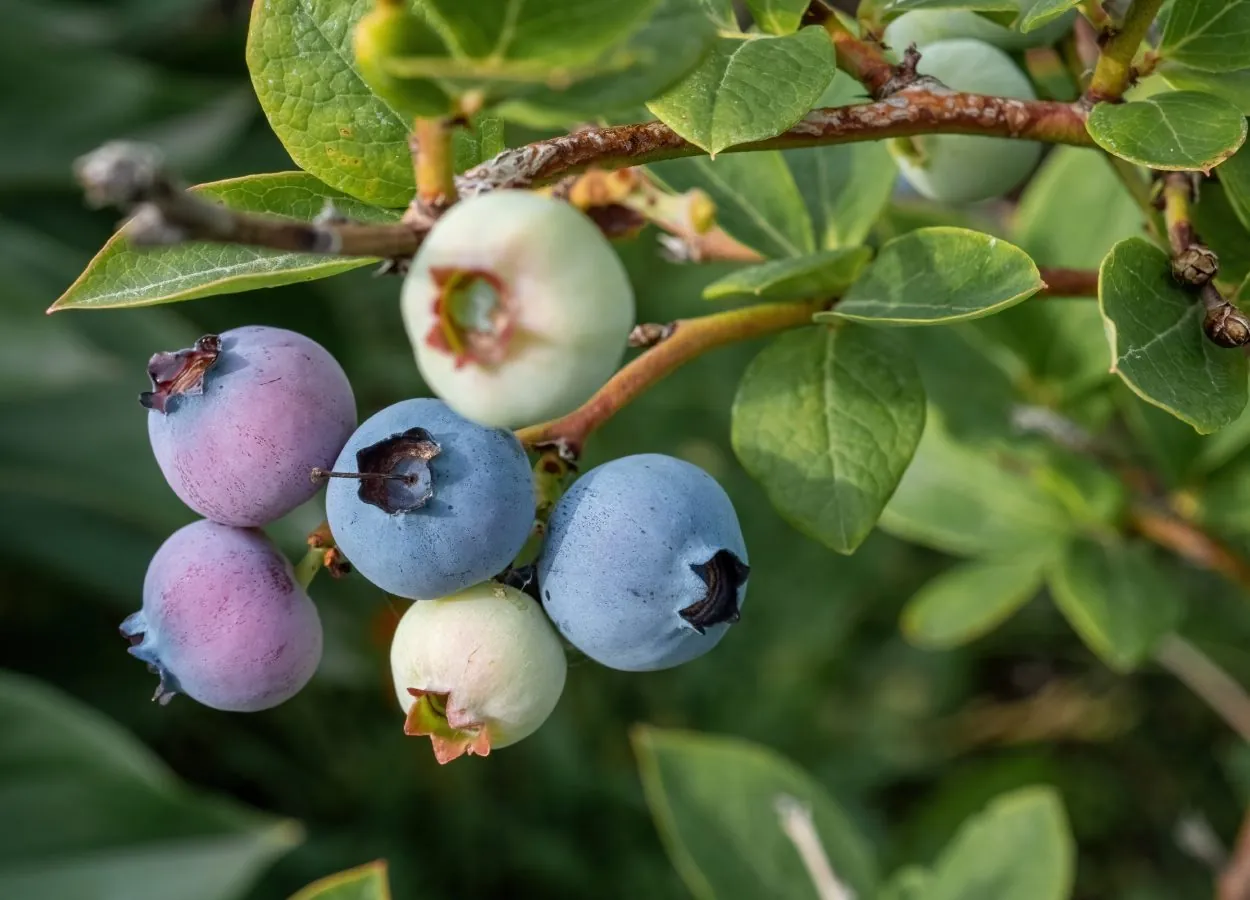
Blueberry Cultivation
The blueberry is one of the fastest-growing fruit crops in Portugal over the past decade. International demand, combined with the fruit's high nutritional value, has turned this species into a real opportunity for farmers looking for high value-added crops.
But make no mistake: blueberries require very specific soil and climate conditions, rigorous technical management and significant upfront investment.
Blueberry growing in Portugal
The blueberry (Vaccinium spp.) belongs to the Ericaceae family and stands out for its high content of antioxidants, vitamins and bioactive compounds. It is highly valued in European and North American markets, both for fresh consumption and for the food industry.
In Portugal, the crop has expanded above all in the North, Centre and Alentejo, driven by good climatic conditions and by the sector's strong export orientation.
Ideal soil and climate conditions
Soil
The blueberry is an extremely demanding crop in terms of soil, and this is one of the main constraints on establishing it.
Ideal soil characteristics:
- Organic matter content above 3%;
- Good drainage and good aeration;
- Acidic pH between 4.5 and 5.2;
- Sandy, sandy loam or clay loam texture;
- 20 to 30% clay particles;
- Shallow soils, provided they are well drained.
Soil temperature is critical for root development:
- Roots are active between 7 °C and 20 °C;
- Above 22 °C root activity drops sharply, causing water and nutritional stress, with a direct impact on yield.
Climate
During dormancy, cold is the most relevant factor, and chilling hours are needed to break dormancy (≥700 h for northern group varieties).
During the growing period, the main factors are:
- Air temperature;
- Rainfall;
- Solar radiation.
Plants are particularly vulnerable to late cold winds in spring, after flowers open.
After flowering, fruit development depends on heat accumulation, and around 50 to 90 days are needed to reach ripeness, depending on thermal conditions.
Blueberry varieties
Around 95% of commercial varieties are hybrids of native North American species. Varieties are classified on the basis of:
- The shape and size of the bushes;
- The characteristics of the berry;
- Chilling requirements and the harvest calendar.
Northern Highbush Vaccinium australe Small. × Vaccinium corymbosum L.
Characteristics:
- Bushes over 2 m tall;
- Chilling requirements between 650 and 1,000 hours;
- Deciduous;
- Well-defined winter dormancy;
- Flowering concentrated in spring;
- Shorter harvest period;
- Large, high-quality fruit.
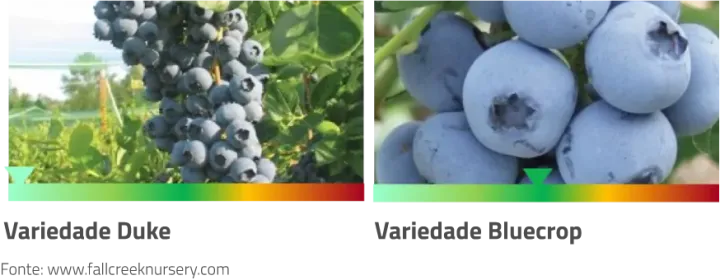
Southern Highbush Hybrids of species from the southern United States × Vaccinium corymbosum L.
Characteristics:
- Low chilling requirement (200–600 hours);
- Early production;
- Earlier ripening and harvest period.

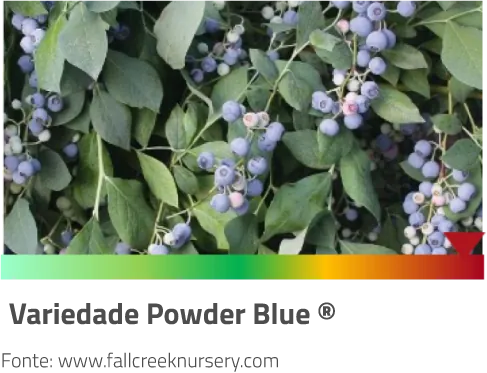
Rabbiteye Vaccinium ashei Reade L.
Characteristics:
- Very vigorous plants (up to 4 m tall);
- High productivity and longevity;
- Greater tolerance to heat and drought;
- Adapted to regions with little chilling (≈300 hours);
- Small to medium fruit, more acidic and with a shorter shelf life.
Establishing the crop
Preparing the ground
- Soil analysis is mandatory;
- pH correction with elemental sulphur or acidic substrates;
- Building raised beds to improve drainage;
- Installing drip irrigation and a fertigation system.
Planting
- Typical density: 2,000 to 4,000 plants/ha;
- Planting preferably in autumn or late winter;
- Mulching the soil (pine bark, sawdust or geotextile) to control weeds and conserve moisture.
Irrigation and fertilisation
The blueberry has a shallow root system and is highly sensitive to water stress.
Technical principles:
- Frequent, controlled irrigation;
- Fertilisation through fertigation, with particular attention to nitrogen, potassium and micronutrients;
- Continuous monitoring of the water's electrical conductivity and pH.
Pruning and training
Pruning is decisive for the longevity of the plantation and the quality of the fruit, making it possible to:
- Renew the plant;
- Balance vegetative growth and production;
- Improve fruit quality and size.
Training pruning is carried out in the first years; later, fruiting pruning and the renewal of ageing branches.
Pests and diseases
Main plant health problems:
- Drosophila suzukii;
- Mites and thrips;
- Botrytis and other fungal diseases;
- Iron chlorosis associated with poorly corrected soils.
The strategy should be based on integrated control, monitoring and prevention.
Harvest and market
Harvesting can be manual or mechanised, depending on the fruit's destination:
- Fresh market: manual harvesting and rigorous grading;
- Industry: mechanised harvesting.
The blueberry has high commercial value, but also high production costs, especially in the first years.
Profitability and challenges
Blueberry growing can be highly profitable, but:
- The initial investment is high;
- Economic returns generally come after 3 to 4 years;
- Technical management is critical;
- The market is competitive and highly demanding in terms of quality.
The blueberry is a crop with high potential in Portugal, but it requires planning, technical knowledge and a professional approach. For farmers looking to diversify and invest in high-value crops, the blueberry represents a strategic opportunity – provided it is properly sized and technically supported.
Keep exploring
The Galega, the Cobrançosa and the Verdeal: The Portuguese Native Varieties Conquering the World
At a time when olive oil is establishing itself as one of the most studied and most highly valued foods of the Mediterranean diet, Portugal is emerging as one of the leading players in the global market.
Climate change in Portuguese vineyards: what is changing and how to adapt?
In 2024, the International Organisation of Vine and Wine (OIV) recorded the lowest level of world production since 1961.

Frequently Asked Questions: Artificial Intelligence in Tourism Course
What is the aim of the AgroB Business School course on Artificial Intelligence in Tourism?