



Sensory Evaluation of Virgin Olive Oil
Sensory analysis of virgin olive oil is an essential step in its commercial and qualitative classification. Carried out by trained tasters, it follows methodologies established by the International Olive Council (IOC). This process makes it possible to detect defects, identify positive attributes and ensure compliance with the regulated categories.
The main objective of sensory analysis is to assess the organoleptic characteristics of the oil, its aroma, flavour and retronasal sensations, in order to:
- Identify defects such as rancidity, mustiness, muddy sediment or vinegary notes.
- Bring out positive attributes, such as fruitiness, bitterness and pungency.
Standardised tasting procedure
1. Preparing the sample
- Pour 15 mL of olive oil into a dark blue glass (this prevents any visual bias).
- Cover with an airtight lid or a watch glass.
- Warm to around 28 ° C, the ideal temperature for the aromatic compounds to volatilise.
2. Olfactory phase
- Swirl the glass gently, still covered, to release the volatile compounds.
- Uncover and inhale deeply, identifying fruity aromas or defects.
3. Gustatory phase
- Place around 3 mL of olive oil in the mouth.
- Draw in air with the lips slightly parted to spread the oil around the mouth.
- Identify flavours such as bitter, sweet or pungent and the retronasal sensations.
4. Expelling and neutralising
- Spit the oil into a suitable container (it should not be swallowed).
- Neutralise the palate with water or apple before the next sample.
5. Sensory record
- Describe and record the sensations perceived.
- Use standardised score sheets, with intensity scales (generally from 0 to 10).

Figure: Preparing the tasting

Figure: Example of a tasting sheet
Positive attributes assessed
| ATTRIBUTE | DEFINITION |
| Fruity | Aromas typical of fresh olives, whether green or ripe. |
| Bitter | The taste sensation of green olives. |
| Pungent | A peppery sensation in the throat, associated with the presence of polyphenols. |

Main defects to detect
| DEFECT | MOST COMMON CAUSE |
| Rancid | Oxidation through prolonged storage or poor conservation. |
| Musty-humid | Presence of fungi due to damp olives. |
| Muddy sediment | Contact with decanting sludge. |
| Winey-vinegary | Unwanted fermentation (yeasts/bacteria). |
| Earthy | Contamination with soil or dirt. |
Commercial classification based on the sensory evaluation
The classification of olive oil comes from combining sensory analysis with physical and chemical analysis:
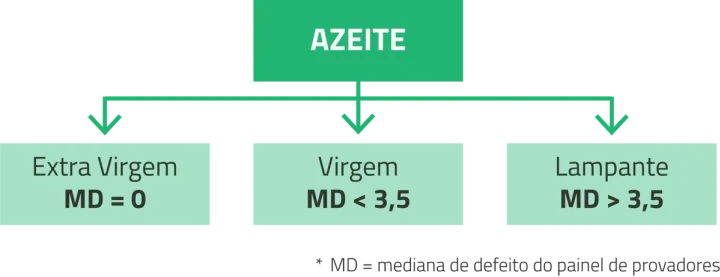
| CATEGORY | SENSORY CONDITIONS |
| Extra Virgin | No defects; perceptible fruitiness. |
| Virgin | Slight defects permitted; fruitiness present. |
| Lampante | Intense defects; unfit for direct consumption. |
Fruitiness profiles: classification by intensity
Under Commission Implementing Regulation (EU) 2015/1983, the median fruitiness intensity (MD.F) allows the sensory profile to be described more precisely:
-
Ripe – MD.F < 3
Soft fruitiness, typical of ripe olives.
-
Mild green – MD.F between 3 and 6
Balanced green aromas, medium intensity.
-
Intense green – MD.F > 6
A pronounced, herbaceous profile with high intensity on the palate.
This system is useful for labelling and for communicating with consumers, as it makes it possible to highlight the sensory style of an oil in objective terms.

Sensory analysis of olive oil:
- Ensures legal compliance and adherence to quality standards.
- Supports technical decisions in quality control and certification.
- Contributes to competitive positioning in domestic and international markets.
In a sector with ever-rising demands, mastering these methodologies is essential for professionals working in food technology, laboratory analysis, and the production and marketing of olive oil.
Find out more about the subject in our course on Technology of Olive Oils and Table Olives, with Professor Nuno Rodrigues, of the Polytechnic Institute of Bragança.
Keep exploring
The Galega, the Cobrançosa and the Verdeal: The Portuguese Native Varieties Conquering the World
At a time when olive oil is establishing itself as one of the most studied and most highly valued foods of the Mediterranean diet, Portugal is emerging as one of the leading players in the global market.
Climate change in Portuguese vineyards: what is changing and how to adapt?
In 2024, the International Organisation of Vine and Wine (OIV) recorded the lowest level of world production since 1961.

Frequently Asked Questions: Artificial Intelligence in Tourism Course
What is the aim of the AgroB Business School course on Artificial Intelligence in Tourism?