


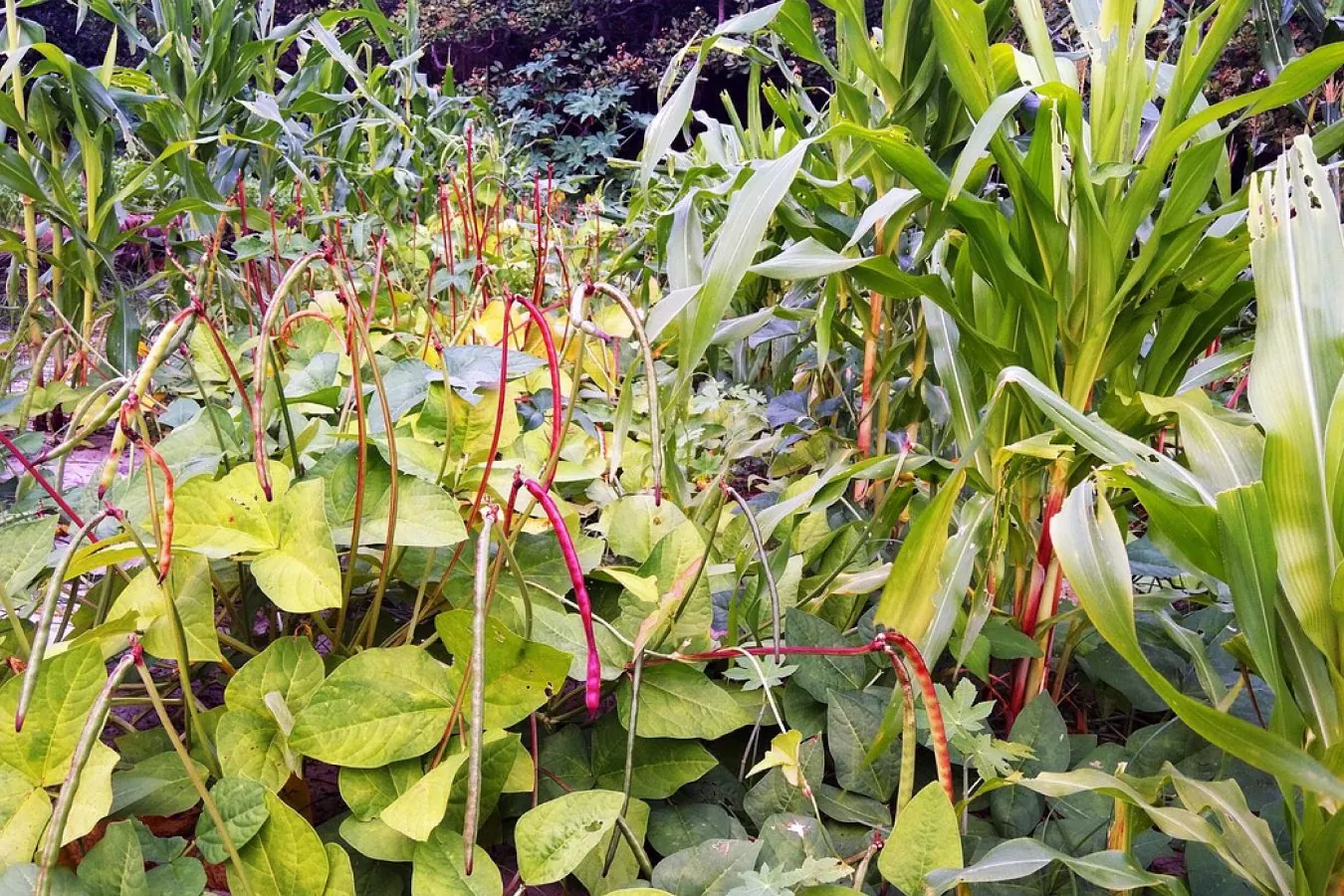
The impact of plant diversity as a driver of beneficial insect activity on crop productivity and health in an agroforestry ecosystem, by Ana Sofia Simões Pereira
The impact of plant diversity as a driver of beneficial insect activity on crop productivity and health in an agroforestry ecosystem, by Ana Sofia Simões Pereira
Summary of the final project of the Advanced Specialisation in Agricultural Crop Protectionby Ana Sofia Simões Pereira
The growing demand for productivity in agriculture, coupled with pressure from the food market, has led to the adoption of intensive practices which, while effective in the short term, frequently result in the degradation of natural resources and a significant loss of biodiversity. Monoculture, as the dominant model, simplifies agricultural ecosystems and depends heavily on the application of plant protection products and chemical fertilisers to make up nutritional shortfalls and control pests and diseases. This approach ignores the soil as a living system and directly compromises the ecological interactions between local fauna and flora, leading to imbalances, exhausted fertility and increasingly vulnerable crops.
Given the limitations of this model, agroforestry systems are emerging as a sustainable alternative, integrating arable crops, forest species and sometimes grazing in the same area. This integration favours the restoration of ecological balance and reduces the need for external inputs, creating the conditions for the natural enemies of pests to establish themselves and work effectively. Planning which plant species to introduce into these systems is a key element, since each plant can attract specific beneficial species and provide crucial ecological resources such as shelter, pollen or nectar.
Within this framework, the choice of plants must be guided by technical criteria, namely compatibility with the main crops, the flowering cycle, the target pests and the beneficial species one wishes to encourage.
Table 1, below, summarises essential information on plants with the potential to support beneficial fauna, highlighting the associated groups of beneficial insects, the resources offered (pollen, nectar), flowering periods and any risk of negative compatibility with specific crops.
Table 1 – Flora favourable to beneficial insects and their agricultural compatibility (Source: Ferreira and Cunha-Queda, 2022; Gonçalves et al., 2013)
| Plant | Pest | Beneficial species most favoured | Agricultural compatibility | Flowering | Resource |
| Blackthorn, Prunus spinosa | Hop aphid (Phorodon humuli) | Hoverflies, aphid predators and parasitoids | (-) hops / (+) crops attacked by aphids | March | Pollen and nectar |
| Rosemary, Rosmarinus officinalis | – | Hoverflies, parasitoid wasps | – | January-April | Pollen and nectar |
| Lavender, Lavandula officinalis | – | Hoverflies, parasitoid wasps | – | April-May | – |
| Privet, Lingustrum spp. | – | Hoverflies, parasitoid wasps | – | June-July | – |
| Hazel, Corylus avellana |
Aphid (Myzocallis coryli) | Hoverflies, aphid predators and parasitoids | – | December-February | Pollen |
| Laurustinus, Viburnum tinus | – | Hoverflies, parasitoid wasps | – | February-March | Pollen |
| Ash, Fraxinus spp. |
Ash psyllid (Psyllopsis fraxini) | Anthocorids, phytoseiid mites, hymenopterans and gall midges | (+) pear | – | – |
| Ivy, Hedera hélix |
Aphid (Aphis hederae) |
Aphid predators and parasitoids | – | August-October | Pollen |
| Oleander, Nerium oleander |
Aphis nerii | Hymenopterans, hoverflies, gall midges | – | – | – |
| Bay laurel, Laurus nobilis |
Psyllid (Trioza alacris) |
Anthocorids and green lacewings | (+) pear | February-April | Pollen |
| Quince, Cydonia oblonga | Aphid (Aphis pomi) |
Aphid predators and parasitoids | (-) pear and apple | March-April | Pollen and nectar |
| Strawberry tree, Arbutus unedo | Aphid (Aphis orbuti) |
Aphid predators and parasitoids | (+) crops attacked by aphids | November-December | Pollen and nectar |
| Judas tree, Cercis siliquastrum |
Judas tree psyllid (Cacopsylla pulchella) | Anthocorids that prey on psyllids |
(+) pear | March | Pollen and nectar. The early flowering attracts a good number of pollinators |
| Elder, Sambucus nigra | Aphid (Aphis sambuci) |
Aphid predators and parasitoids | – | April-May | Pollen and nectar |
| Mediterranean buckthorn, Rhamnus alaternus | Psyllids | Anthocorids that prey on psyllids | (+) pear | March-April | Pollen and nectar |
| Hawthorn, Crataegus monogyna | – | Aphid predators and parasitoids | (-) pome fruit orchards | April-May | Pollen and nectar |
| Field maple, Acer campestris | – | Hymenopterans, mirids and phytoseiid mites | – | – | – |
| Holm oak, Quercus ilex |
Hoplocallis pictus and Myzocallis boerneri | Hoverflies and aphid parasitoid wasps | (+) hazel and walnut | – | – |
These data are fundamental to the construction of effective ecological zones, because poorly chosen vegetation may, instead of supporting beneficial species, favour the crop's own phytophagous pests and undermine the objectives of biological control. A continuous supply of attractive and diverse flowers, combined with shelter, refuge and alternative prey, keeps beneficial species present throughout the production cycle. That ecological stability reduces the need for plant protection treatments and contributes to more resilient, more sustainable production systems.
Beyond the careful choice of vegetation for ecological support, the beneficial insects themselves also deserve attention – predators or parasitoids that provide biological control services to arable crops. These organisms establish ecological interactions such as predation, parasitism or mutualism (e.g. pollination), and their role can vary with their stage of development. The same beneficial species may act as a predator in the larval stage and as a pollinator as an adult, as is the case with hoverflies.
Establishing zones of attractive vegetation and using cover crops, such as Trifolium spp., umbellifers or brassicas in the inter-rows or field margins, helps to maintain the presence and activity of these insects. Providing alternative food (nectar, pollen or honeydew) is essential to their persistence and effectiveness, particularly when prey is scarce. Flowering vegetation therefore acts as an essential trophic support, both for the performance of the beneficial species and for the pollination of the crop.
Table 2 (below) summarises the main groups of beneficial insects, identifying the entomological family, the diet at different stages of the life cycle and the type of pests or resources they consume. This information is essential for guiding conservation practices for beneficial species and encouraging ecological services that benefit the crop.
Table 2 – Insects beneficial to crops and their diet (Source: Gonçalves and Torres, 2013; Coutinho, 2007)
| Functional group | Family | Diet – juvenile stages | Diet – adult |
| Mites | Phytoseiidae | Tetranychid mites | Tetranychid mites |
| Erythraeidae | Parasitise green leafhopper nymphs | – | |
| Anystidae | Tetranychid mites, thrips, leafhoppers and aphids |
– | |
| Beetles | Coccinellidae | Aphids, mites, scale insects, psyllids, eggs of other insects |
– |
| Carabidae | Insects and slugs | Aphids, psyllids, beetle eggs and larvae (Colorado potato beetle or cockchafer) | |
| Staphylinidae | Mites, moth eggs and larvae, aphid eggs and others | – | |
| Cleridae | Insects that tunnel galleries into trunks (beetles) | – | |
| True bugs | Malachilidae | Moth larvae, leafhoppers, bark beetles, weevils and lygaeids | Adults can also feed on pollen |
| Anthocoridae | Mites and/or aphids | – | |
| Miridae e Nabidae | Mites, pear psyllid, leafhopper nymphs, whiteflies, aphids, thrips | Nabids: aphids | |
| Flies | Syrphidae | Aphids and some psyllids | Pollen and nectar (pollinators) |
| Cecidomyiidae | Aphids and scale insects | Insect honeydew and nectar | |
| Tachinidae | Moth larvae and the larvae and adults of beetles |
Pollen and insect honeydew | |
| Lacewings | Chrysopidae | Mites, aphids, coccids and aleyrodids (whitefly) |
Nectar and pollen from flowers and insect honeydew |
| Hemerobiidae | Aphids, mites and thrips | Aphids and mites | |
| Coniopterygidae | Mites (adults and eggs), aphids, scale insects, whiteflies | – | |
| Parasitoids (Hymenoptera) | Chalcididae | European grapevine moth, cotton mealybug and leafhoppers | Pollen, nectar and honeydew |
| Ichneumonidae | European grapevine moth | Pollen, nectar and honeydew | |
| Chrysididae | Leafhoppers, beetle larvae and micro-moths |
Pollen, nectar and honeydew | |
| Aphelinidae | Whitefly, woolly apple aphid and scale insects | Nectar, plant exudates, insect honeydew |
As for the spatial arrangement of agroforestry species, they can be organised in patches, in rows that act as barriers between plots, or even make up the cropping system itself. The main aim is to create environments with greater structural diversity, less fragmentation and high ecological connectivity, which encourage beneficial species to remain and disperse. This structuring must be grounded in an understanding of the ecological relationships and behaviour of the organisms present in the agricultural ecosystem.
Other complementary measures help to enhance the desired ecological effects: maintaining cover crops in the inter-rows not only attracts beneficial species but also reduces nutrient leaching, improves soil structure and fertility, and stimulates microbial activity. Reducing soil cultivation to the strictly necessary and using pruning residues as mulch are practices that favour water retention and create micro-habitats for beneficial insects.
Landscape features such as riparian galleries or patches of natural vegetation are also worth valuing, as they often host species targeted by pests other than those of the crop, allowing populations of beneficial species to be maintained without risk to agricultural production. The presence of ecological infrastructure – stone walls, rock crevices, hedges, log piles or small patches of woodland – within a radius of around 150 metres is highly recommended to guarantee refuge and shelter throughout the year.
The biodiversity promoted by trees and shrubs is not limited to insects. Studies show that birds and bats, above all in systems with hedges and natural habitats, play a relevant role in reducing pests such as the European grapevine moth and in controlling fungal diseases such as grey mould. Although they may be present in intensive systems, their numbers and effectiveness increase substantially in more natural environments.
In short, there is an ever-broader consensus that the dominant technological model, based on chemical and mechanical intensification, is associated with negative environmental, climate and economic impacts. Its heavy dependence on inputs, water and energy is not compatible with today's sustainability challenges. The transition to models based on ecological intensification – such as agroforestry systems – is seen as an unavoidable route to striking a balance between productivity and environmental conservation.
Through its structural and ecological characteristics, the agroforestry system makes it possible to create environments that sustain functional populations of beneficial species over time, reducing pest pressure and dependence on chemicals. The success of this model depends, however, on the ecological design and on an informed choice of plant species, based on their function, phenological cycle and compatibility with the crop in place. It is a model that gives the farmer back an active, informed role in managing natural balances, contributing to production that is more resilient, more profitable and more regenerative.
Keep exploring
The Galega, the Cobrançosa and the Verdeal: The Portuguese Native Varieties Conquering the World
At a time when olive oil is establishing itself as one of the most studied and most highly valued foods of the Mediterranean diet, Portugal is emerging as one of the leading players in the global market.
Climate change in Portuguese vineyards: what is changing and how to adapt?
In 2024, the International Organisation of Vine and Wine (OIV) recorded the lowest level of world production since 1961.

Frequently Asked Questions: Artificial Intelligence in Tourism Course
What is the aim of the AgroB Business School course on Artificial Intelligence in Tourism?