


Why Portugal's Native Cattle Breeds Matter
Portugal has remarkable livestock diversity, with more than 15 registered native cattle breeds. These breeds are the product of centuries of adaptation to the climate, the soils and the farming practices of each region. They are far more than production animals: they represent cultural, genetic and gastronomic identity.
Many are nonetheless at risk: several have fewer than 7,500 purebred females, a critical figure for their survival. Losing a breed does not only mean the extinction of an animal, but of a whole body of traditional knowledge, farming practices and genetic diversity that is fundamental to the future of livestock farming.
Portugal's native breeds: diversity, identity and tradition
Portugal's livestock heritage is vast and varied, reflecting centuries of adaptation to the land and to the way of life of rural communities. Among the native cattle breeds, 16 still have a presence in the country, even though some are on the brink of extinction.
In the south, the Alentejana stands out for its imposing build and hardiness, and is one of the oldest of the national breeds. Resistant to heat and prolonged drought, it produces high-quality beef and was once widely used for farm work. Closer to the coast is the Preta, a robust breed with a uniform black coat, likewise adapted to hot climates and yielding much-appreciated beef. In the Algarve, the discreet Algarvia survives in small numbers, notable for its ability to withstand arid environments. In the same Ribatejo and Alentejo region we also find the Brava de Lide, famous for its use in bullfighting, reared extensively and closely bound up with Iberian culture.
In central Portugal, the Marinhoa stands out, typical of the Aveiro floodplains. Large-framed, it was once used as a draught animal and is today recognised for its PDO beef. Further inland comes the Jarmelista, native to the Serra da Estrela, a smaller breed now at risk of extinction but representing an important part of traditional Beira livestock farming. The Garvonesa, from the Serra de São Mamede, is another breed in a critical state of conservation, surviving on the hardiness that has always characterised it. The lesser-known Catrina, reared in small upland areas, is another symbol of the struggle to preserve our genetic heritage.
In the north, the diversity is greater still. The Barrosã, from Trás-os-Montes, is easily recognised by its lyre-shaped horns and its exceptional PDO beef. The neighbouring Maronesa, from the Serra do Marão, is also very hardy and adapted to the mountains, producing quality beef. The Arouquesa, typical of the Arouca region, is notable for its smaller frame and succulent beef, considered among the best in the country. The Mirandesa, from the Miranda do Douro plateau, was once essential as a working animal, but today is known above all for its PDO beef and its place in local cuisine, in dishes such as the celebrated posta mirandesa.
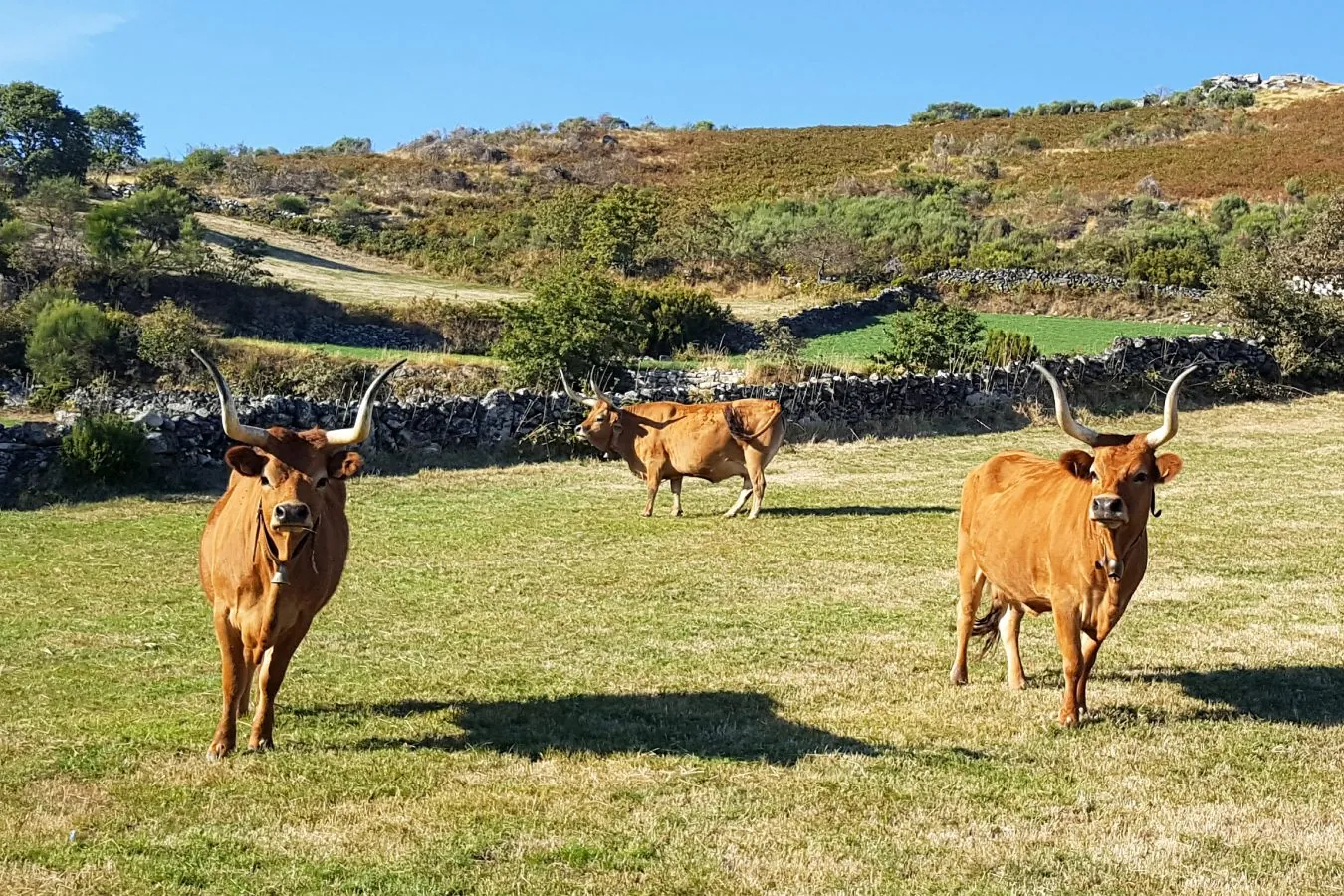
In the same region we also find the Minhota, one of the oldest and most versatile breeds, used for both beef and milk and playing an essential role in family subsistence systems. The Cachena, small in stature but with enormous horns, has adapted remarkably well to mountain areas with poor grazing, showing notable hardiness.
Finally, in the Azores, the Ramo Grande remains a benchmark of island livestock farming. Found mainly on Terceira, it is a triple-purpose breed – beef, milk and work – that keeps the Azorean farming tradition alive.

Why should we preserve these breeds?
Portugal's native breeds play essential roles that go well beyond producing meat or milk:
- Environmental sustainability – adapted to the land, they need fewer external inputs and help preserve ecosystems through extensive grazing.
- Biodiversity – each breed is a unique genetic reservoir, important to the resilience of livestock farming in the face of disease or climate change.
- Culture and tradition – they are bound up with regions, communities and even cuisine, and are part of Portugal's rural heritage.
- Economic value – certified products such as PDO beef open the door to differentiated markets with higher added value.
How can we preserve Portugal's native breeds?
Support local producers
The first form of preservation is through consumption. Buying certified meat and milk, such as PDO beef, guarantees producers a market and encourages them to carry on rearing these breeds.
Encourage conscious consumption
Choosing products from native breeds means choosing quality and sustainability. These animals are adapted to the land, which reduces environmental impact and promotes extensive systems that are kinder to the environment.
Value them and spread the word
Sharing knowledge is fundamental. Talking about these breeds, visiting the regions where they are reared and supporting rural fairs and initiatives all help more people recognise their value and importance.
Invest in research and conservation
Genetic conservation projects, support programmes and public incentive measures are crucial to ensuring that these breeds continue to be preserved and to evolve.
Portugal's native cattle breeds are living heritage in the truest sense. Protecting them means defending biodiversity, supporting agricultural sustainability and keeping alive the cultural bond between communities and the land.
Every choice, whether in what we buy, in the support we give producers or in spreading the word, is a step towards ensuring these breeds continue to exist and to enrich Portuguese agriculture in the future.
Keep exploring
The Galega, the Cobrançosa and the Verdeal: The Portuguese Native Varieties Conquering the World
At a time when olive oil is establishing itself as one of the most studied and most highly valued foods of the Mediterranean diet, Portugal is emerging as one of the leading players in the global market.
Climate change in Portuguese vineyards: what is changing and how to adapt?
In 2024, the International Organisation of Vine and Wine (OIV) recorded the lowest level of world production since 1961.

Frequently Asked Questions: Artificial Intelligence in Tourism Course
What is the aim of the AgroB Business School course on Artificial Intelligence in Tourism?