


How to Reduce the Environmental Footprint of a Small Farm
According to UNESCO, as of February 2024, Agriculture accounts for around 70% of all freshwater abstraction worldwide. The sector is also responsible for 27% of global greenhouse gas emissions (WWF, 2024).
Data from Our World in Data, from November 2022, adds that 94% of animal biomass corresponds to livestock and that 78% of the eutrophication observed in aquatic ecosystems results from the use of fertilisers. These figures make clear the significant impact of agriculture on natural resources, on the climate and on biodiversity, and reinforce the importance of adopting more sustainable and efficient practices.
Before understanding how to reduce the environmental footprint of a small farm, however, it is essential to understand what the concept means.
The environmental footprint is a composite indicator that measures the total impact of human activity on the environment. It assesses not only the use of natural resources but also the effects associated with:
- Greenhouse gas emissions;
- Water consumption;
- Waste production;
- Soil, air and water pollution;
- Loss of biodiversity.
The concept gained prominence through initiatives of the European Commission, in particular the Product Environmental Footprint (PEF) project, launched in 2013. The PEF seeks to establish a common methodology for measuring the environmental performance of products and organisations across their life cycle.
"The Environmental Footprint is a multi-criteria measure of the environmental impacts associated with a product, service or organisation across its life cycle." European Commission, 2013, Product Environmental Footprint Guide
Under ISO 14040, the purpose of Life Cycle Assessment (LCA) is to quantify environmental impacts at every stage of a product's life cycle. Take the example of the greenhouse-grown tomato:
Stages of Life Cycle Assessment:
The greenhouse tomato example
-
Extraction of natural resources Water abstraction for irrigation;
Energy consumption (such as electricity for climate control or pumping systems);
Production of fertilisers, pesticides and agricultural plastics (e.g. mulch films).
-
Production and processing of materials Manufacture of the greenhouse's structural components (metals, glass, plastics);
Production of equipment, irrigation systems, packaging and agricultural machinery.
-
Manufacture and assembly (growing phase) Operations such as sowing, irrigation, fertilisation and pest control;
Emissions resulting from the use of nitrogen fertilisers (e.g. nitrous oxide – N₂O).
-
Distribution Transport of the tomatoes to packing centres or points of sale;
Refrigerated storage, with the associated energy consumption.
-
Use by the consumer Washing, refrigeration and preparation of the food;
Possible food waste at household level.
-
Final destination (end of life) Destination of the packaging (recycling, composting, landfill);
Uneaten tomato remains (food waste).
Reducing the environmental footprint of a farm means lessening the negative impacts of the activity on soil, water, air, climate and biodiversity. Even with limited resources, it is possible to adopt more efficient, sustainable and regenerative practices, promoting production that is more responsible and more resilient.
Some practical strategies for reducing the environmental footprint
-
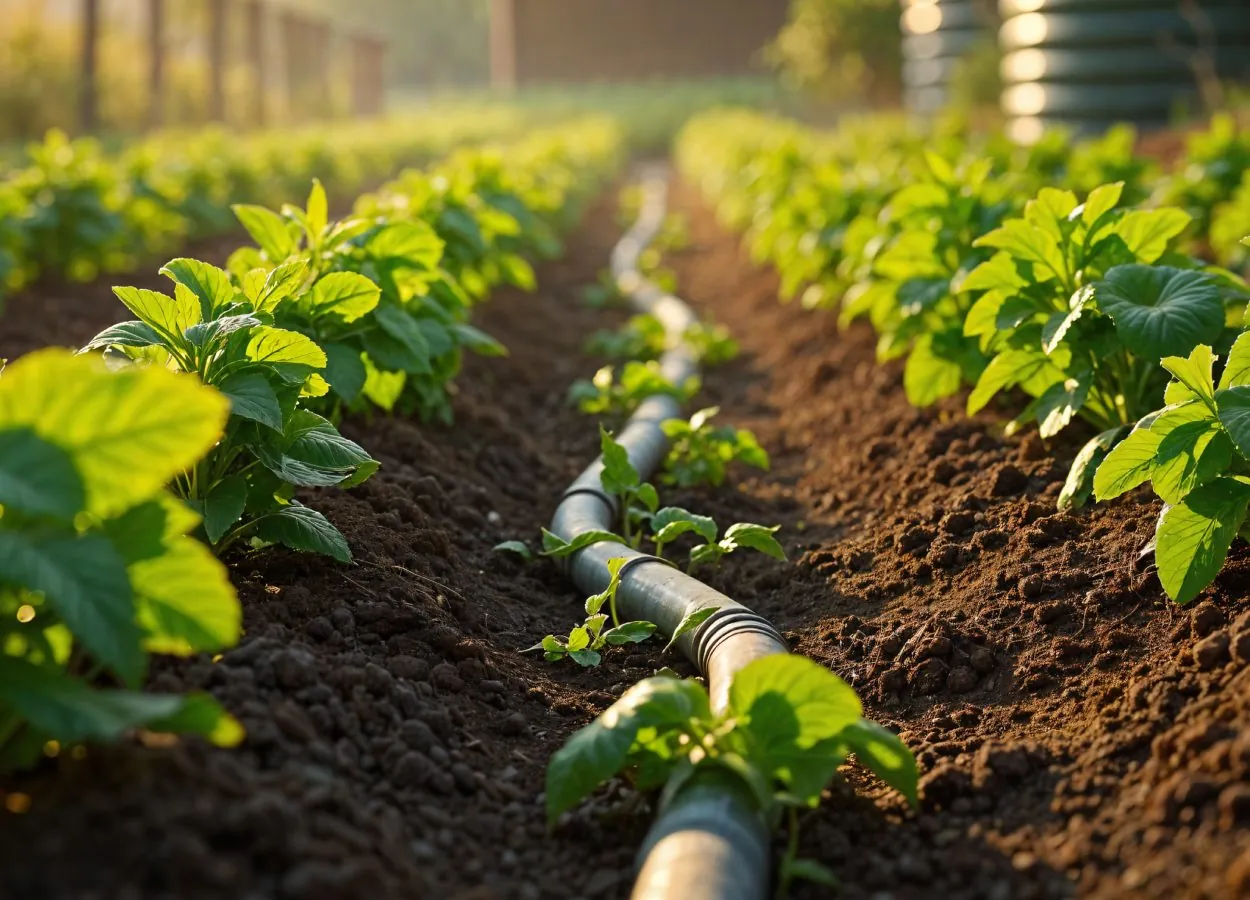
Efficient water management Use drip irrigation systems or moisture sensors to optimise consumption;
Collect rainwater for non-potable uses;
Avoid irrigating during the hours of greatest evaporation.
-
Responsible use of fertilisers and pesticides Apply targeted fertilisation adjusted on the basis of soil analyses;
Give priority to organic or naturally sourced fertilisers;
Use biological pest control wherever possible.
-
Promoting biodiversity Preserve hedgerows, areas of spontaneous vegetation and fallow land;
Practise crop rotation to improve soil health and reduce pest pressure.
-
Adopting regenerative practices Keep the soil covered with straw or plant residues;
Set up on-site composting;
Reduce tillage to improve structure and increase carbon sequestration.
-
Conscious selection of materials and inputs Avoid single-use plastics;
Buy locally to cut transport emissions;
Choose varieties adapted to the local climate, which are more resistant to extreme conditions.
-
Making the most of energy and waste Install solar panels for pumping or lighting, where viable;
Compost plant residues and manure;
Reuse agricultural materials and existing structures.
-
Improving logistics and distribution Sell at local markets or through short supply chains such as veg boxes or partnerships with restaurants;
Organise harvests to order to avoid food waste.
Reducing the environmental footprint of a small farm does not depend solely on major investment or advanced technology. Above all it depends on conscious management of resources, on the adoption of more efficient practices and on the ability to build sustainable solutions into the day-to-day running of production.
By applying measures such as efficient water management, adjusted fertilisation, biodiversity protection, the use of waste and the optimisation of logistics, it is possible to reduce negative impacts on the environment and, at the same time, improve the farm's economic efficiency.
Every small change contributes to a more positive overall outcome, reinforcing the resilience of farming and its relevance to the future of responsible food production. Investing in sustainability is investing in the longevity of the business and in the balance of the ecosystems on which it depends.
Keep exploring
The Galega, the Cobrançosa and the Verdeal: The Portuguese Native Varieties Conquering the World
At a time when olive oil is establishing itself as one of the most studied and most highly valued foods of the Mediterranean diet, Portugal is emerging as one of the leading players in the global market.
Climate change in Portuguese vineyards: what is changing and how to adapt?
In 2024, the International Organisation of Vine and Wine (OIV) recorded the lowest level of world production since 1961.

Frequently Asked Questions: Artificial Intelligence in Tourism Course
What is the aim of the AgroB Business School course on Artificial Intelligence in Tourism?