



Sustainability in Tourism: Paths to a Responsible Future
The concept of sustainability has been gaining growing importance worldwide, driven by environmental, social and economic concerns that affect every sector of society, including Tourism.
The need to protect the environment and safeguard the well-being of local communities is ever more pressing, with international agreements such as the Kyoto Protocol, the Paris Agreement and the European Climate Pact putting pressure on governments and businesses to adopt more responsible practices.
In the context of Tourism, a sector crucial to the global economy and to Portugal's in particular, sustainability is not merely a trend but a necessity. With tourists increasingly aware of and demanding about the impact of their travel, tourism businesses face the challenge of adapting their operations to minimise negative impacts and maximise economic, social and environmental benefits. In Portugal, for instance, a number of business support programmes demonstrate the sector's commitment to this transformation.
Concepts and their application in tourism
Sustainability, as defined in the 1987 Brundtland Report, refers to development that meets the needs of the present without compromising the ability of future generations to meet their own needs. This concept is often represented by the three pillars of sustainability, encompassing the social, environmental and economic dimensions. Each of these dimensions is essential to the balance required for the preservation of resources and for human well-being.
In business, sustainability means the ability to manage an activity in a way that creates long-term value, benefiting society and the environment at the same time. In Tourism, the concept takes on a practical application once we consider that tourist activities have a direct impact on destinations, local communities and the environment. One relevant practice in the sector is the circular economy, which aims to reduce waste, reuse resources and regenerate ecosystems, promoting a sustainable cycle of production and consumption.
Tools and programmes for businesses
BCSD Charter of Principles
The Charter of Principles of BCSD Portugal (Business Council for Sustainable Development) is a set of guidelines that steers businesses towards adopting sustainable practices. These principles were developed to apply to companies of different sizes and sectors, serving as a voluntary benchmark for sustainable business management. The Charter focuses on areas such as efficiency in the use of resources, minimising environmental impacts, promoting fair working conditions and corporate social responsibility.
The Charter is implemented through Jornada 2030, a shared agenda designed to support companies in turning sustainability into concrete action. This tool is essential for businesses wishing to integrate sustainability in a structured way, aligned with the Sustainable Development Goals (SDGs).
ESG criteria
ESG (Environmental, Social, Governance) criteria are a set of standards that guide companies in integrating sustainability into their operations. These criteria were developed under the UN Global Compact, in partnership with the World Bank, and cover three main areas:
- Environmental: focuses on the efficient management of natural resources, the reduction of carbon emissions, the protection of biodiversity and the promotion of ecological practices;
- Social: refers to companies' responsibility towards their people, communities and customers, promoting fair working conditions, diversity, inclusion and positive social impact;
- Governance: involves adopting transparent and ethical management practices, with a governance structure that ensures compliance with the law, corporate integrity and accountability to stakeholders.
Companies that adopt ESG criteria not only improve their financial performance but also generate positive social and environmental impacts, strengthening their reputation and the confidence of investors and customers.
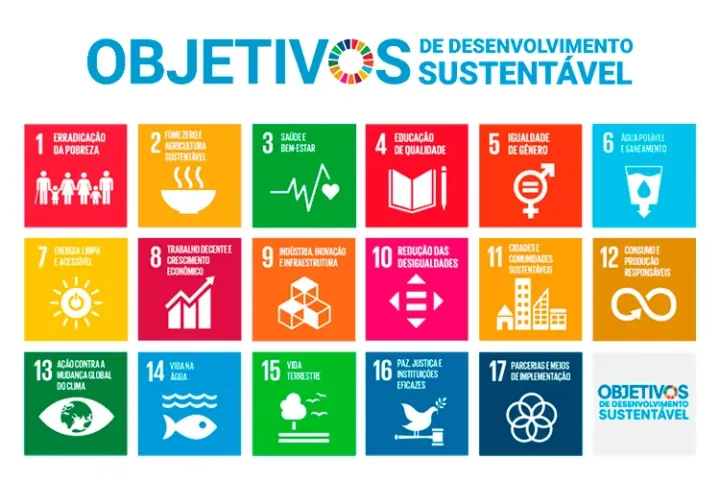
Sustainable Development Goals (SDGs)
The Sustainable Development Goals (SDGs) are a global agenda set out by the UN, comprising 17 goals and 169 targets, which seek to address the most pressing challenges facing humanity, including eradicating poverty, protecting the planet and ensuring prosperity for all.
In the context of tourism, the applicable SDGs include:
- Goal 8: Promote sustained, inclusive and sustainable economic growth, full and productive employment and decent work for all;
- Goal 12: Ensure sustainable consumption and production patterns;
- Goal 14: Conserve and sustainably use the oceans, seas and marine resources;
- Goal 17: Build partnerships for the implementation of the goals.
Tourism businesses aligned with the SDGs not only contribute to sustainable global development but also position themselves as leaders in social and environmental responsibility.
Empresas Turismo 360° Programme
The Empresas Turismo 360° Programme is an initiative of Turismo de Portugal designed to equip businesses in the sector to report on their sustainability performance.
The programme offers training and capacity-building focused on sustainable management and the application of ESG criteria. The aim is to give companies the technical knowledge they need to integrate environmental, social and governance performance indicators into their internal processes. This programme is crucial for businesses wishing to measure and communicate their progress towards sustainability, making them more competitive and better aligned with the demands of the market and of consumers.
Tourism Strategy 2027
Tourism Strategy 2027 is the strategic framework for the development of tourism in Portugal, centred on the sustainability and competitiveness of the destination. The plan sets clear targets for national tourism, focusing on valuing the territory, the circular economy, energy efficiency, water resource management and waste reduction.
The strategy sets out an ambitious vision: to position Portugal as one of the most competitive and sustainable tourist destinations in the world. Tourism businesses are encouraged to align themselves with this vision by adopting practices that promote the country's economic, social and environmental development.
Sustainability Certifications and Labels
To make the positioning and application of sustainable practices by tourism businesses transparent, there is a set of certifications that establishments and companies in the sector can obtain. Each of these certifications requires compliance with specific criteria, assessed by independent audits. As well as promoting sustainable practices, these certifications help companies stand out in the market, attracting tourists who are aware of and committed to sustainability.
To obtain certification, companies must adopt and implement a robust sustainability policy that demonstrates their commitment to responsible practices. The process may vary according to the certifying body, but generally involves choosing and implementing mandatory criteria, with the possibility of progressing to more advanced levels of certification as sustainable practices become embedded.
Some of the main globally recognised sustainability labels are:
Biosphere
The Biosphere label is awarded to tourism businesses that demonstrate a solid commitment to sustainability in areas such as environmental protection, social responsibility and the promotion of local culture. To obtain this certification, companies must meet 35 requirements. The Biosphere label is internationally recognised and promotes practices that align with the Sustainable Development Goals.
EarthCheck
EarthCheck is one of the leading certification and benchmarking programmes for sustainability in tourism. This certification requires companies to meet 74 criteria, covering areas such as energy efficiency, water management, ecosystem conservation and cultural and social protection. Companies certified by EarthCheck undergo rigorous audits, guaranteeing the veracity and effectiveness of their sustainable practices.
Green Globe
Green Globe is a globally recognised sustainability certification that applies to a range of industries, including Tourism. To obtain this certification, companies must meet 44 criteria and 385 indicators. Green Globe covers aspects such as reducing the carbon footprint, the efficient management of natural resources and corporate social responsibility.
Green Growth 2050
Green Growth 2050 is a certification that assesses company performance against 450 sustainability-related indicators, including pollution reduction, biodiversity conservation and labour practices. The certification is renewed annually, with independent audits ensuring the continuity of sustainable practices.
Green Key
The Green Key certification is one of the most recognised in the Tourism sector and applies to tourist accommodation, restaurants and leisure businesses. To obtain this certification, companies must meet both mandatory and additional criteria. Green Key is synonymous with environmental responsibility and is highly valued by tourists seeking sustainable accommodation options.
Travelife
Travelife is an international certification programme that promotes sustainability among tour operators and accommodation providers. To obtain this certification, companies must meet 126 criteria relating to sustainable management. Travelife is a widely recognised certification in Europe and offers companies a way of demonstrating their commitment to responsible tourism.
EU Ecolabel
The EU Ecolabel is a certification awarded by the European Union to products and services that meet high environmental standards. In the Tourism sector, the Ecolabel is applied to accommodation that demonstrates sustainable practices, such as energy efficiency, water management and waste reduction. This certification is widely recognised in Europe and gives a competitive advantage to the companies that obtain it.
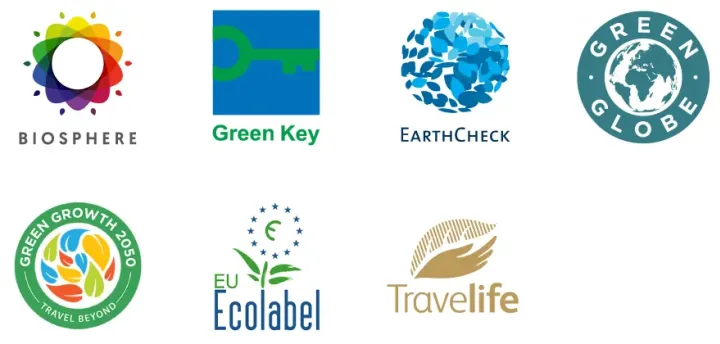
Figure: Tourism Sustainability Labels
Sustainability in tourism is a necessity that cannot be put off if future generations are to enjoy the planet's natural resources. Tourism businesses have a crucial part to play in this process, taking on the responsibility of integrating sustainable practices across all their activities.
By adopting tools, programmes and certifications geared towards sustainability, companies can not only improve their environmental and social performance but also strengthen their competitiveness and respond to the growing expectations of tourists.
The road to sustainable tourism is a challenging one, but the rewards are immeasurable for businesses, for society and, of course, for the environment.
Keep exploring

The Galega, the Cobrançosa and the Verdeal: The Portuguese Native Varieties Conquering the World
At a time when olive oil is establishing itself as one of the most studied and most highly valued foods of the Mediterranean diet, Portugal is emerging as one of the leading players in the global market.
Climate change in Portuguese vineyards: what is changing and how to adapt?
In 2024, the International Organisation of Vine and Wine (OIV) recorded the lowest level of world production since 1961.

Frequently Asked Questions: Artificial Intelligence in Tourism Course
What is the aim of the AgroB Business School course on Artificial Intelligence in Tourism?