


Harvest challenges in years of climate extremes
The past few years have made it very clear that the Portuguese grape harvest no longer runs on the traditional calendar alone. Heatwaves that are more frequent and longer, wet springs that send downy mildew pressure soaring and localised hail events have forced growers to decide with more information and greater speed. In 2024 the IVV recorded 6.9 million hectolitres, 8% down on 2023, attributing part of the fall to unstable weather during the growing cycle. In July 2025 the same body forecast a further drop to 6.2 million hectolitres, 11% below the previous campaign. According to the IVV in 2024 and 2025, these signals are tied to the weather that actually occurred in the field.
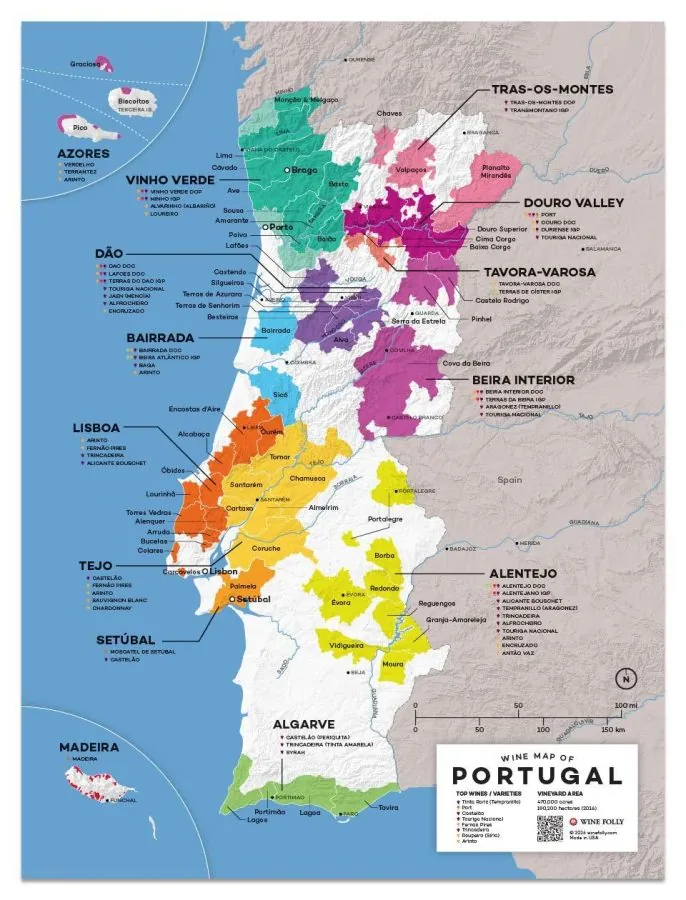
Source: Maps Portugal
1) Phenology on the move: from budburst to flowering and fruit set
When spring arrives wet and with swings in temperature, the vine can advance and stall in waves, compressing phenological stages and increasing risks at fruit set. In 2024, for example, June rainfall favoured primary and secondary downy mildew infections in less well protected vineyards and delayed the average harvest by around a week. According to the IVV in 2024, late spring rain had a direct impact on disease pressure and on harvest scheduling.
The flowering and fertilisation window is especially sensitive. Temperatures outside the comfort range can cause coulure and millerandage, with fewer flowers fertilised and irregular berries. In practical terms, ideal fertilisation values sit in the low twenties Celsius, and anomalous heat or cold episodes in that period penalise fruit set. According to technical content published on this blog previously, vine flowering in Portugal typically takes place between May and June and reacts strongly to thermal deviations at that stage.

Source: Luminosita
2) Heatwaves and drought: what happens in the leaf and in the berry
Heatwaves in Portugal are defined by the IPMA as periods of at least six consecutive days with daily maximums more than 5 ºC above the reference average. Over the past 30 years more summer events have been observed, with greater incidence in the northern and central interior and in the Alentejo. According to the IPMA in 2025, the frequency and duration of heatwaves have increased in recent decades, which raises the risk of sunburn and water stress in Portuguese vineyards.
Physiologically, the vine closes its stomata to save water, reduces photosynthesis and may accumulate sugars faster, while total acidity tends to fall, mainly through the degradation of organic acids during hot ripening periods. National studies link temperature directly to ripening kinetics and to the evolution of sugars and acids, also influencing colour and aromas. According to Portuguese academic work (UTAD and ULisboa) between 2018 and 2021, temperature explains much of the variability in ºBrix and total acidity, with clear consequences for the optimal harvest date.
Bunch sunburn increases in hot, dry air with high radiation after heavy leaf removal. In 2024, technical communications for growers in the Douro reinforced preventive practices and the judicious use of canopy management to reduce damage. According to ADVID in 2024, canopy and green operation management needs to be adjusted in very hot years to mitigate sunburn.

Source: American Vineyard Magazine
Kaolin as the vine's "sunscreen": trials on Douro cultivars show that foliar application of kaolin can reduce heat stress and incident radiation with no negative effects on composition, making it a useful tool during heatwaves. According to UTAD in 2020 and 2023, kaolin application is compatible with the technological quality of the grapes in Trincadeira, Tinta Roriz and Touriga Nacional.
3) Wet springs and disease: why downy mildew takes off
Rainy springs raise leaf wetness and lengthen wetting periods, opening the door to downy mildew and powdery mildew. In 2024, the IVV noted that June rainfall favoured infections in less well protected vineyards, requiring adjusted protection strategies and close monitoring. The disease advanced furthest where treatment windows were missed.
For downy mildew, in 2025 ADVID published a technical handbook that sets out the biology of the pathogen and the critical points for forecasting and decision making, tailored to the reality of the Douro but with practical applicability in other regions. Understanding the downy mildew cycle and combining warnings, phenology and environmental conditions is decisive in wet years.

Source: Agriculture Basf
4) Rain as harvest approaches: splitting, Botrytis and difficult decisions
When it rains at veraison and above all close to harvest, the risks of berry splitting, Botrytis infections and sugar dilution all increase. Portuguese technical literature recommends reducing vigour and canopy density to encourage air circulation, and using cover crops or grassing to improve trafficability and health. According to ISA/ULisboa, grassing can reduce the incidence of Botrytis and help ripening by moderating vigour.
The IVV's regional forecasts in years with rainy springs frequently point to localised losses and harvest delays, with wide variability between plots. According to the IVV in 2024 and the national technical press, in wet campaigns a phased harvest strategy, by plot and by aspect, becomes essential to minimise rot damage.

5) Hail and gales: wounds, scarring and direct production loss
Early summer convective events, sometimes very localised, have caused severe damage in the Douro Demarcated Region and elsewhere. In 2021, large diameter hail episodes caused significant losses in Douro plots. According to news reports from 2021, it was necessary to assess the damage and act quickly to mitigate wounds and secondary infections.
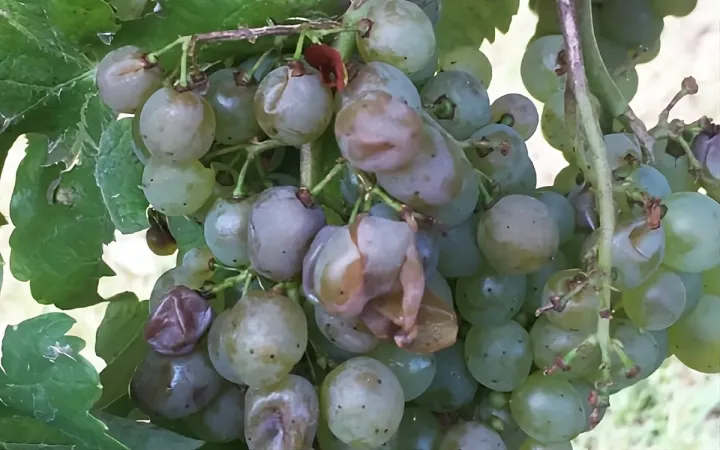
Source: Revista Adega
6) Late frosts: less frequent in some places, but with a heavy impact when they occur
Spring frost damages buds and young shoots, and can force regrowth with a production penalty and uneven ripening. Portuguese regional guides and technical circulars set out post-event care to help plants recover and to guide summer pruning. According to DRAP Norte in 2020, training after a frost should remove necrotic tissue and make use of healthy parts, stabilising the plant for the rest of the campaign.
For risk management, the IPMA provides agrometeorological products with minimum temperature, ET0 and soil water percentage that help anticipate dangerous windows and plan mitigation measures, including late pruning in higher risk areas. According to the IPMA in 2025, the viticulture platform offers operational data that is useful for decisions on the ground.
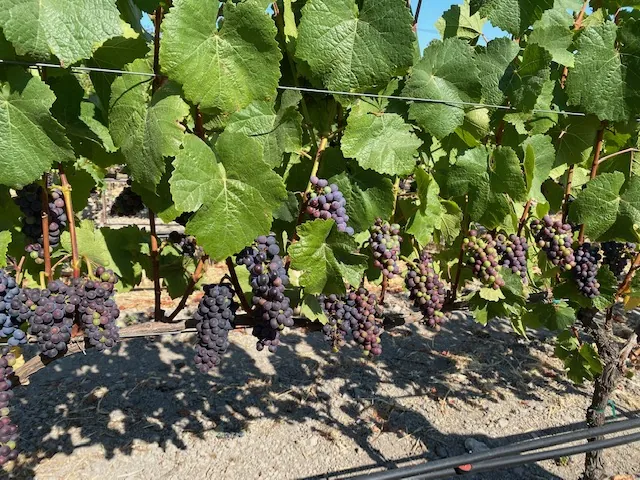
Source: Advancedvit
7) Effects on grape composition and oenological quality
In ripening accelerated by heat and drought it is common to see high ºBrix with low total acidity and higher pH, which can reduce freshness and stability and complicate phenolic extraction. Portuguese studies show that temperature during ripening shapes colour, aromas and the evolution of sugars and acids. According to UTAD and ULisboa in 2018 and 2011, accumulated heat is a strong predictor of the technological composition of the grape, with a direct impact on the optimal harvest date.

Source: Appc
8) Regional differences that matter in the field
In the Minho, rainy springs and humid breezes raise downy mildew pressure, requiring a careful protection calendar and canopy aeration. In the Douro, dryland farming and heatwaves raise the risk of sunburn and water stress, with localised hail introducing strong production variability between blocks, as seen in 2021. In the Alentejo, the combination of heat and water deficit makes controlled deficit irrigation critical, where legally applicable, along with the use of kaolin and cover crops to conserve water and moderate the temperature of the canopy microclimate. According to the IPMA in 2025 on heatwaves, the IVV in 2025 and the Douro hail reports of 2021, this regional reading is consistent with the patterns observed.
9) Practical adaptation strategies in the Portuguese vineyard
In years of extremes, technique counts. Below are measures based on national studies and guides.
Canopy and bunch microclimate management. Adjust leaf removal and suckering, avoiding sudden exposure of bunches before or during heatwaves. In wet years, opening air corridors reduces wetness and Botrytis pressure. According to ADVID in 2024 and 2025, green operations and the physiological principles of pruning should be adapted to the year in order to balance vigour, health and quality.
Cover crops and grassing. On slopes, ground cover reduces erosion, improves trafficability and can moderate vigour, which is associated with lower Botrytis incidence and better ripening. According to ISA/ULisboa in 2012 and ADVID technical documents, grassing is recommended in many hillside situations.
Physical and chemical protection against heat. Kaolin applications in more exposed blocks, choosing row orientations and cane heights that shade the bunch zone at the peak of summer and, where possible, using support irrigation based on ET0 and soil moisture. According to UTAD in 2020/2023 and the IPMA in 2025, kaolin and evapotranspiration data help reduce stress and plan water use sensibly.

Source: Vinha dos Folgados
Close monitoring of ripening. In hot years, the window of balance between sugar, acidity, pH and phenolics can shorten. Tracking ºBrix, total acidity, pH and colour weekly, and preparing a plot by plot harvest, is decisive. According to national studies on ripening dynamics, accumulated degree days explain the evolution of ºBrix and acidity well, making it possible to anticipate critical dates.
Disease control tailored to the year. With wet springs and variable summers, plan downy mildew and powdery mildew protection on the basis of risk, phenology and local forecasts, using recent technical handbooks and regional warnings. According to ADVID in 2025, mastering the downy mildew cycle and including forecasting in the decision reduces unnecessary treatments and failures at peak risk.
Soil and nutrition. Maintain organic matter and structure to improve water holding capacity and resilience to extremes. National tools such as INFOSOLO and INIAV services make it possible to characterise pH, organic carbon and CEC by region and to ground fertilisation decisions in data. According to INIAV in 2021 and 2025, sustainable soil management is a pillar of adaptation to climate change.
10) When the weather decides the harvest: logistics and winery
Years of extremes call for harvesting in short windows with agile teams. In campaigns with strong heat, picking at dawn lowers fruit temperature and helps preserve acidity and volatiles. When rain threatens, selective harvesting by block and by plot according to aspect and soil makes it possible to prioritise grapes more exposed to rot. Harvest reports from national producers in 2023–2024 describe precisely these fine tuning strategies according to the weather. According to sector reports and campaign notes, staggered and adaptive harvesting has been the most effective response.

Source: Revista Adega
11) Portuguese tools that are worth their weight in gold day to day
For planning irrigation and assessing stress, the IPMA's viticulture products provide daily ET0, soil water percentage, temperatures and accumulated heat by municipality. According to the IPMA in 2025, these indicators are updated and geared towards agriculture.
In the Douro, projects such as INFRAVINI were created to support the management of climate change impacts with real time and historical data, bringing science closer to decisions in the block. According to INESC TEC and sector news since 2022, the platform aims to extend to other regions and accelerate technology transfer to growers.
12) In summary: which practical signs to watch and how to act
In hot, dry years in Portugal, expect faster ripening, falling acidity and a risk of sunburn. Adjust leaf removal, consider kaolin and follow ET0 for support irrigation where permitted. In wet years, concentrate vigilance on downy mildew and Botrytis and use grassing and canopy aeration to reduce wetness. In regions at risk of hail, plan rapid responses for wound healing and post-event hygiene. According to the IVV's summaries for 2024–2025 and the IPMA on heatwaves, it is the combination of operational data with an agronomic reading of the block that makes the difference at harvest.
Keep exploring
The Galega, the Cobrançosa and the Verdeal: The Portuguese Native Varieties Conquering the World
At a time when olive oil is establishing itself as one of the most studied and most highly valued foods of the Mediterranean diet, Portugal is emerging as one of the leading players in the global market.
Climate change in Portuguese vineyards: what is changing and how to adapt?
In 2024, the International Organisation of Vine and Wine (OIV) recorded the lowest level of world production since 1961.

Frequently Asked Questions: Artificial Intelligence in Tourism Course
What is the aim of the AgroB Business School course on Artificial Intelligence in Tourism?