



Tourism as a strategic axis of regional development
Tourism in Portugal has established itself as one of the most significant engines of the national economy, accounting for a substantial share of Gross Domestic Product and creating jobs across a range of sectors. Beyond its direct economic impact, tourism has increasingly been seen as a strategic tool for regional development, one that adds value to inland territories, promotes territorial cohesion and strengthens cultural identity. In this context, Turismo de Portugal, as the body responsible for implementing national tourism policy, plays a central role in setting the guidelines that frame and steer regional and local action.
Tourism as a strategic axis of regional development
1. Tourism as a driver of territorial cohesion
Tourism has been adopted as a key public policy for reducing the disparities between the coast and the interior. The Tourism Strategy 2027 explicitly identifies territorial cohesion as one of its central pillars. This means that tourism is not merely an economic activity but a tool for attracting investment, improving infrastructure and retaining population in low-density territories. In this sense, tourism can act as a catalyst for cross-cutting policies, from mobility to spatial planning, strengthening the links between strategic sectors such as agriculture, culture and the environment (Turismo de Portugal, 2023).
2. Integration into national and European agendas
Tourism as a strategic axis is also expressed in the way Portugal aligns it with European guidelines, notably under the European Green Deal and the 2030 Agenda. The commitment to sustainable, digital and resilient destinations is in step with European Union policy, securing access to Community funds such as the RRP and Portugal 2030, which include financing lines aimed at tourism in less competitive regions. The vision is clear: to use tourism as a vehicle for meeting sustainable development targets, generating skilled employment and adding cultural value (European Commission, 2022).
3. Examples of regional application
It is also worth illustrating how this strategic role is already taking shape in specific regions.
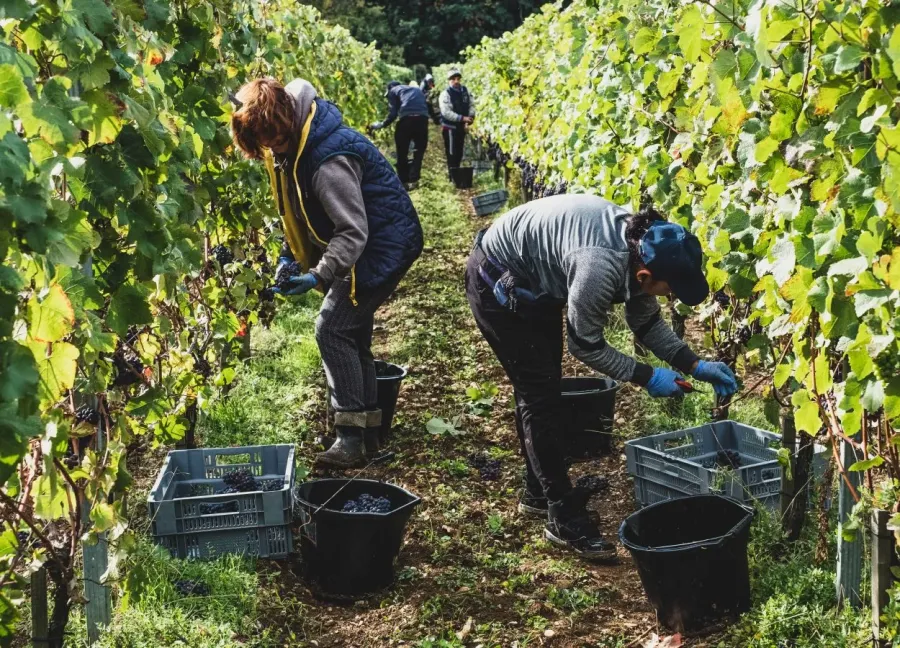
• In the Alentejo, tourism has been a driver for products such as wine tourism, olive oil tourism and nature tourism, bringing farms into tourist circuits and strengthening territorial brands.
• In the Douro and the Dão, wine tourism has an international profile, raising the visibility of these territories and creating added value for local producers.
• In the inland Centre region, programmes such as Aldeias de Portugal show how small localities can become recognised tourist hubs while preserving cultural authenticity and stimulating new forms of local economy.
These examples demonstrate that tourism, when well structured, works as a factor of regional integration, generating employment, retaining population and promoting balanced, sustainable development.
4. A strategic outlook for the coming decade
Positioning tourism as a strategic axis of regional development does not end with current initiatives. Looking ahead, the priority will be to turn Portugal into a sustainable and innovative destination that can balance economic growth, social inclusion and environmental protection. This framing places tourism not merely as an economic sector of considerable weight, but as a genuine lever for regional development, in line with the Sustainable Development Goals and the Tourism Strategy 2027.
The role of Turismo de Portugal in setting the guidelines
Turismo de Portugal plays a central role in defining the strategic direction of the country's tourism sector. As the public body responsible for coordinating national tourism policy, it ensures that national lines of action are consistent with sustainable development objectives, with adding value to the territory and with raising the quality of the offer. The Tourism Strategy 2027 and the more recent action plans are concrete examples of this function, since they set clear targets for innovation, sustainability and diversification of demand, serving as a guide for regional and local operators.
The organisation also ensures that the national scale and regional realities are joined up. A close working relationship with the Regional Tourism Boards makes it possible to adapt overarching guidelines to the specific features of each territory, promoting projects tailored to local characteristics and avoiding overlapping investment. This coordination ensures that policy is not confined to a centralised view but also incorporates regional dynamics and needs.
Another important strand of Turismo de Portugal's work is its investment in human resources. The network of Hotel and Tourism Schools has been essential in training professionals in key areas such as hospitality, catering, wine tourism, management and rural tourism. Continuing professional development, with particular emphasis on digital skills and sustainability practices, has come to the fore in recent years, keeping pace with changing demand and preparing the sector to meet new challenges.
Internationally, Turismo de Portugal is also responsible for projecting the VisitPortugal brand. The guidelines extend to how the country positions itself in foreign markets, promoting an image of an authentic, sustainable and diverse destination. In 2023 and 2024, international campaigns focused on promoting year-round experiences and raising the profile of lesser-known regions, helping to counter seasonality and strengthen the appeal of low-density territories.
Impact on low-density regions
The impact of tourism on Portugal's low-density regions has become more pronounced in recent years, particularly after the post-pandemic recovery, when patterns of tourist demand shifted significantly. Between 2020 and 2022 there was a clear move towards destinations away from the major urban centres and the busiest coastal areas, with rural and inland territories recording notable growth rates in local accommodation and in rural tourism units (INE, 2022).
In 2024, rural tourism and country-house establishments totalled 1,987 units, growth of 2.3 per cent on the previous year. These properties offered 15,600 rooms (+3.9 per cent) and 34,100 beds (+3.7 per cent). They received 1.4 million guests (+5.4 per cent) and recorded 3.1 million overnight stays (+5.7 per cent), of which 55.3 per cent were residents, confirming the importance of the domestic market to these territories (INE, 2024).
Nationally, tourist accommodation received 30 million guests and recorded 77.2 million overnight stays in 2023, increases of 13.2 per cent and 10.7 per cent respectively on 2022 (INE, 2023). In 2024, overnight stays rose to 80.3 million (+4.0 per cent) and guests to 31.6 million (+5.2 per cent). Accommodation revenue in the sector approached 6.7 billion euros, an increase of 10.9 per cent on the previous year (Turisver, 2024).
Within the specific segment of rural tourism and country-house accommodation, the most recent figures confirm its vitality. Between 2023 and 2024 this type of accommodation recorded the largest percentage rise of any category of supply, growing by 6.3 per cent and outpacing both traditional hotels and local accommodation (ADRACES, 2025).
Economically, this momentum has allowed households to diversify their income and complement farming activity. Many local producers use the tourism side of the business to sell their agri-food products, such as wines, olive oils, cheeses and cured meats. Demand for immersive experiences, including grape harvests, olive oil tastings and interpretive walking trails, strengthens the sustainability of farms and creates short value chains (UN & European Committee of the Regions, 2024).
Socially, this growth is an opportunity to counter depopulation and create the conditions to retain younger residents. Tourism-related jobs in rural areas, spanning accommodation, catering, tourist entertainment and local retail, act as an incentive to entrepreneurship and help keep essential services running in low-density villages and small towns. The Revive and Revive Natureza programmes, run by the Portuguese State, are further examples of how vacant or disused buildings have been converted into tourism units while generating new social and economic dynamics in inland areas (Turismo de Portugal, 2023).
In cultural and heritage terms, tourism has driven the restoration and appreciation of traditions and historic buildings. By 2023, 83 villages had been classified as "Aldeias de Portugal", evidence of a commitment to authenticity and to preserving regional identity, while also strengthening local community pride and attracting visitors interested in genuine experiences (RNAP, 2023). The Aldeias Históricas and Aldeias do Xisto networks are equally clear examples of how tourism can turn small settlements into landmark destinations, promoting local culture, crafts and gastronomy.
Environmentally, tourism in low-density regions has encouraged the conservation of traditional farmed landscapes and greater appreciation of protected areas. The Peneda-Gerês National Park, for example, recorded more than 66,000 visitors in 2022, up from 45,000 the previous year (ICNF, 2022). This growing demand has continued in subsequent years and confirms the appetite for nature tourism, while calling for careful management to balance conservation with economic use. Sustainability certification schemes promoted by Turismo de Portugal have gained ground and encourage rural accommodation units to adopt environmentally friendly practices such as energy efficiency, water reuse and the use of low-impact local produce (Turismo de Portugal, 2024).
A further consideration concerns the challenges ahead. Despite the growth, many of these regions still face structural problems such as a shortage of skilled labour, the absence of regular public transport and poor digital coverage in some areas. These factors limit competitiveness and call for a coordinated response through public policy, capacity-building programmes and closer alignment with Community funds (Minhaterra, 2024). Seasonality remains another obstacle, above all in inland regions that depend heavily on the summer and on holiday periods. A focus on year-round tourism products, such as wine tourism, wellness tourism and scientific tourism, may be the key to levelling out demand.
Challenges and future prospects
Seasonality remains one of the greatest challenges for tourism in Portugal. Many regions depend heavily on the summer and on a handful of holiday periods, producing concentrated peaks in demand and long stretches of low activity. This limits the return on investment and undermines the sustainability of the sector, particularly in inland regions. The answer lies in creating diverse tourism products spread across the year, such as wine tourism, olive oil tourism, religious tourism, scientific tourism and senior tourism, all of which have the potential to attract steady flows in traditionally quieter periods (Turismo de Portugal, 2023).
A further challenge is the shortage of skilled labour. The sector faces growing difficulties in recruiting staff, in hotels as well as in catering and tourist entertainment. This shortage is linked to factors such as the seasonal nature of the work, uncompetitive pay and the high international mobility of workers. The future of tourism will depend on the ability to retain talent, make careers more attractive and invest in vocational training, including digital skills and sustainability management (Turismo de Portugal, 2023).
The digital transition is equally a priority. Many tourism operators in low-density regions still have a weak online presence and little capacity for international promotion. Investment in digital tools, booking platforms, place marketing and smart management solutions is decisive if competitiveness and the visitor experience are to improve. Programmes such as NEST, the Tourism Innovation Centre, exist to accelerate this transition and support small and medium-sized businesses in the sector (NEST, 2024).
Environmentally, the challenges are significant. Climate change has a direct impact on tourism, with phenomena such as prolonged drought, forest fires and heatwaves affecting essential resources and the perceived safety of the destination. The Portuguese Environment Agency noted in 2024 that much of the national territory faces water stress, with direct implications for farming and tourism alike (APA, 2024). The sector will have to invest in energy efficiency, sustainable water management and environmental certification if it is to remain competitive and attractive in a market increasingly alert to sustainability.
As for future prospects, several trends are already shaping global tourist demand. The World Tourism Organization forecasts that by 2030 sustainable tourism, nature tourism and wellness tourism will be among the fastest-growing segments (UNWTO, 2023). Portugal is well placed to follow this trend, provided it can make the most of its natural and cultural resources in a balanced way, above all in low-density territories.
Innovation and new product development also stand out as strategic directions for the future. Bringing tourism together with science, technology and wellbeing, investing in smart destinations and tailoring the offer to specific visitor profiles, such as digital nomads, senior travellers or multigenerational families, can open up new market opportunities (Turismo de Portugal, 2024).
Finally, territorial cohesion remains an underlying challenge. The future of tourism in Portugal will depend on the ability to reduce the disparities between the coast and the interior, ensuring that the sector's economic, social and environmental benefits are spread more evenly. Achieving this will require national policy to be joined up with regional strategies, Community funds to be put to good use and local communities to be actively involved in planning and managing destinations.
Conclusion
Tourism is today a strategic axis of regional development in Portugal, not only for its direct economic impact but also for its capacity to generate territorial cohesion, add value to local cultures and create synergies with sectors such as agriculture. The role of Turismo de Portugal has been decisive in setting national and regional guidelines, ensuring an integrated, sustainable and innovative vision.
For rural and farming territories, this vision represents a unique opportunity for recognition and growth. The combination of natural heritage, cultural traditions and agricultural production positions Portugal as a distinctive tourist destination, able to attract visitors in search of authenticity and quality experiences.
Keep exploring

The Galega, the Cobrançosa and the Verdeal: The Portuguese Native Varieties Conquering the World
At a time when olive oil is establishing itself as one of the most studied and most highly valued foods of the Mediterranean diet, Portugal is emerging as one of the leading players in the global market.
Climate change in Portuguese vineyards: what is changing and how to adapt?
In 2024, the International Organisation of Vine and Wine (OIV) recorded the lowest level of world production since 1961.

Frequently Asked Questions: Artificial Intelligence in Tourism Course
What is the aim of the AgroB Business School course on Artificial Intelligence in Tourism?