


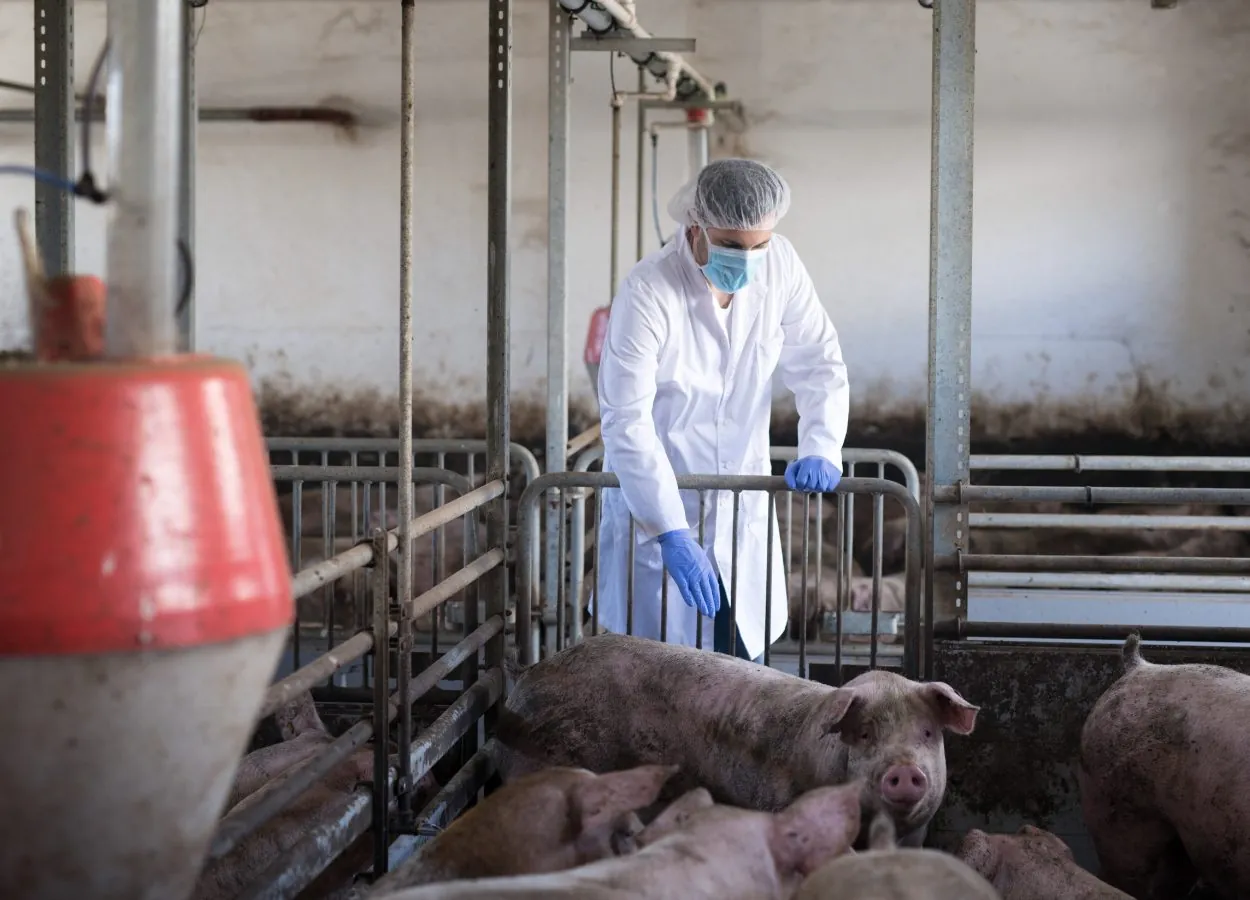
The five pillars of animal welfare
Talking about animal welfare means talking about a concept that goes beyond ethics and reaches directly into the economic, productive, environmental and social spheres. At a time when consumers are increasingly attentive to the conditions in which animals are raised, and when visitors are looking for authentic experiences connected to the rural world, guaranteeing suitable conditions for animals is no longer merely a legal requirement: it has become a competitive advantage.
In Portugal, the legal framework has been consolidated over recent decades, keeping pace with and often exceeding the standards set by the European Union. Decree-Law 135/2003 and Decree-Law 155/2008 are essential references, but the country has gone further, creating complementary regulations that require better housing, feeding and movement conditions. The guidelines of the World Organisation for Animal Health, which define the well known five freedoms, are the basis of what we call here the five pillars of animal welfare.
Feed and water: the basis of productivity
The first pillar is access to feed and water in sufficient quantity and quality. Water, often undervalued, is so critical that on dairy farms it must meet the same parameters as water intended for human consumption. Poor water quality can cause disease, reduce feed intake and compromise milk and meat production. In the same way, feeding must be carefully planned and adapted to nutritional needs that vary with the animals' age, weight, reproductive stage or production stage.
In integrated production systems, fibre must be included in the diet, while in intensive systems for beef cattle, feeds such as straw play a double role: they improve digestibility and reduce foot problems. On extensive farms, grazing is a natural way to ensure welfare, reduce costs and strengthen the animals' connection with their environment. In pig farming, the use of milk replacers helps increase piglet survival, reducing mortality and raising economic returns.
Feed management is also a matter of image and trust. Increasingly, consumers want to know where the meat, milk or cheese they consume comes from. Ensuring that animals have balanced nutrition safeguards not only their health but also food safety and the quality of the end product.

Comfort and housing: space as a welfare factor
The second pillar is suitable housing. Buildings must guarantee thermal comfort, hygiene, protection from the weather and conditions that encourage rest. An animal that rests more is a more productive animal. Studies show that dairy cows with access to clean, comfortable bedding produce more milk and of better quality.
Ventilation is another essential element. Gases such as ammonia, carbon dioxide or methane, when they build up, directly affect respiratory health. Correctly sizing the space avoids overcrowding, which leads to stress, aggression and the spread of disease. Floors must be safe, reducing falls and injuries, and bedding management must keep it dry and clean.
In pig farming, outdoor systems are an example of how housing can be adapted to promote welfare, since they offer more individual space and reduce the problems typical of confinement. From a tourism point of view, well kept facilities convey trust and are seen as proof of professionalism and respect for the animals.

Health and biosecurity: prevention pays better than treatment
The third pillar, freedom from pain, injury and disease, is perhaps the most strategic in economic terms. Keeping animals healthy reduces treatment costs, production losses and mortality risk. Biosecurity is the first protective shield. It involves measures such as quarantine for newly arrived animals, disinfection of vehicles and equipment, the use of clean work clothing and restrictions on the movement of people around the farm.
Record keeping and traceability are indispensable tools, making it possible to respond quickly and effectively to outbreaks. The field logbook, which must be kept for at least three years, ensures that treatments, husbandry and vaccination are monitored.
Vaccination is an investment that delivers greater resistance and opens doors to international markets, since many trade flows depend on health certification. But no vaccine is effective without adequate hygiene and husbandry conditions. Medicines must be used responsibly, limited to what is strictly necessary and always under veterinary supervision, respecting withdrawal periods to avoid residues in products of animal origin.
As for painful procedures such as castration and tail docking in pigs, the trend is to restrict them to a minimum. Where they are unavoidable, they must be justified by records and carried out under anaesthesia and analgesia, with a preference for alternatives such as immunocastration, which reduces suffering and improves public perception of the sector.
Humane handling and transport: reducing fear and stress
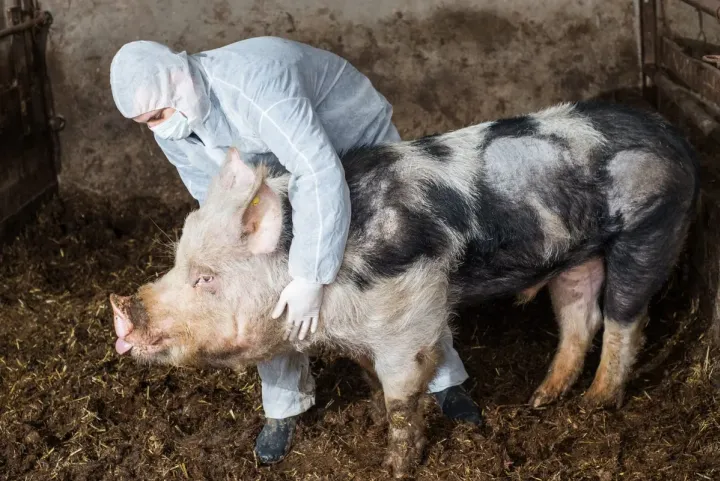
The fourth pillar is freedom from fear and distress. Here the stockperson's role is central. The way animals are handled day to day influences their behaviour and productivity. Animals subjected to excessive noise, aggression or rough handling become anxious, harder to handle and less productive.
On dairy farms, calm in the milking parlour is a clear example. Quiet environments, with well designed routes and without unnecessary steps or ramps, reduce cows' stress and increase milking efficiency.
Transport is another critical moment. Long journeys in poor ventilation or cramped conditions cause suffering and compromise meat quality, producing defects such as DFD meat (Dark, Firm and Dry). Careful transport planning, respecting rest periods and appropriate stocking density, is a legal requirement but also a practice that protects profitability.

Source: Fundação Roge
Expressing natural behaviour: respecting the animal's nature
The fifth pillar is the freedom to express natural behaviour. Each species has instincts and behavioural needs that must be respected. In pigs, for example, access to manipulable materials such as straw or simple objects reduces frustration and aggression. Uniform groups and enough space for collective resting are equally fundamental.
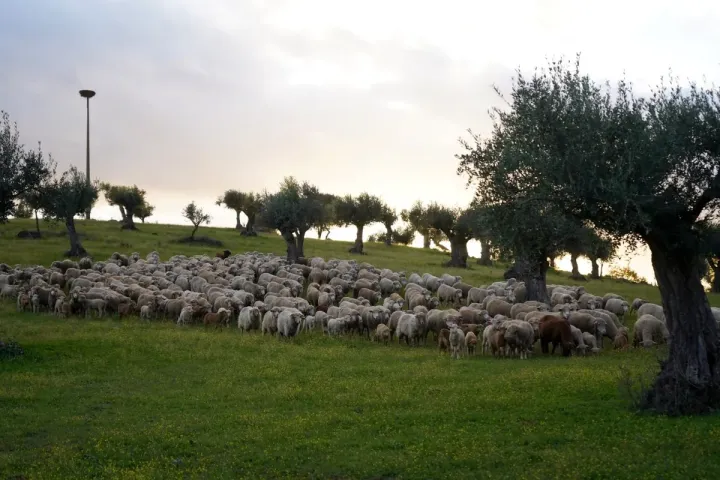
In sheep, shearing is not just a husbandry practice but a health necessity, since continuous wool growth can lead to overheating and hamper mobility. In cattle, allowing access to pasture or exercise areas encourages social behaviour, reduces stress and improves physical condition.
From a tourism point of view, watching animals express their natural behaviour adds value to the visitor experience, as visitors increasingly look for authenticity and respect for natural rhythms.

Sustainability and waste management: the sixth element
Although the five pillars are the foundation, we cannot forget the role of waste management and sustainability, which acts as a cross cutting sixth element. Portugal's new legal regime for livestock activity sets out rules for effluent management, and effluents should be seen not as waste but as valuable by-products. Using slurry and manure on the land returns nutrients to the soil, increases fertility and closes the production cycle. Composting and treatment technologies make it possible to turn waste into organic soil improvers, or even to reuse water on pig farms, reducing environmental impact and strengthening the farm's sustainable image.
Implementing these five pillars is not just about complying with the law. It is a strategic decision that lifts the farm to a higher level. Healthy, respected animals translate into greater productivity, lower risk of economic losses and greater acceptance by consumers. In rural tourism, they are a differentiating element that reinforces trust and the value of the experience.
Animal welfare is thus a bridge between ethics and economics, between production and tourism, between tradition and innovation. It is the reflection of a modern, competitive agricultural sector aligned with society's expectations. Ultimately, investing in animal welfare is investing in the sustainability and competitiveness of Portuguese farms.
Keep exploring
The Galega, the Cobrançosa and the Verdeal: The Portuguese Native Varieties Conquering the World
At a time when olive oil is establishing itself as one of the most studied and most highly valued foods of the Mediterranean diet, Portugal is emerging as one of the leading players in the global market.
Climate change in Portuguese vineyards: what is changing and how to adapt?
In 2024, the International Organisation of Vine and Wine (OIV) recorded the lowest level of world production since 1961.

Frequently Asked Questions: Artificial Intelligence in Tourism Course
What is the aim of the AgroB Business School course on Artificial Intelligence in Tourism?