


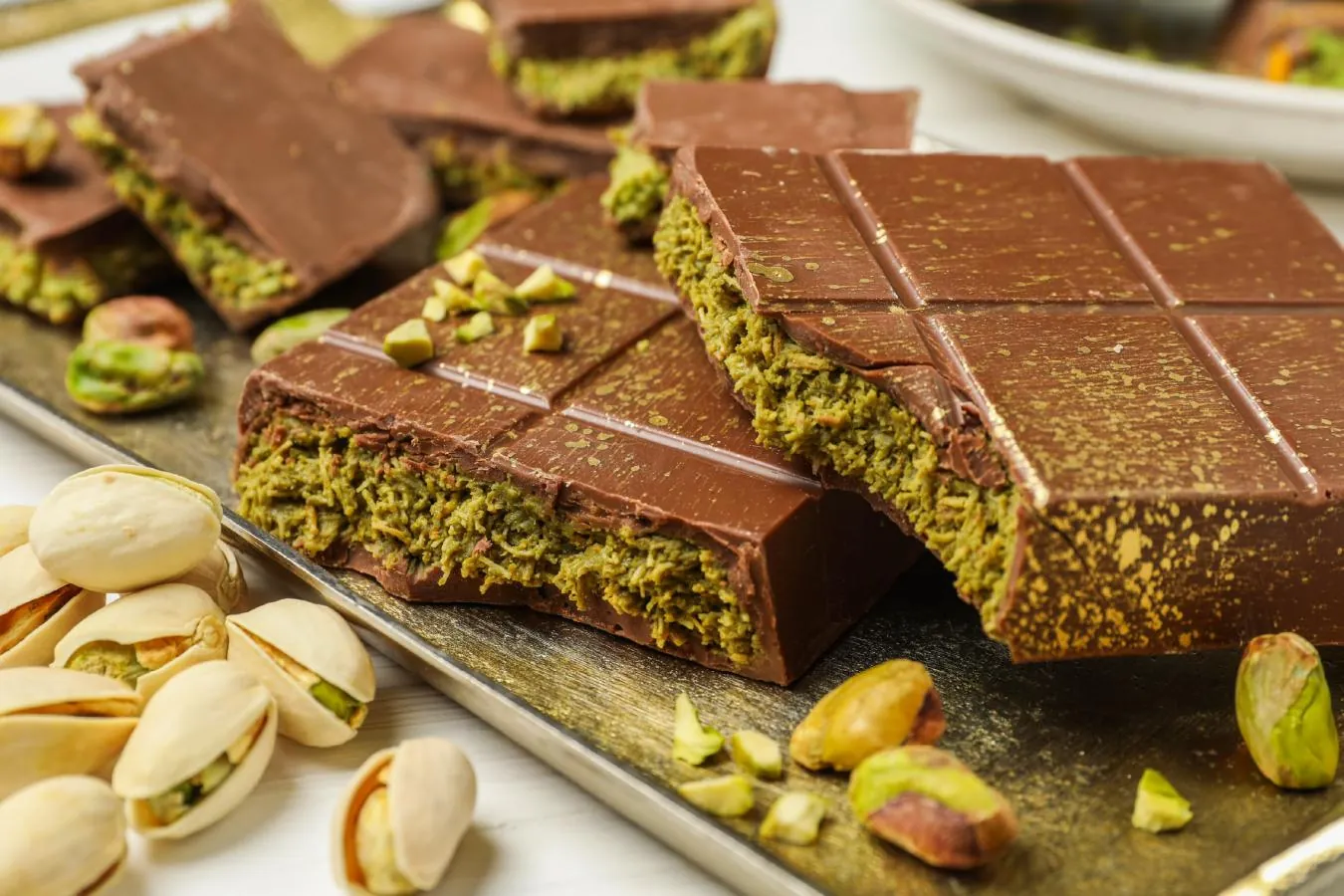
The best part of Dubai chocolate is the filling: get to know the pistachio
The pistachio comes from the tree Pistacia vera, native to the Middle East and Central Asia. It has been cultivated for thousands of years and was already prized by kings and emperors. Today the largest producers worldwide are Iran, the USA (California in particular), Turkey and Syria.
It is not just about flavour. The pistachio is a genuine nutritional powerhouse:
- Rich in protein and fibre, ideal for anyone looking to feel full.
- A source of good fats (monounsaturated).
- Contains antioxidants such as lutein and zeaxanthin, good for eye health.
- High in potassium and vitamin B6.

In patisserie, the pistachio has been gaining ground
- Fillings for chocolates, bonbons and truffles;
- A main ingredient in creams and ganaches;
- Artisan ice creams and fine cakes.

But what are the ideal conditions for growing this crop?

The Alentejo, the Interior Centro and some parts of the Algarve offer perfect conditions for planting it.
The pistachio has a long production cycle: full fruiting comes only 7 to 10 years after planting. The trees can live for more than 100 years, however, which makes this crop a long-term investment.

It is a dioecious crop… That means you have to plant female trees (which bear the fruit) and male trees (which pollinate).
The ratio should be 1:8, that is, 1 male for every 8 females.
Production alternates, with years of high yield followed by years of lower output.
To minimise this effect, growers use practices such as pruning and balanced fertilisation, making sure the trees stay in good physiological condition.
Thinking of starting a pistachio orchard?
Take a look at the Cultura do Pistácio course, taught by José Martino!
Keep exploring
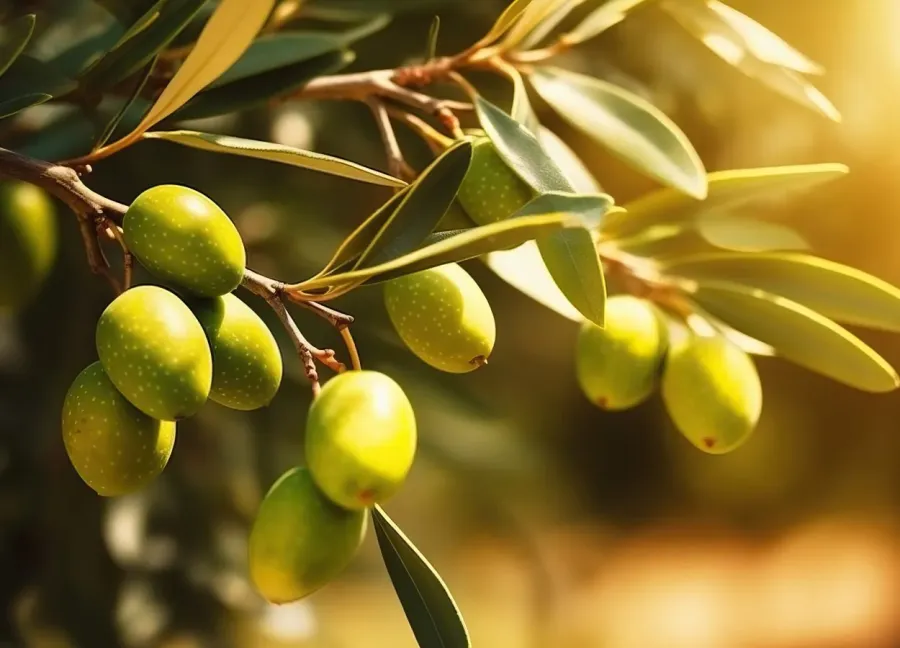
The Galega, the Cobrançosa and the Verdeal: The Portuguese Native Varieties Conquering the World
At a time when olive oil is establishing itself as one of the most studied and most highly valued foods of the Mediterranean diet, Portugal is emerging as one of the leading players in the global market.
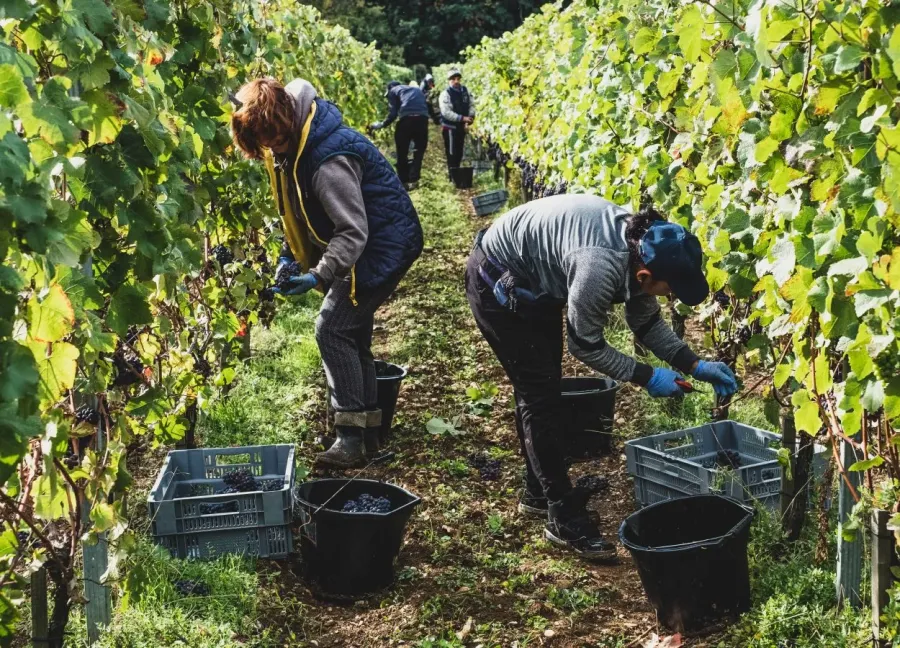
Climate change in Portuguese vineyards: what is changing and how to adapt?
In 2024, the International Organisation of Vine and Wine (OIV) recorded the lowest level of world production since 1961.

Frequently Asked Questions: Artificial Intelligence in Tourism Course
What is the aim of the AgroB Business School course on Artificial Intelligence in Tourism?