


Bacterial Canker of Kiwifruit: A Threat to Actinidia Production
Kiwifruit, widely appreciated for its flavour and nutritional properties, faces significant challenges in production because of Bacterial Canker of Kiwifruit. This disease, caused by the bacterium Pseudomonas syringae pv. actinidiae (PSA), has caused severe damage to the crop in various parts of the world, including Portugal. In this article, we look at the symptoms, the biological cycle, the risk factors and the control measures associated with this plant health threat.
Bacterial Canker of Kiwifruit is a disease that affects species of the genus Actinidea, including the green (Actinidea deliciosa) and yellow (Actinidea chinensis) varieties. The bacterium is highly aggressive, especially in favourable weather conditions (cold, wet winters followed by wet springs), and can severely compromise the productivity and economic viability of the crop.
Since it was first identified in Asia, Bacterial Canker of Kiwifruit has spread rapidly to other kiwifruit-producing regions, such as Europe, South America and New Zealand.
Recent studies indicate that Portugal, Italy and Greece are highly susceptible areas for the development of the disease because of their soil and climate conditions which, in the face of climate change, will translate into milder winters, allowing the symptoms to become permanent throughout the year (EPPO, 2011).
PSA is a bacterium that survives and multiplies in woody tissue, particularly during spring and summer. Some cultivars, such as yellow kiwifruit (Actinidea chinensis), are particularly vulnerable.
-
Primary infections: These generally occur in spring, when the plant is in active growth.
-
Spread: The bacterium spreads through rain, wind, pollinating insects and even contaminated pruning tools.
-
Favourable conditions:
- Temperatures above 15°C;
- High relative humidity;
- Flowering periods, due to the high susceptibility of floral tissue.
The symptoms appear differently in the various parts of the plant:
Leaves
- Angular water-soaked spots that develop into reddish necrosis;
- Chlorotic (yellowish) halos around the lesions;
- Coalescing necrosis that can cause the affected areas to fall away.

Trunks and Branches
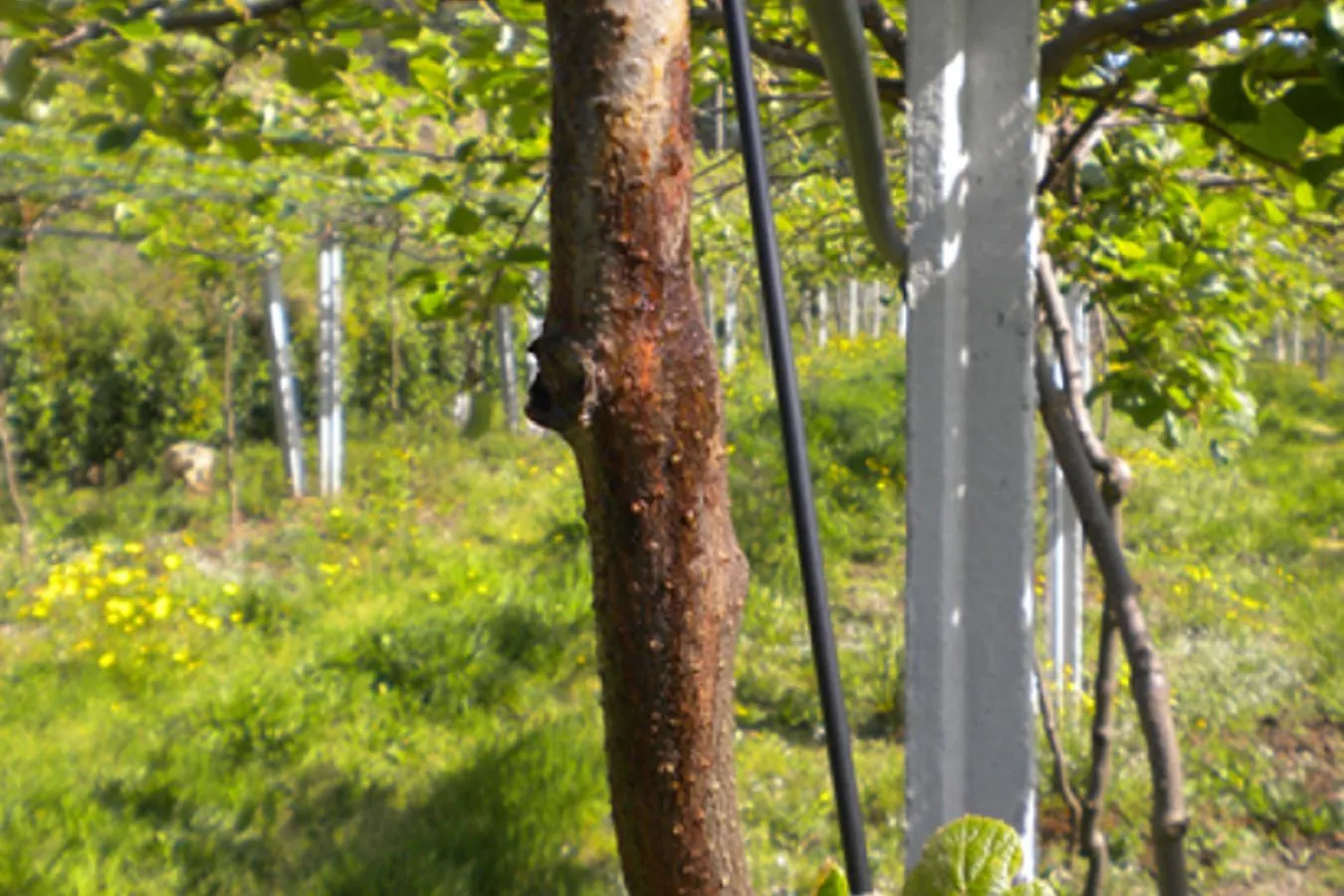
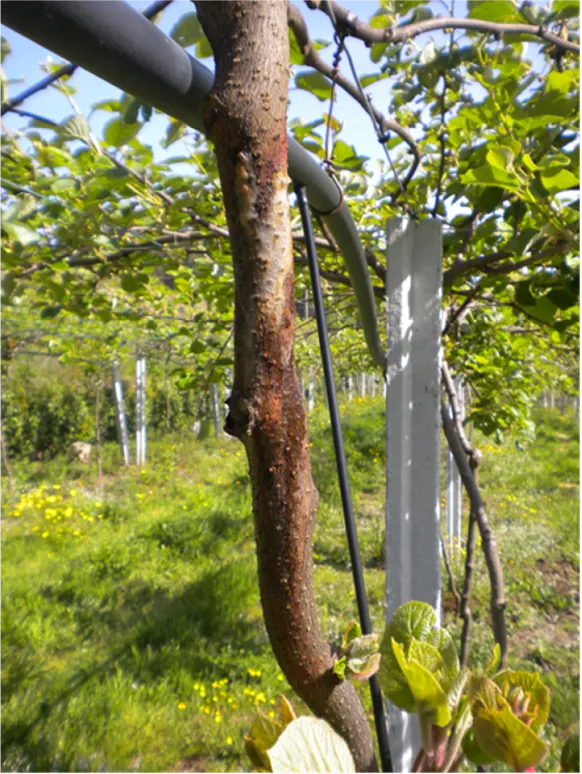
- Cankers with bacterial exudate (a viscous, whitish substance);
- Necrosis of the vascular tissue, resulting in the interruption of the flow of nutrients;
- Death of branches and, in severe cases, of the whole plant.
Flowers and Fruit
- Necrosis in buds and petals during flowering;
- Floral abortion that reduces fruit set;
- Deformed fruit of lower quality.

Prevention and Control Strategies
Controlling Bacterial Canker of Kiwifruit requires an integrated approach, including cultural practices, constant monitoring and, in some cases, the application of plant protection products.
Preventive measures:
- Inspection of plant material: Make sure that young plants and other propagation material are free of the disease;
- Hygiene: Regularly disinfect the tools and equipment used in pruning and harvesting;
- Managing climatic factors: Improve drainage and ventilation in the orchards to reduce excessive humidity.
Monitoring and diagnosis:
- Carry out regular inspections looking for early symptoms;
- Use laboratory tests to confirm the presence of the bacterium.
Chemical and biological control:
- Apply specific bactericides, such as copper-based compounds, at the critical moments of susceptibility;
- Investigate the use of biocontrol agents to limit the proliferation of the bacterium.
Removal of infected plants:
- Eliminate severely affected plants to prevent the bacterium from spreading through the orchard.
Bacterial Canker of Kiwifruit can drastically reduce fruit production and quality, driving up production costs and reducing growers' competitiveness on the global market. Given the economic importance of kiwifruit, especially in countries such as Portugal, it is essential to adopt preventive and control measures as early as possible.
Keep exploring
The Galega, the Cobrançosa and the Verdeal: The Portuguese Native Varieties Conquering the World
At a time when olive oil is establishing itself as one of the most studied and most highly valued foods of the Mediterranean diet, Portugal is emerging as one of the leading players in the global market.
Climate change in Portuguese vineyards: what is changing and how to adapt?
In 2024, the International Organisation of Vine and Wine (OIV) recorded the lowest level of world production since 1961.

Frequently Asked Questions: Artificial Intelligence in Tourism Course
What is the aim of the AgroB Business School course on Artificial Intelligence in Tourism?