


Women in the Rural World: Roots and Achievements – Joana de Castro
Joana de Castro: “Quinta de Lourosa is a business with an emotional component”
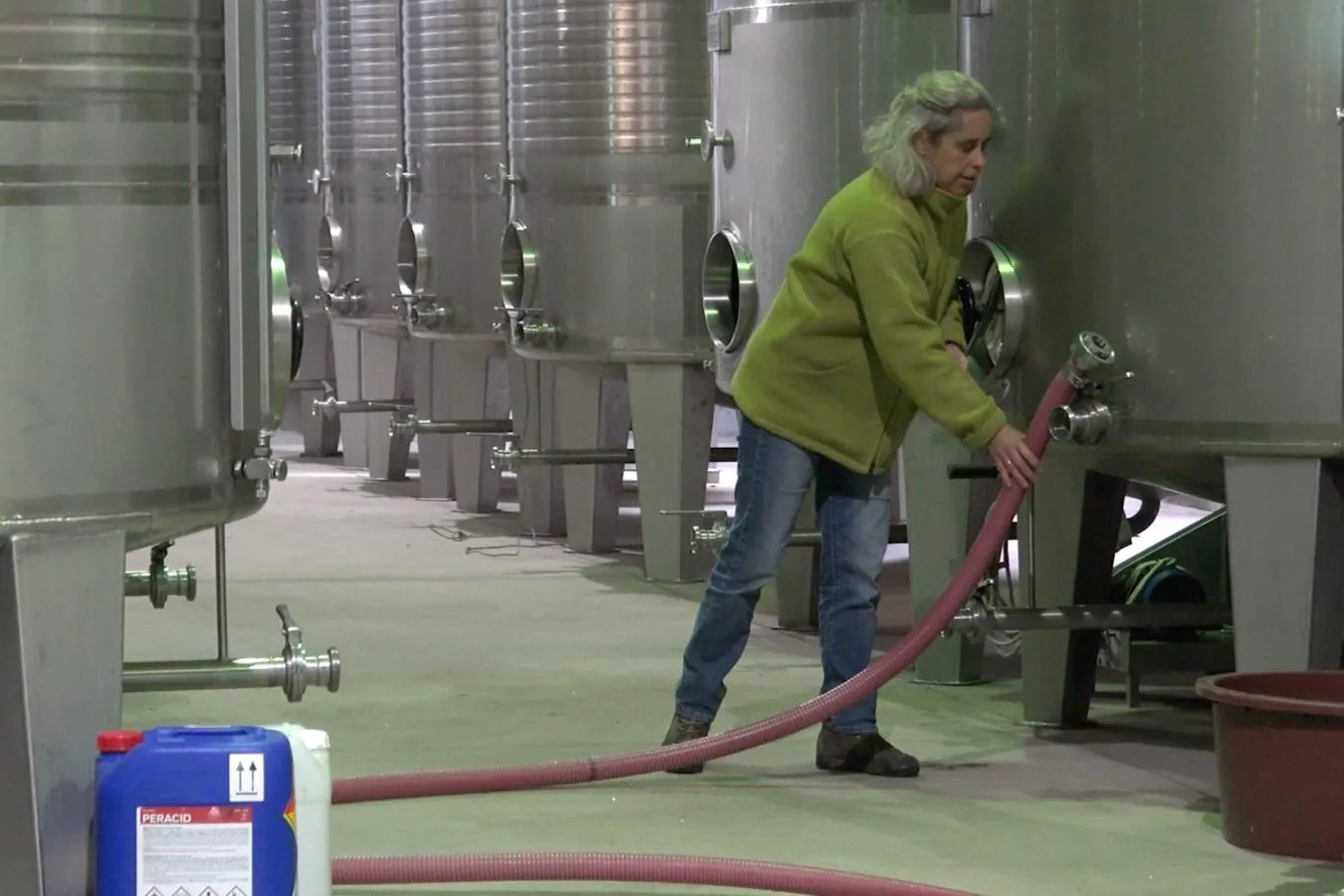
In this interview, Joana de Castro, winemaker and head of wine tourism at Quinta de Lourosa (Lousada), tells us the estate's story and her approach to running it, and leaves a message of encouragement for women who want to join the sector.
In the winding landscape of Lousada stands the superb Quinta de Lourosa, a living testament to a tradition rooted in the heart of a family. Rogério de Castro, the youngest of eight siblings, was the bold visionary who decided decades ago to invest in the family legacy, turning it into a wine-growing oasis. It is the memories of childhood, etched into the stone walls and the whisper of the vines, that bind him inseparably to this place. Even during the years he lived in the capital, he never neglected the link with his essence, returning whenever he could at weekends and on holidays, recovering the scent of the land and the taste of tradition.
Born in Gondomar and known by the epithet “Senhor do Vinho Verde”, after studying at the Instituto Superior de Agronomia and going on to become a full professor at the same university, he found himself irremediably in love with this corner of memories that is Quinta de Lourosa.
After buying the estate, he made Porto his home, settling first in the sprawling city before putting down definitive roots in Lousada around two decades ago. And it is in this fertile soil that a centuries-old inheritance flourishes, under the attentive gaze of his daughter Joana de Castro, his worthy successor.
Joana, who followed the same path as her father, today walks alongside him, sharing his passion for the land and for wine. Over three decades they have witnessed the rebirth of Quinta de Lourosa, which has grown from a modest four hectares to thirty in a continuous and inexorable expansion. Here at Quinta de Lourosa, pride of place goes to the art of viticulture and winemaking, where good grapes and good wines are produced.
But Quinta de Lourosa does not limit itself to producing excellent wine; it is also a wine tourism destination, where hospitality intertwines with tradition. Joana, the estate's winemaker and the restless mind behind its new ideas, is responsible for creating unique experiences: picnics among the vines, dinners paired with wine tastings, and programmes that celebrate the union between vinho verde and the region's cultural richness.
This conversation took place on a winter afternoon, among the rows of vines, where Joana de Castro, a woman with a warm smile who embodies the fusion of tradition and innovation in the world of wine, shared the vibrant story of this place.
How would you describe the moment your passion for viticulture and winemaking was awakened?
I have been going out into the fields with my father since I was very young. Choosing agricultural engineering was undoubtedly influenced by my parents: my mother was an accountant and passed on to me a passion for numbers, while my father, a professor of agricultural engineering, instilled in me a passion for the vines.
How is your personal and professional vision reflected in the way you have approached management at Quinta de Lourosa?
Here at Quinta de Lourosa we try to avoid anything mass-produced, adapting our programmes to our visitors. Every tourist is unique, just as every season in farming brings new opportunities. It is this versatility that allows us to offer authentic experiences all year round.
Quinta de Lourosa goes beyond the mere notion of a business; it is a passion. It is a business with an emotional component. Our business vision in tourism is aligned with our family's personal tastes, without losing sight of our commercial objective. When it comes to wine production, we base ourselves on listening carefully to our customers and on the trends in the market itself.
I am fascinated by the art of winemaking, by the variety of wine profiles and by the capacity for adaptation and innovation we show with each new cycle. I love sharing the history of our region and giving visitors our wines to taste. It is particularly challenging when people tell me they do not like wine, because those are the moments when I take even greater pleasure in persuading them to try. I have had people arrive saying they do not like wine and leave saying they are fans of the Quinta de Lourosa wines.
Which moments do you find particularly challenging as winemaker and manager of the estate?
The most challenging and defining phases as winemaker and manager of the estate are undoubtedly those linked to planting new vines. The behaviour of the vines is unique, and every change of terrain, along with climate change, influences the final product. The first years of winemaking are especially challenging; the feeling of tasting a wine and realising it has nothing to do with the wine you made before is astonishing. From then on, the challenge is to adapt the techniques to obtain the best results. This dynamic is one of the most captivating aspects of the technical side for me. And then there is communicating the wine. We are constantly seeking to evolve, we never stand still. We have to adapt to changes in winemaking techniques. Nothing is the same from one year to the next; every harvest and every winemaking process brings its own particularities. But it is that diversity that sets us apart, giving us an advantage over more commercial wines. Here at Quinta de Lourosa, every year is a box of surprises, and that is what drives us and makes us different.
In the 1970s, women began to take on important roles in Europe, holding leadership positions at wine estates, as winemakers or sommeliers. On the occasion of International Women's Day, what message would you like to share with other women making their way in the wine industry?
In winemaking, men still predominate. Despite the growing number of women, they often hold more junior positions rather than top ones. In this world, where sensitivity in wine tasting is combined with the technical expertise of winemaking, it is essential to recognise that there is an innate talent that knows no gender. Even so, it is beyond dispute that there are many women with exceptional aptitude in this field. I am convinced that in future we will see more and more women in prominent roles in this sector. In every field, whether in winemaking or any other, tasks can be carried out with equal mastery by men and women. The secret lies in the ability to manage time efficiently, ensuring a balance between work and family.
Interview: Joana de Castro Copy: Cláudia Silva Filming and Video Editing: João Santos and Sónia Machado Editing and Ownership: Espaço Visual Lda.
Keep exploring
The Galega, the Cobrançosa and the Verdeal: The Portuguese Native Varieties Conquering the World
At a time when olive oil is establishing itself as one of the most studied and most highly valued foods of the Mediterranean diet, Portugal is emerging as one of the leading players in the global market.
Climate change in Portuguese vineyards: what is changing and how to adapt?
In 2024, the International Organisation of Vine and Wine (OIV) recorded the lowest level of world production since 1961.

Frequently Asked Questions: Artificial Intelligence in Tourism Course
What is the aim of the AgroB Business School course on Artificial Intelligence in Tourism?