


Varroosis: what it is and how to control it
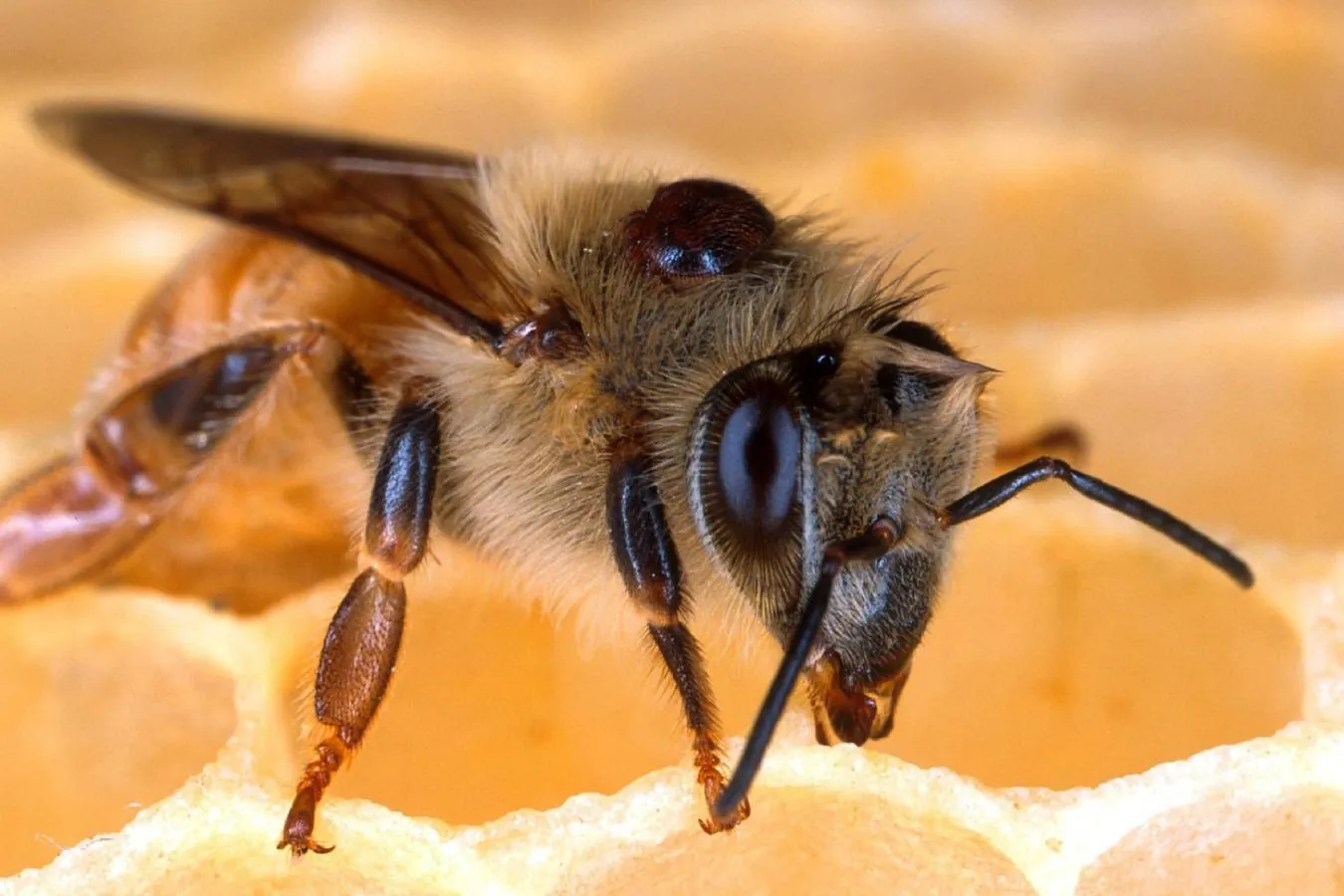
Varroosis, a disease caused by the mite Varroa destructor, is currently the greatest health challenge facing beekeepers worldwide.
This reddish-brown parasite attaches itself to the bodies of bees, feeding on them and spreading through the brood combs, above all the drone brood. It undermines the vitality of colonies by sucking the bees' haemolymph (the bees' circulatory fluid, the equivalent of blood in vertebrates), causing deformities, a shorter life expectancy and brood mortality.
The disease is a vector for several dangerous viruses, including deformed wing virus. At its most advanced stage, varroosis can result in the complete collapse of the colony, affecting both biodiversity and the productivity of beekeepers.
The impact of varroosis on the colony
In the brood, varroa feeds on vitellogenin (a protein essential to larval development), producing bees that emerge with a lower weight and smaller size (up to 7% less in workers and 19% less in drones). A high infestation rate leads to larval mortality, leaving disorganised brood combs with areas of dead and patchy brood (irregular brood across the frames).
In adult bees, meanwhile, varroa affects the development of the hypopharyngeal glands (important structures in worker bees, located in the insect's head close to the pharynx), which are essential to the production of royal jelly, weakening the nutrition of the larvae and the queen. Infested bees have a shorter working life and often lose their ability to navigate, and are seen outside the hive or fallen on the ground. These problems become more obvious during the winter.
Methods for detecting and controlling varroa
It is essential that beekeepers monitor their hives constantly in order to identify and control varroa infestation. The main methods of detection and control include:
Direct observation
This favours early detection and allows more effective control. Look for signs of varroa on adult bees (the phoretic phase) or in drone brood, check for deformed wings on adult bees, and look for dead larvae or larvae with deformed wings at the hive entrance.
Health status
Carry out periodic counts of varroa mite drop to assess the level of infestation. Where infestation is suspected, use acaricides in sentinel hives to confirm the presence of varroa.
Monitoring the drone brood
Varroa prefers drone brood, which therefore makes an excellent indicator of infestation. Periodically remove drone brood shortly before emergence and check for varroa to assess the level of infestation.
The bee wash method
One of the most effective methods for quantifying varroa infestation is the bee wash, which can be done with water and detergent. This technique lets the beekeeper identify how many mites are present in a group of bees, giving an accurate estimate of infestation.
The bee wash method step by step
- Preparing the jar: fill a jar with water and add a spoonful of detergent to help loosen the mites.
- Collecting bees: carefully collect a set number of adult bees from a frame in the colony.
- Shaking and separating: put the bees into the jar and shake gently. After a while, the mites will come loose from the bees and settle at the bottom of the jar.
- Counting the mites: using tweezers, remove the bees and count the mites left at the bottom. This gives an estimate of the colony's infestation rate.

Specific treatments for varroa
Where there is strong evidence of varroa in the apiary, that is, a rate above 5% (number of mites/number of bees), specific treatments should be applied.
In the apiary, 30% of hives should be sampled, chosen at random and including the hives at either end, which are considered highly representative because they take in bees from other apiaries.
Around 50 bees should be collected from each of the hives selected, and the bees taken should be the youngest ones, those that are very hairy and greyish in colour. Care must be taken that none of the bees collected is the queen. For that reason, find the queen first and place her frame somewhere safe inside the hive. All the bees from the apiary go into the same jar.
Unfortunately, eradicating varroosis is impossible, but the infestation can be controlled with veterinary products approved by the Direção-Geral de Alimentação e Veterinária (DGAV). These products are applied under a treatment plan designed to reduce the parasite load and prevent the colony collapsing.
Acaricidal substances are used for this purpose, one of the most effective being amitraz. This product is placed in the hives on plastic strips, with two strips installed between the brood frames. For it to be effective, the bees have to come into contact with the strips in order to spread the substance through the hive. The recommended period is 6 to 10 weeks. Depending on the brand, additional precautions are needed during the peak production period.
Treatments should be applied in an integrated way, combining physical methods (such as removing infested drone brood) with controlled chemical treatments, to prevent the parasite developing resistance.
Are you a beekeeper? What strategies do you use to control varroa?
Share your experience with us.
Keep exploring

The Galega, the Cobrançosa and the Verdeal: The Portuguese Native Varieties Conquering the World
At a time when olive oil is establishing itself as one of the most studied and most highly valued foods of the Mediterranean diet, Portugal is emerging as one of the leading players in the global market.
Climate change in Portuguese vineyards: what is changing and how to adapt?
In 2024, the International Organisation of Vine and Wine (OIV) recorded the lowest level of world production since 1961.

Frequently Asked Questions: Artificial Intelligence in Tourism Course
What is the aim of the AgroB Business School course on Artificial Intelligence in Tourism?