


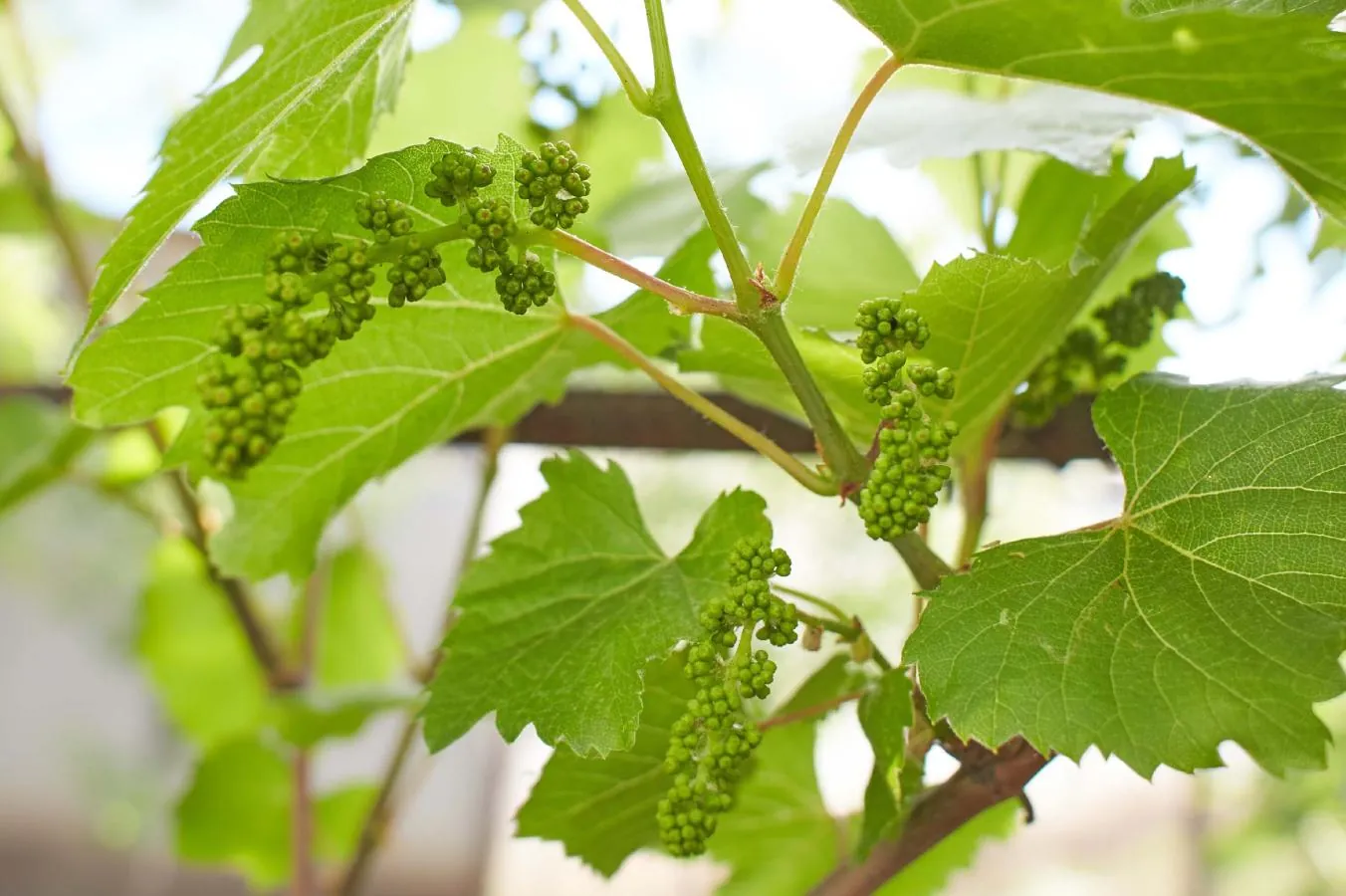
Flowering in the vineyard
Flowering in the vine takes place around 2 months after budburst, generally between May and June.

Figure: Biological cycle of the vine
Flower
The vine's flowers appear at the tips of the shoots, grouped into inflorescences. They emerge after budburst and go through changes until they mature. Their size and shape vary according to the variety, which is a crucial factor in ampelographic identification*.
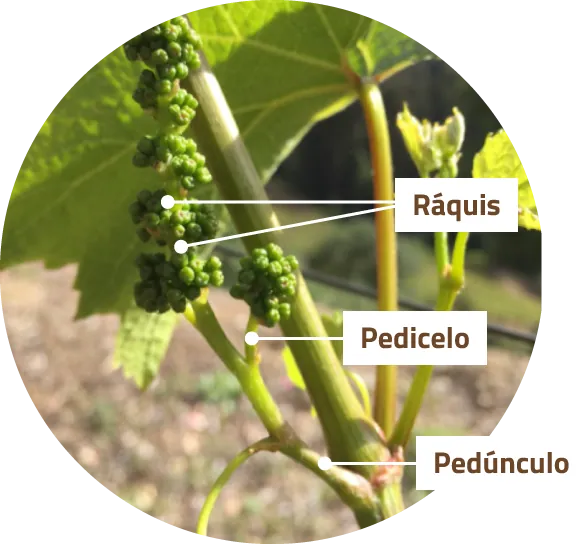
The vine's inflorescence takes the form of a compound cluster (rachis), with first and second order branching (the stem structure). On the branches are the pedicels, which support the flowers and are very small.
Types of sexuality
Monoclinous or hermaphrodite
Both male and female reproductive organs developed (most varieties have hermaphrodite flowers).

Diclinous male
Only the male organ is developed.
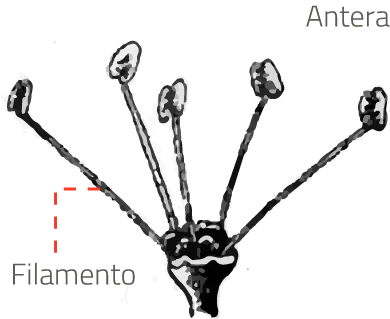
Diclinous female
Only the female organ is developed.

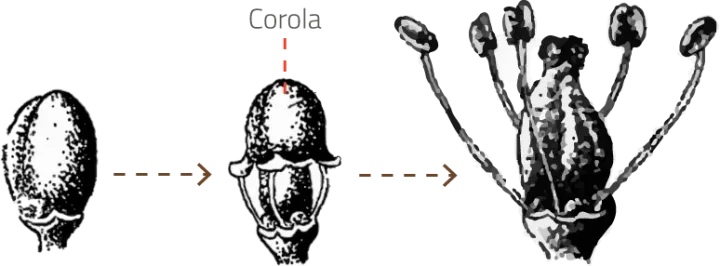
The flowering process
- The petals of the corolla detach at the base and form a cap (calyptra), which falls off pushed by the stamens;
- The anthers open and release the pollen grains;
- These grains become attached to the substances released by the stigma;
- The pollen grains germinate and form the pollen tube, which penetrates the stigma and travels down the pistil until it reaches the ovule (fertilisation).
Temperature has a major influence on the fertilisation of the flower. At temperatures below 15 ºC or above 37 ºC, the formation of the pollen tube is inhibited and the ovule is not fertilised.
Wind and rain are two more of growers' great fears. These factors not only lower the ideal fertilisation temperature (20 to 25 ºC) but also carry away much of the pollen.
Pollination of the flower therefore does not always result in fertilisation of the ovule, giving rise to millerandage, in other words the berry stays small. Another negative phenomenon that can occur is coulure, caused by the flowers or young fruit dropping.
*Ampelography: The science that studies Vitis vinifera and its varieties on the basis of the botanical characteristics of each cultivar.
Did you know these details of vine flowering?
Tell us in the comments!
Keep exploring
The Galega, the Cobrançosa and the Verdeal: The Portuguese Native Varieties Conquering the World
At a time when olive oil is establishing itself as one of the most studied and most highly valued foods of the Mediterranean diet, Portugal is emerging as one of the leading players in the global market.
Climate change in Portuguese vineyards: what is changing and how to adapt?
In 2024, the International Organisation of Vine and Wine (OIV) recorded the lowest level of world production since 1961.

Frequently Asked Questions: Artificial Intelligence in Tourism Course
What is the aim of the AgroB Business School course on Artificial Intelligence in Tourism?