


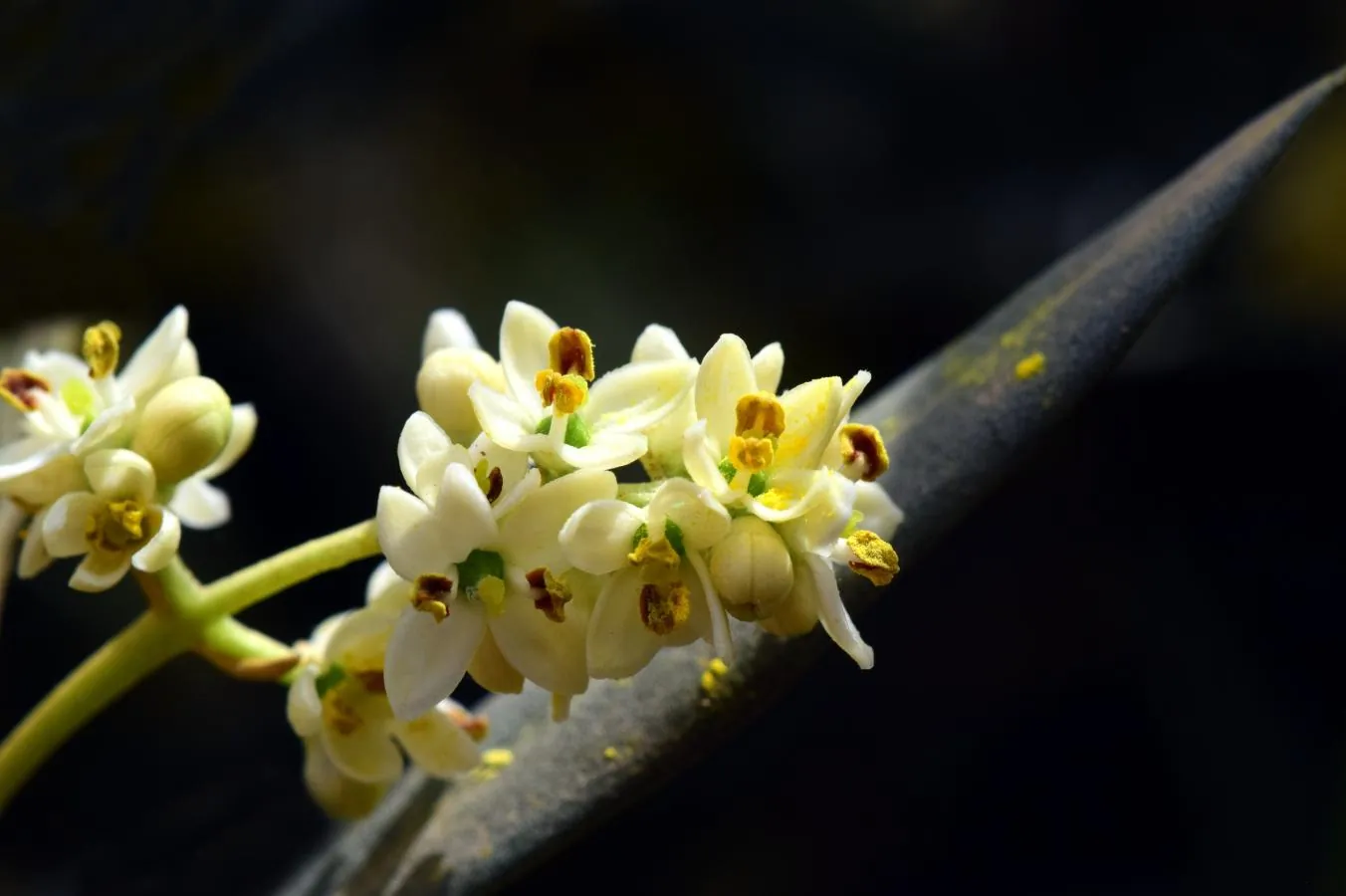
Flowering in the olive grove
Flowering in the olive crop generally occurs between the beginning of May and the middle of June.
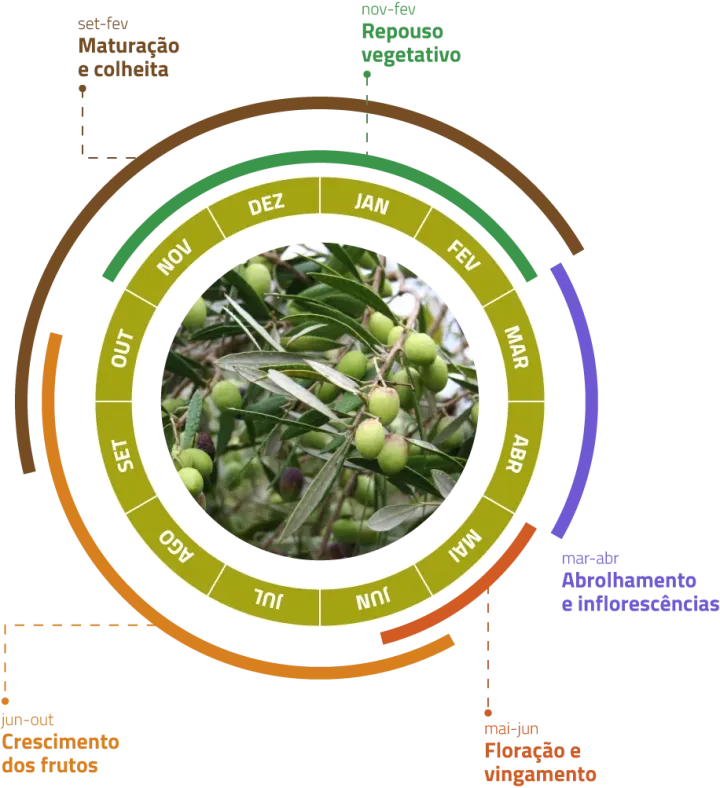
Figure: biological cycle of the olive tree
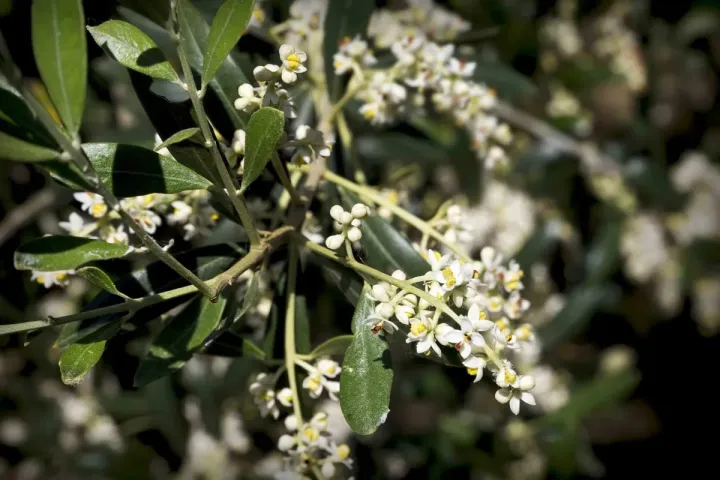
Inflorescences
The inflorescences of the olive tree are panicle-shaped and develop in the leaf axils, on growth from the year before flowering. Each inflorescence carries an average of 10 to 40 flowers, varying with the cultivar and with physiological and environmental conditions.
The inflorescences carry 2 types of flower:
- Hermaphrodite flowers: made up of well-developed stamens and pistil, and staminate;
- Male flowers: these have a rudimentary, absent ovary and do not give rise to fruit.
The flowers are small, yellowish-white or greenish-white, divided into equal parts and with regular symmetry.
They are made up of 4 sepals, 4 petals, 2 stamens and 2 carpels.
Pollination
Pollination is anemophilous, carried out by the action of the wind, since olive flowers are not attractive to bees.
For there to be genetic material in the plot for cross-pollination, it is essential to have different varieties (pollinators) close to the main variety. In established plantations, patch grafting with the pollinating cultivar can be carried out in April on a small proportion of the branches.
In established plantations, patch grafting with the pollinating cultivar can be carried out in April on a small proportion of the branches.
Since pollination is anemophilous, as noted above, the positive effect of the pollinators only extends 40 m in the direction of the prevailing wind.
An even number of rows makes mechanical harvesting easier, and grouping blocks together ensures good fruit set, extending the period over which harvesting machinery is used.
Distribution of pollinating varieties:

Were you aware of the particularities of olive tree flowering?
Tell us in the comments!
Keep exploring
The Galega, the Cobrançosa and the Verdeal: The Portuguese Native Varieties Conquering the World
At a time when olive oil is establishing itself as one of the most studied and most highly valued foods of the Mediterranean diet, Portugal is emerging as one of the leading players in the global market.
Climate change in Portuguese vineyards: what is changing and how to adapt?
In 2024, the International Organisation of Vine and Wine (OIV) recorded the lowest level of world production since 1961.

Frequently Asked Questions: Artificial Intelligence in Tourism Course
What is the aim of the AgroB Business School course on Artificial Intelligence in Tourism?