


Field Training: Pruning Pome Fruit 2024
Last Saturday, 27 January, the field training session on pruning pome fruit was held in Alcobaça, in partnership with INIAV – Instituto Nacional de Investigação Agrária e Veterinária.
The main aim of the visit was to bring everyone with an interest, from beginners to operators and growers, closer to the reality of the pome fruit sector, encouraging the sharing of experience and good practice as well as the building of professional networks.
The meeting point for the training was the INIAV site in Alcobaça. At the start, the participants and the trainer, Eng. Rui de Sousa, the INIAV technician responsible for monitoring and research across a range of crops, had the chance to get to know one another and exchange first impressions and motivations.
The session opened with a theoretical look at apple and pear growing, in which the concepts considered essential before starting to prune were discussed, from the morphology of the trees to the timing and objectives of pruning, always with a view to producing larger and better-quality fruit. The emphasis fell on the importance of disinfecting pruning wounds, of maintaining balance and renewing wood in order to achieve efficient production, and of knowing the fruiting habits of the crops and varieties being pruned.


Figure: Eng. Rui de Sousa and participants in the INIAV auditorium
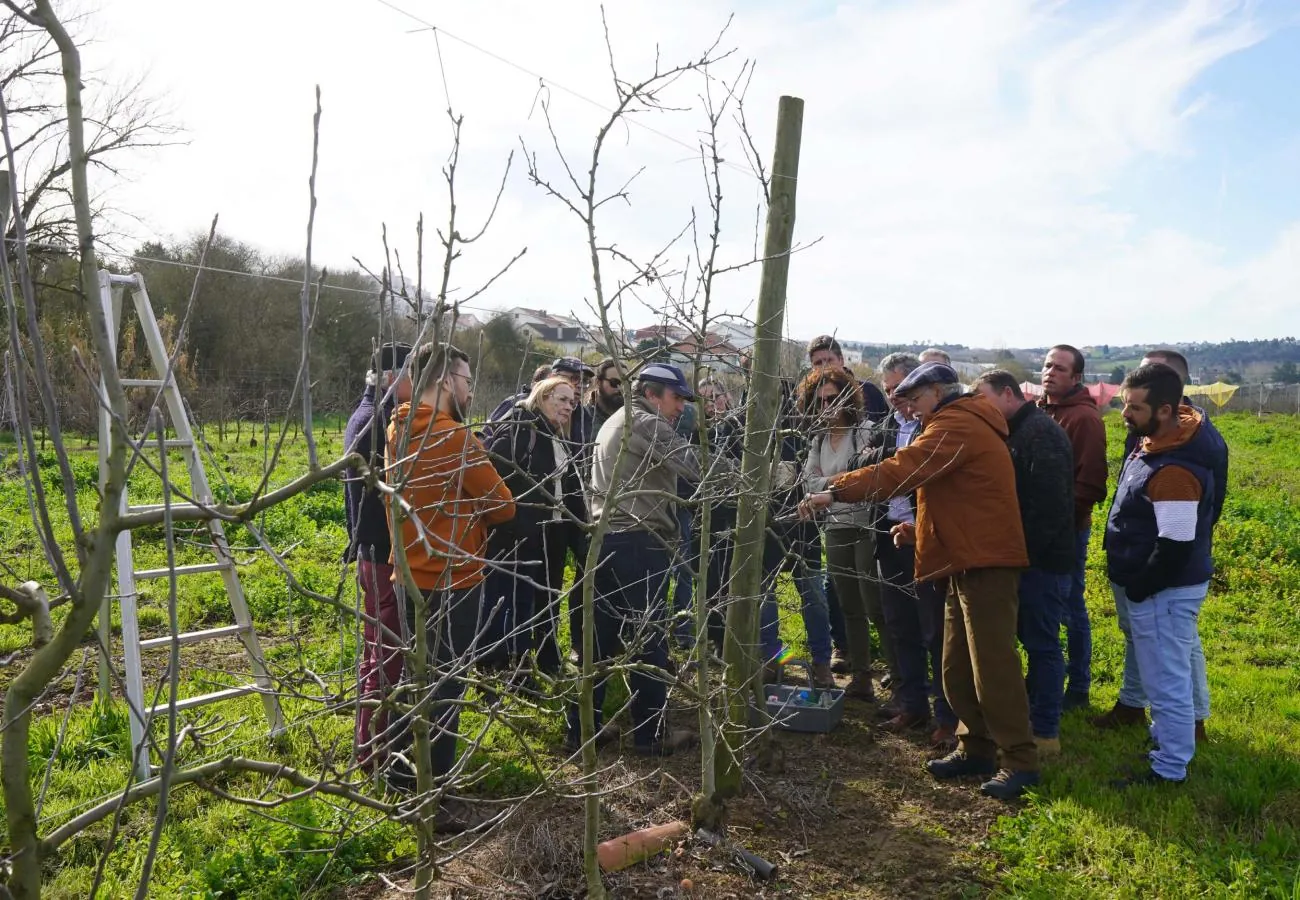
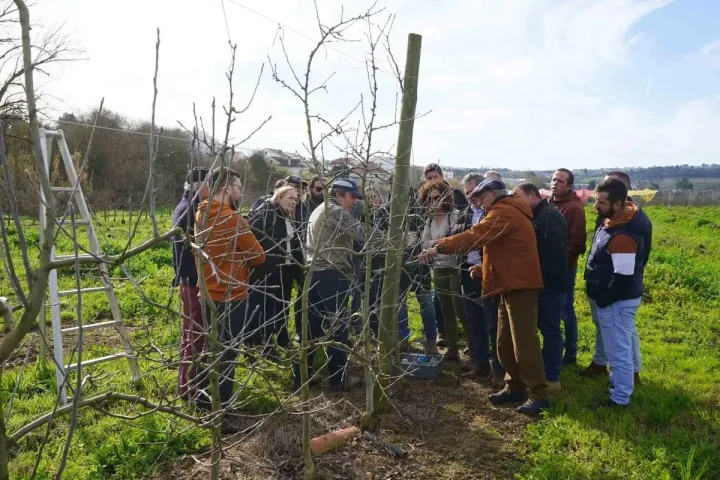
After the theory, still in the morning, the group made its way to one of the experimental plots at this INIAV site, where Eng. Rui de Sousa demonstrated some of the concepts and principles discussed in the classroom, applying them to apple trees. Here the participants had the chance to put these pruning concepts into practice, guided throughout by the trainer.

A lunch break followed, providing a moment of good company and an opportunity to exchange experiences and contacts.
In the afternoon, the participants once again had the chance to prune a number of apple trees. As we moved through the orchard, different situations came up, clearing up questions about what to do given the different health and development states of the trees.
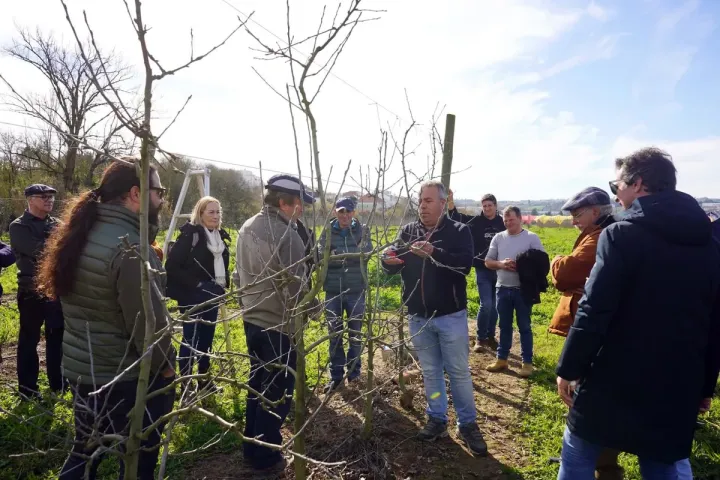
The training then turned to pear trees, where Eng. Rui de Sousa pointed out the main differences in pruning and training the crop compared with apples. Here, once again, the participants were able to put into practice the pruning concepts covered and demonstrated.


That brought the field training on pruning pome fruit to a close. If you were not able to take part but are interested in apple and pear growing, take a look at our tutorial courses on Pruning Operations in Apple Trees, Irrigation and Fertilisation Plan for Apple Trees, Pruning Operations in Pear Trees and Irrigation and Fertilisation Plan for Pear Trees.

Figure: photograph of the group
Keep exploring
The Galega, the Cobrançosa and the Verdeal: The Portuguese Native Varieties Conquering the World
At a time when olive oil is establishing itself as one of the most studied and most highly valued foods of the Mediterranean diet, Portugal is emerging as one of the leading players in the global market.
Climate change in Portuguese vineyards: what is changing and how to adapt?
In 2024, the International Organisation of Vine and Wine (OIV) recorded the lowest level of world production since 1961.

Frequently Asked Questions: Artificial Intelligence in Tourism Course
What is the aim of the AgroB Business School course on Artificial Intelligence in Tourism?