


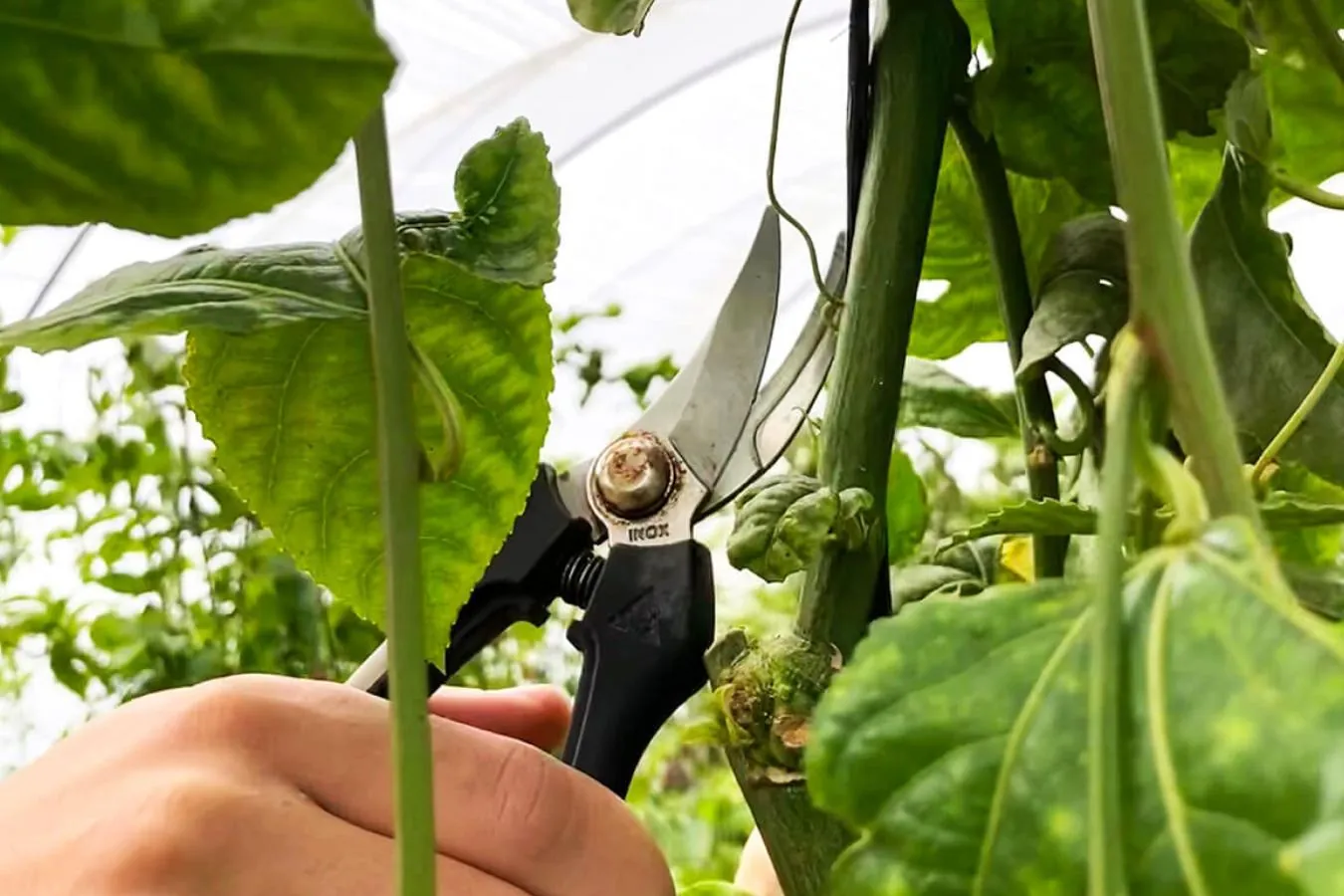
Pruning the passion fruit vine
The passion fruit vine is a herbaceous crop which, lacking the structure of a tree, needs artificial support to stay upright. Given its climbing nature, that support can vary, from string, wire and stakes to other plants.
But how does the passion fruit vine reach the hedge shape we are used to seeing? Here it is, step by step.≤
1.
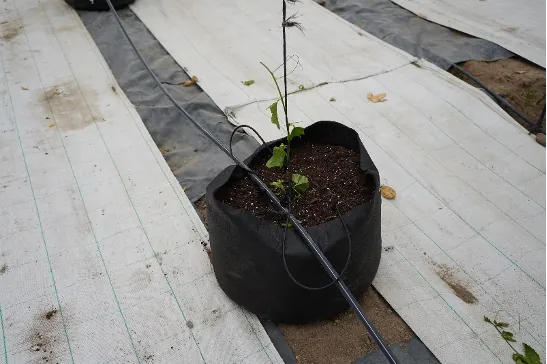
The passion fruit vine is generally planted at under 5 cm, and in the first stage it is best to let it grow naturally. In this process you should use a guide string and train the plant to use it as a support.
2.
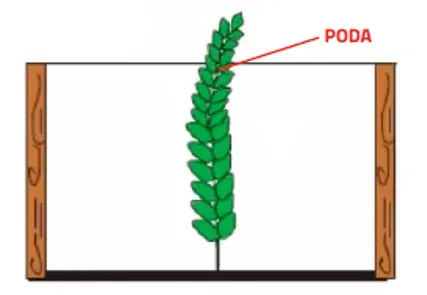
When the plant grows more than 10 cm past the main wire, you should tip it back to remove apical dominance and encourage the lateral buds to grow.
3.
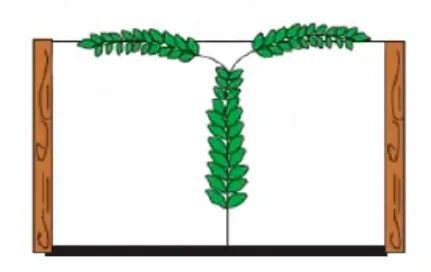
Of the lateral shoots that appear, you should select the two most vigorous and best positioned, one on each side.
4.
Once they reach the space allotted to them, bounded by the planting distance or the structure, you should tip the shoots back. Only at this stage should you remove the shoots below the fork of the two arms.
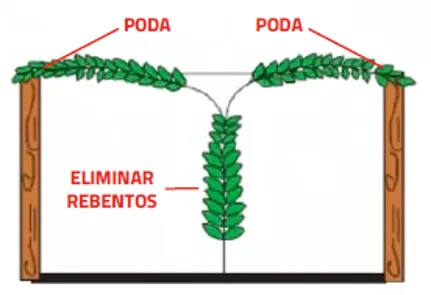
5.
This tipping back will stimulate the earlier lateral buds, creating the tertiary branches, which is where production takes place.
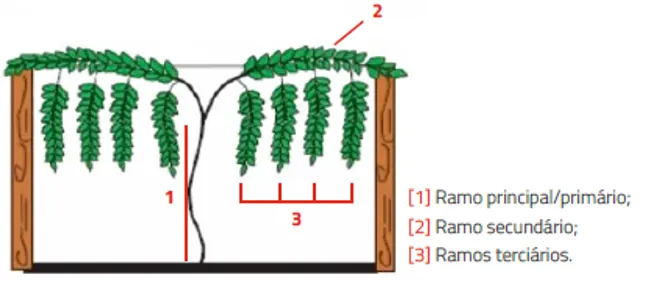
Each bud produces only once, so every year the grower should carry out a pruning to remove branches whose production has dropped too low, so as to avoid fruit developing close to the ground.
At the same time, the plants can be "combed", untangling the knots caused by the tendrils.
What training system do you use on your passion fruit vines?
Tell us in the comments!
Keep exploring
The Galega, the Cobrançosa and the Verdeal: The Portuguese Native Varieties Conquering the World
At a time when olive oil is establishing itself as one of the most studied and most highly valued foods of the Mediterranean diet, Portugal is emerging as one of the leading players in the global market.
Climate change in Portuguese vineyards: what is changing and how to adapt?
In 2024, the International Organisation of Vine and Wine (OIV) recorded the lowest level of world production since 1961.

Frequently Asked Questions: Artificial Intelligence in Tourism Course
What is the aim of the AgroB Business School course on Artificial Intelligence in Tourism?