


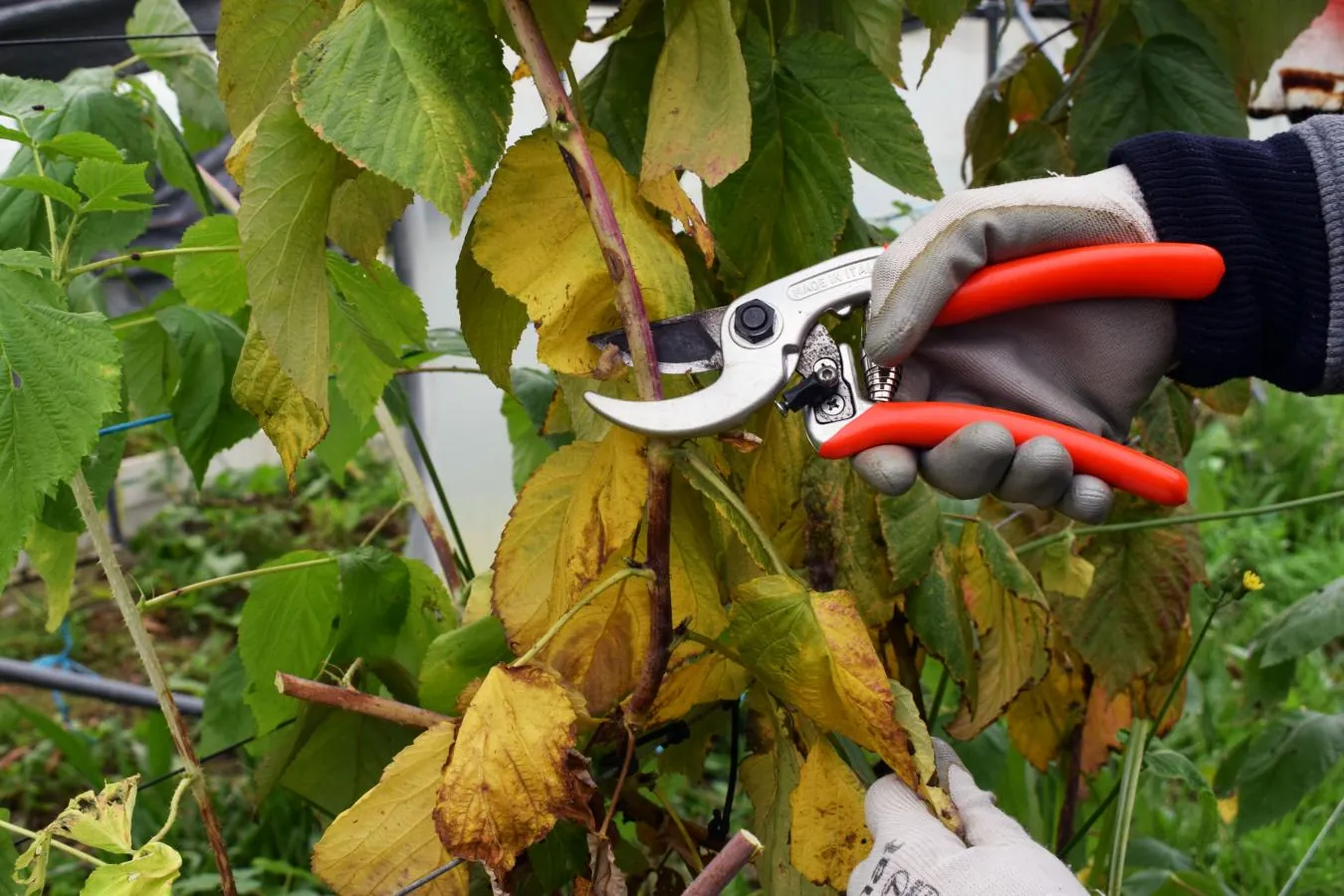
Pruning the raspberry
In Portugal, raspberries are commonly grown under cover, in tunnels or greenhouses, which allows two harvests a year:
- Late spring/summer – floricanes;
- In autumn – primocanes.
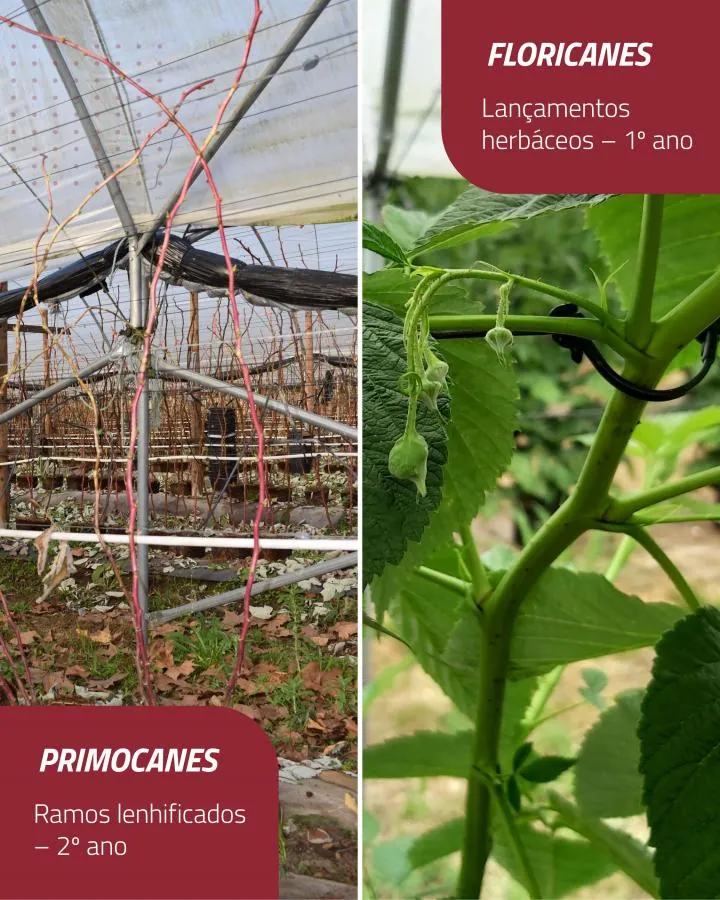
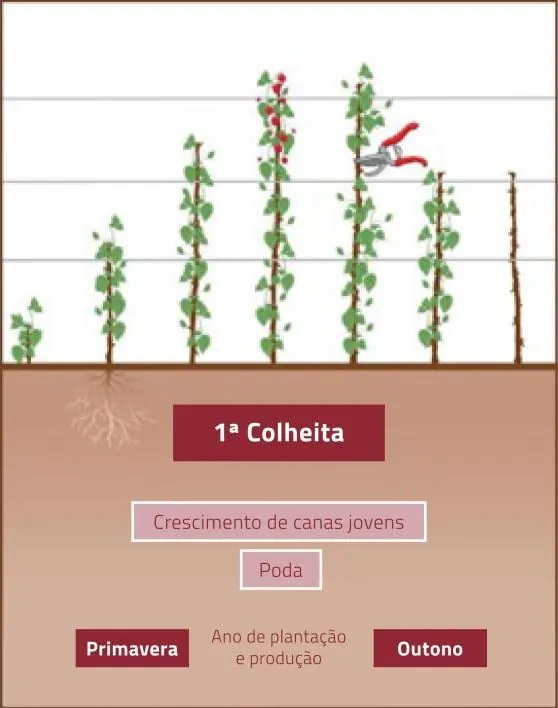
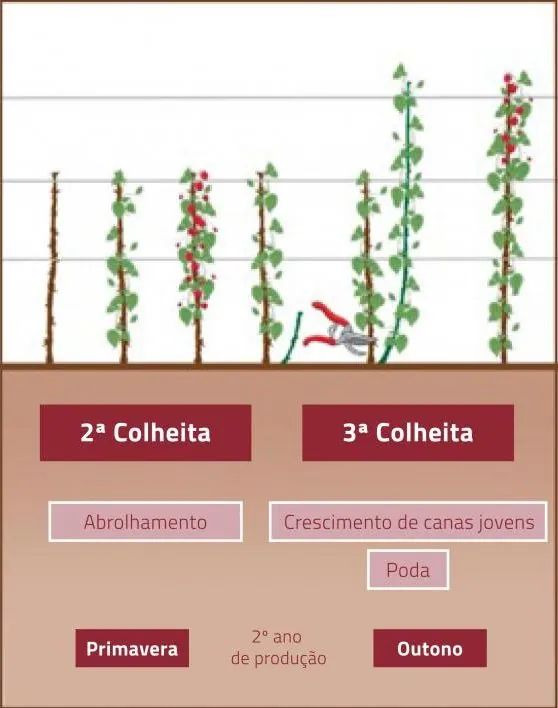
For the crop to be of good quality, two prunings a year are needed. The practice makes the operation more expensive, so it is necessary to assess whether the crop justifies the labour costs.
Summer pruning
- Excess lateral shoots are thinned out;
- Up to 5 primocanes are selected to form the basis of the autumn crop and the rest are thinned out;
- After the floricanes have been harvested, the canes that have already fruited are removed.
Winter pruning
- Carried out after the autumn harvest and leaf fall - defoliate first if necessary;
- The central stem is cut back;
- Unwanted and weak shoots are thinned out;
- The lateral branches are cut back to two buds.
The raspberry plant is especially vulnerable after winter pruning, since wounds take longer to heal in a damper environment. Measures should therefore be taken, such as:
- Disinfecting pruning tools;
- Applying Bordeaux mixture after pruning;
- Removing and burning contaminated pruning waste.
Do you follow these pruning practices?
Tell us in the comments!
Keep exploring
The Galega, the Cobrançosa and the Verdeal: The Portuguese Native Varieties Conquering the World
At a time when olive oil is establishing itself as one of the most studied and most highly valued foods of the Mediterranean diet, Portugal is emerging as one of the leading players in the global market.
Climate change in Portuguese vineyards: what is changing and how to adapt?
In 2024, the International Organisation of Vine and Wine (OIV) recorded the lowest level of world production since 1961.

Frequently Asked Questions: Artificial Intelligence in Tourism Course
What is the aim of the AgroB Business School course on Artificial Intelligence in Tourism?