


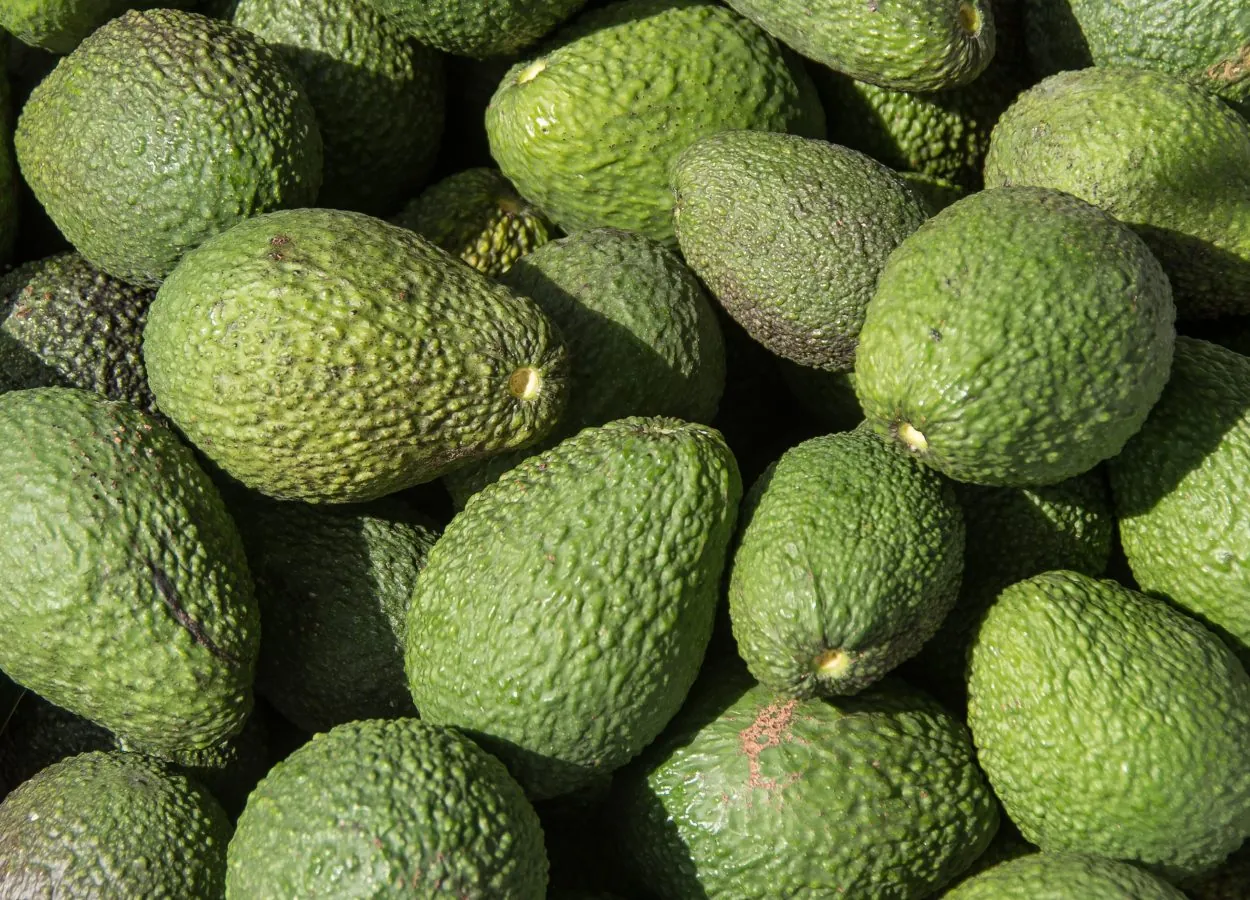
Is Avocado Worth Investing in in Portugal?
Avocado production in Portugal has grown remarkably over the past decade. In 2013, some 300 hectares of avocado orchards had been identified. According to the most recent figures from the Instituto Nacional de Estatística (INE), by 2023 that figure had already passed 4,500 hectares, an increase of more than 1,400% in just ten years.
This striking growth is the result of a combination of key factors. Chief among them are the high profitability of the crop, with gross margins at or above 40%; rising international demand, which translates into an active market with operators ready to take up and pay well for domestic production; the avocado's good fit with the soil and climate conditions across much of Portugal; and the availability of investment capital, from Portuguese and foreign operators alike.
The avocado has been gaining weight in Portuguese agriculture, not only for the high added value it generates in production, but also for its place in well defined and organised export chains. According to FAOSTAT, Portugal was the European Union's second largest avocado producer in 2019, with a harvest of 13,370 tonnes, behind only Spain.
The trend is visible in concrete examples on the ground, such as Agrocate, which has more than 300 hectares in specialist production, with almost the entire crop destined for export to demanding European markets. The Spanish company Trops has also invested heavily in the crop in Portugal, putting 9 million euros into a production and logistics centre in Tavira. With that facility, Portugal came to account for 40% of the company's Iberian production, exceeding 11 million kilos of avocado a year, according to statements the company itself made to Jornal Económico.
The question that naturally follows is this: is avocado a crop only for the Algarve?
The answer is clear: no. Although the Algarve offers ideal conditions and accounts for most of the production, avocado can be grown in other regions of the country, provided there is proper technical planning, secure irrigation water and measures to mitigate the climate risk posed by frost.
Proof that avocado can succeed outside the Algarve is the expansion project led by Kiwicoop – Cooperativa Frutícola da Bairrada. This cooperative is promoting avocado among its members across 29 municipalities in the centre and northern coastal region, including Aveiro, Águeda, Anadia, Vagos, Cantanhede, Coimbra, Figueira da Foz and Leiria. The target is up to 200 hectares of new plantings.
The avocado is an evergreen tree of vigorous habit that can exceed 10 metres in height if it is not pruned regularly. It has a deep taproot system reaching 1 to 1.5 metres, which rules out soils with impermeable layers. It prefers deep, well drained soils with a slightly acid to neutral pH (between 6.2 and 6.5); it does not tolerate waterlogged or compacted soils, which risk root asphyxia, so loam-textured soils rich in organic matter are recommended
The plant is particularly sensitive to cold and vulnerable to winter frost, with irreversible damage once temperatures reach -3 °C or below. The ideal is therefore to grow it in places with mild winters and good sun exposure, preferably south-facing and on mid-slope. Outside frost-free zones, near the coast where frost is likely, anti-frost systems are recommended, using micro-sprinkler irrigation over the canopy, triggered whenever air temperature drops below 1 °C. The avocado develops best at average temperatures between 20 °C and 25 °C. In periods of more intense heat, however, it requires constant irrigation and careful monitoring, above all during flowering and fruit set. It is also a plant that is sensitive to strong winds.
One of the most common criticisms of avocado growing concerns water use.
In Portugal, though, the figures show a rather more balanced picture. Studies by DRAP Algarve and DGADR indicate average consumption of around 6,500 m³ per hectare per year, comparable to crops such as citrus. Many holdings also use drip irrigation, moisture sensors and finely tuned fertigation practices, which substantially increase water use efficiency and can halve the requirement given above.
The European Union is currently the world's second largest avocado consumption market. Consumption per head has grown steadily, driven by the fruit's standing in modern nutrition. The avocado is widely recognised as a source of healthy vegetable fat, with no significant contraindications to regular consumption, especially among consumers with greater purchasing power.
Portugal is strategically well placed in this context: it is geographically close to major consumer markets such as France, Germany, the Netherlands and the United Kingdom, and can offer lower logistics costs and a smaller carbon footprint than exporting countries in Latin America. On top of that, the Portuguese harvest complements the Spanish one in terms of calendar, giving access to premium market niches at certain times of year (January to April).
In short, investing in avocado production in Portugal is currently a rational decision, backed by hard data and technical knowledge. The continued growth in planted area, the crop's increasing weight in national agricultural exports, its natural fit with a changing climate and its proven capacity to be adapted technically to new regions all reinforce its potential. Rising market value in Europe positions the avocado as one of the most promising crops of the coming decade.
With sound agronomic knowledge, rigorous planning and efficient management of resources, the avocado can establish itself as a high-return, highly resilient crop in Portuguese agriculture.
If you are considering going ahead with an avocado planting, Espaço Visual can help. Our technical team provides specialist advice, feasibility studies, licensing support, investment project preparation and ongoing technical assistance in the field, making sure your project is technically sound, economically viable and environmentally sustainable.
Keep exploring
The Galega, the Cobrançosa and the Verdeal: The Portuguese Native Varieties Conquering the World
At a time when olive oil is establishing itself as one of the most studied and most highly valued foods of the Mediterranean diet, Portugal is emerging as one of the leading players in the global market.
Climate change in Portuguese vineyards: what is changing and how to adapt?
In 2024, the International Organisation of Vine and Wine (OIV) recorded the lowest level of world production since 1961.

Frequently Asked Questions: Artificial Intelligence in Tourism Course
What is the aim of the AgroB Business School course on Artificial Intelligence in Tourism?