


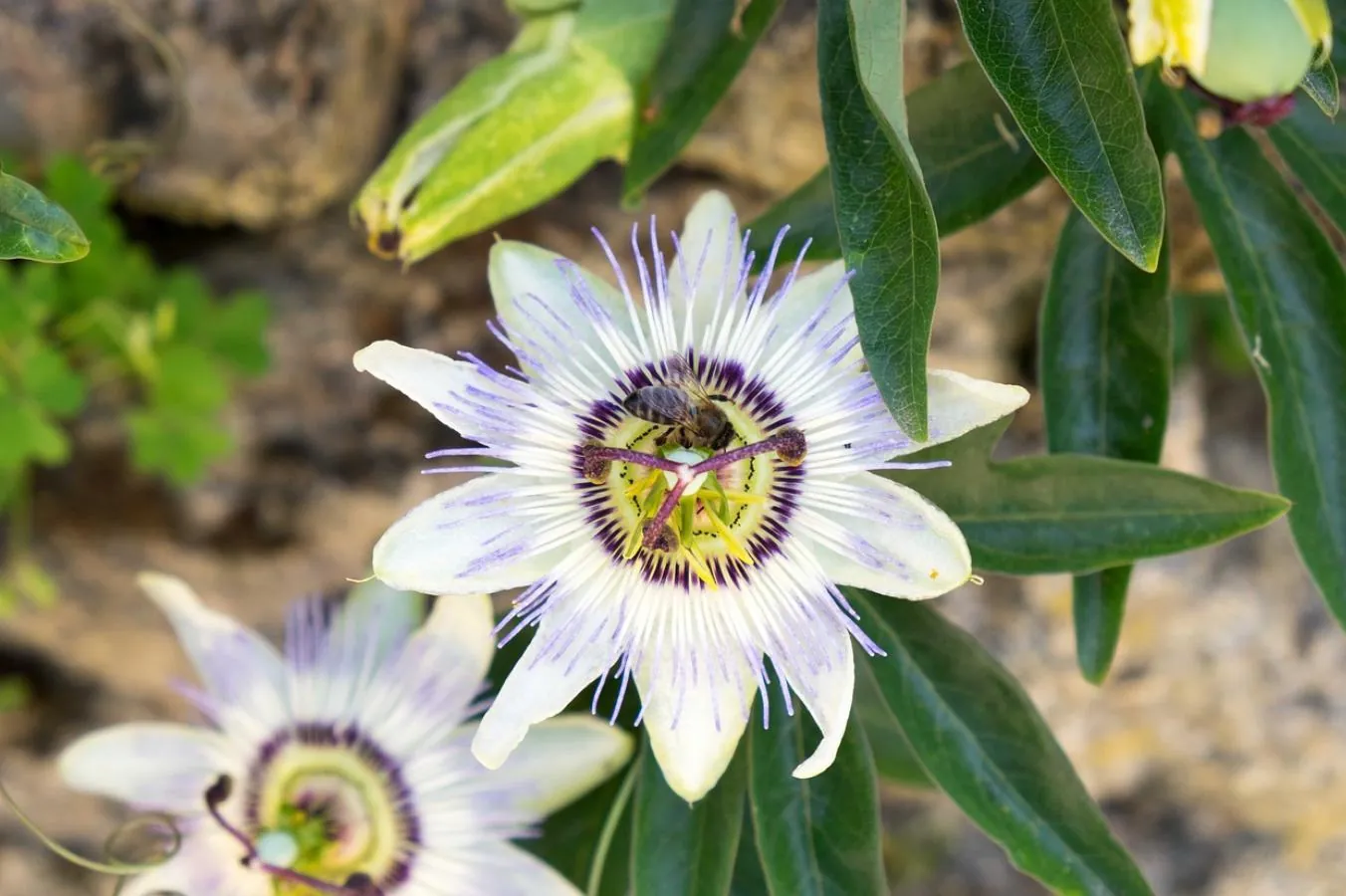
Flowering in the Passion Fruit Vine
The passion fruit cycle consists of flowering, fruit set, fruit ripening and post-ripening, and different stages can be found at the same time on the same plant.
The various passion fruit species have distinct flowers in terms of colour, size and shape.
Purple passion fruit is the species most in demand in European markets, and production is growing in Portugal and southern Europe.
The flowers of the passion fruit vine are hermaphrodite, with male (stamens) and female (ovaries) reproductive organs present in the same flower.
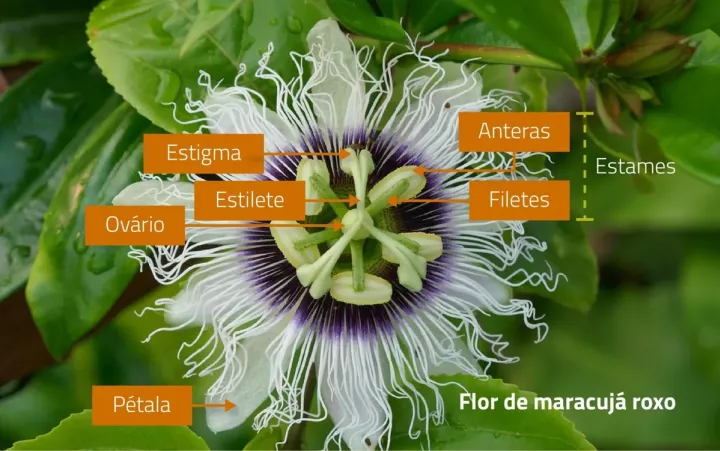
The flower's receptivity to pollen is directly related to the position of the stigmas over the course of the day.
The flowers open during a limited window of the day, which serves several biological purposes for the plant:
- Attracting pollinators, which tend to be more active in the early hours of the morning;
- Limiting the time the flower stays open in order to conserve the plant's energy.
In this way, pollination only occurs when it is most likely to be efficient.
If the flower is not pollinated within that short window, it wilts and drops.

The active participation of pollinating insects, which can be provided through beekeeping practices or even with commercial species such as Bombus Terrestris, is therefore crucial in this process.

That said, there is also the option of pollinating artificially, in order to increase the rate of successful fruit set and to produce larger fruit.
To do this, during the hours when the flower is receptive, using a brush or the fingertips, the pollen is taken from the anthers of one flower and placed on the stigma of the same flower or of another one (cross-pollination).
However, this is a very time-consuming operation with a very high labour cost.
Did you know about this particular feature of passion fruit flowers?
Tell us in the comments!
Keep exploring
The Galega, the Cobrançosa and the Verdeal: The Portuguese Native Varieties Conquering the World
At a time when olive oil is establishing itself as one of the most studied and most highly valued foods of the Mediterranean diet, Portugal is emerging as one of the leading players in the global market.
Climate change in Portuguese vineyards: what is changing and how to adapt?
In 2024, the International Organisation of Vine and Wine (OIV) recorded the lowest level of world production since 1961.

Frequently Asked Questions: Artificial Intelligence in Tourism Course
What is the aim of the AgroB Business School course on Artificial Intelligence in Tourism?