


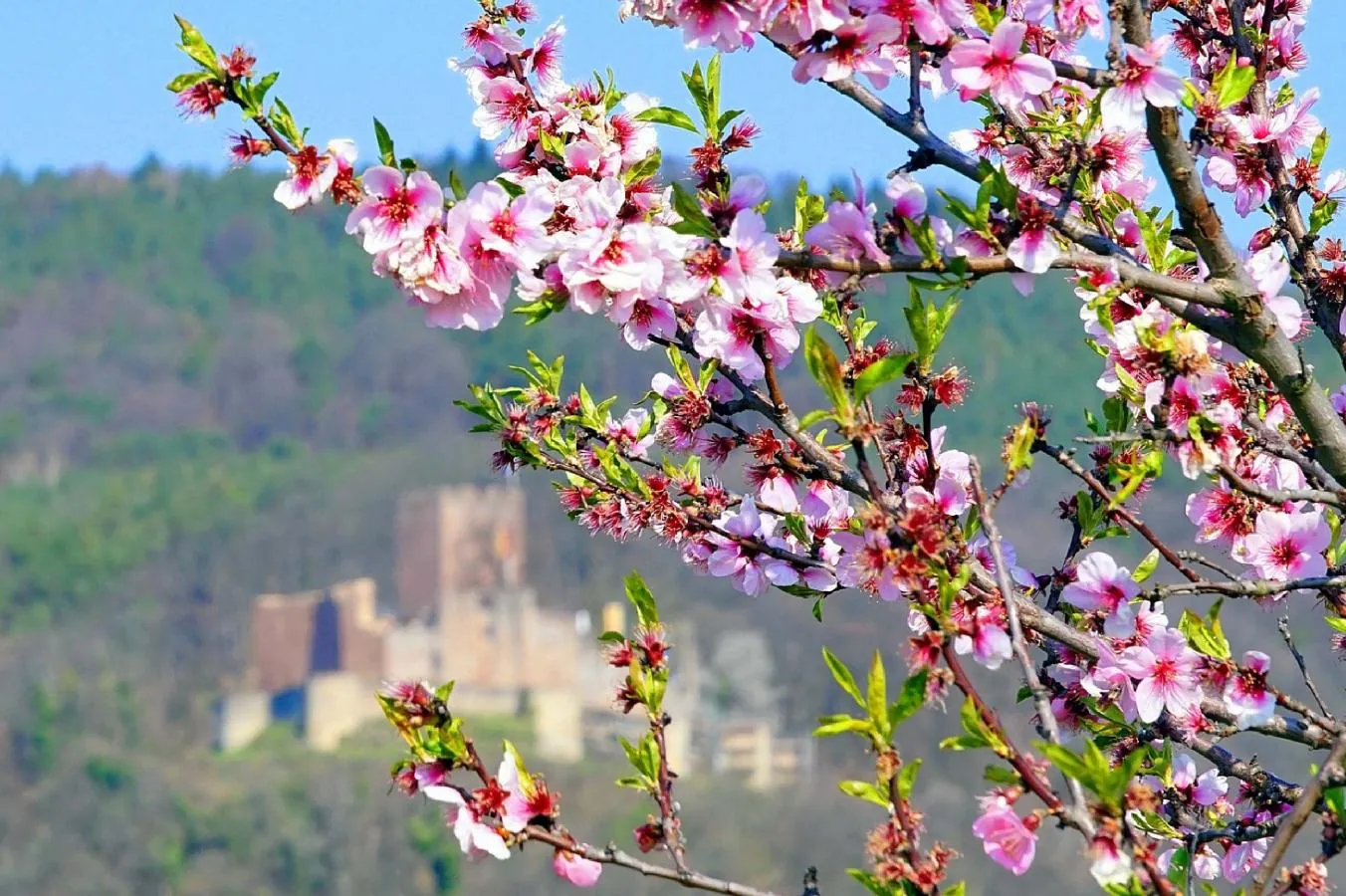
Flowering in the almond tree
Flowering in the almond tree, which normally occurs between February and April, happens before vegetative development (the appearance of leaves and buds).
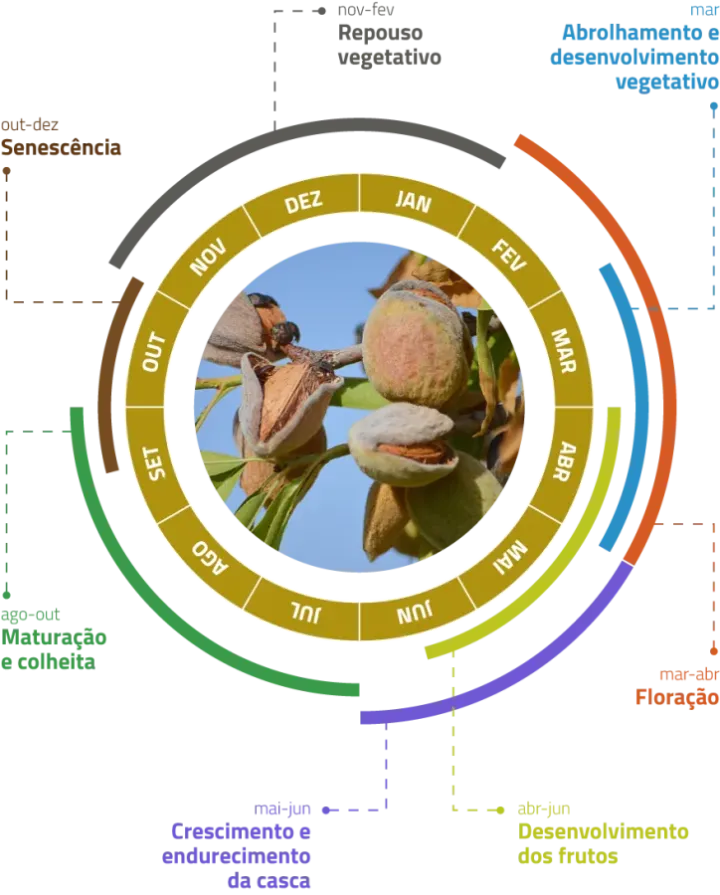
Figure: biological cycle of the almond tree
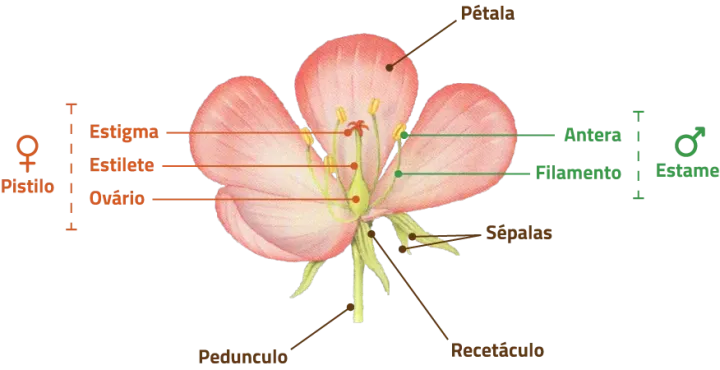
The almond flower appears singly or in pairs, once the flower bud has developed. The flower is characteristic of the Rosaceae family. It is a complete, hermaphrodite flower (androecium and gynoecium) made up of:
Pollination is one of the biggest problems in almond production. This is because most of the cultivars available on the market are partly or entirely incompatible.
More than one variety therefore has to be planted so that the flowers of one can pollinate the other, with the help of pollinating agents.
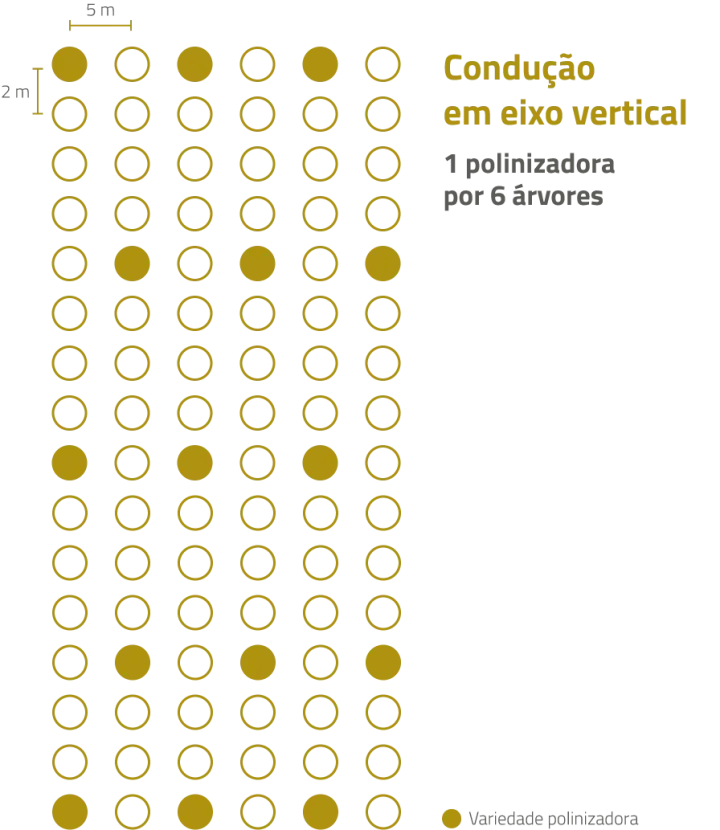
The number of pollinating trees changes according to the variety. Some basic conditions always apply, however:
- Maximum distance between trees and pollinator: 12-15 metres;
- The number of trees per pollinator should be no more than 9;
- Flowering must take place at the same time.
The diagrams below show two examples of different spacings and the way pollinating varieties are distributed (Source: Prof. Ana Paula Silva, UTAD).
Note: this study was developed for a cherry orchard. It can, however, be applied to the different species of the genus Prunus that present the same self-incompatibility problem as the almond tree.

Were you aware of the importance of pollination in the almond tree?
Tell us in the comments!
Keep exploring
The Galega, the Cobrançosa and the Verdeal: The Portuguese Native Varieties Conquering the World
At a time when olive oil is establishing itself as one of the most studied and most highly valued foods of the Mediterranean diet, Portugal is emerging as one of the leading players in the global market.
Climate change in Portuguese vineyards: what is changing and how to adapt?
In 2024, the International Organisation of Vine and Wine (OIV) recorded the lowest level of world production since 1961.

Frequently Asked Questions: Artificial Intelligence in Tourism Course
What is the aim of the AgroB Business School course on Artificial Intelligence in Tourism?