



Artificial Intelligence in Tourism: How to Set Your Business Apart
For anyone running a hotel, a travel agency or any tourism business, there is one plain truth. Artificial intelligence has stopped being a future trend and is now an operational reality that transforms whoever adopts it. With 50% of travellers already using AI to plan their trips and the large chains rolling out chatbots and personalised recommendations, the question is a simple one. "Is your company ready?" By 2026, the gap between those who embrace AI and those who remain indifferent will be too wide to ignore.
Why AI in Tourism Matters Right Now
Customer expectations have risen sharply. Travellers expect experiences tailored to their interests, intelligent recommendations and immediate support, 24 hours a day. The era of generic service is coming to an end. At the same time, the competition is a step ahead. Hotels and agencies that have already implemented AI enjoy a clear advantage in conversion, satisfaction and operational efficiency. While you are still weighing it up, they are already profiting from it.
Operating costs keep climbing as well. Staff, energy, maintenance, everything is getting more expensive. AI offers a proven way to automate repetitive tasks, cut staffing costs and improve profit margins significantly. This is not a promise for the future; companies are already doing it now.
How AI Works in Tourism
An AI chatbot can be available 24 hours a day at no extra staffing cost. It answers frequently asked questions in seconds, in several languages, processes complete bookings, handles automated check-in and learns from every interaction. For the customer it means immediate support. For the company it means a substantial reduction in service costs.
Personalised recommendations work by analysing travel history, stated preferences, browsing behaviour and the patterns of similar customers. The result is a set of recommendations that feel as though they came from a specialist working for that customer alone, dramatically raising the conversion rate and the average booking value.
Dynamic pricing adjusts in real time, taking account of current demand, competitor behaviour, local events and booking history. A hotel equipped with AI automatically maximises revenue at peak times and cuts prices strategically in quieter periods to keep occupancy up. Without AI, this would require a dedicated manager.
Operational automation changes everything: automatic check-in removes queues, intelligent housekeeping anticipates cleaning and maintenance needs, and stock management stops being guesswork. Staff are freed up to create memorable experiences instead of performing repetitive tasks.
Platforms such as Mind Trip generate fully personalised itineraries. The traveller states their preferences and the platform builds a unique route with suggestions, timings, transport and bookings, automatically. A destination that adopts this transforms the experience: instead of listing 50 attractions, it offers a genuinely personalised experience.
The Three Pillars of AI in Tourism
The first pillar is transformed operational efficiency. Tasks that used to require dedicated staff are now automated. A reduction of 25 to 40% in administrative costs, fewer human errors, and staff freed up to create genuine differentiation. The operation runs 24 hours a day at no extra cost. For a hotel with 100 rooms, this means tens of thousands of euros a year added to the profit margin.
The second pillar is personalisation at scale. AI treats 10,000 different customers as though each one were special, with recommendations and prices adjusted individually, significantly raising the conversion rate. The average value of each booking rises because intelligent recommendations generate add-on purchases, which in turn lifts satisfaction and organic word of mouth.
The third pillar is taking decisions based on objective data rather than intuition. AI analyses the behaviour of thousands of tourists, identifies seasonal patterns, measures the effectiveness of marketing channels and calculates profitability by customer segment. This allows far more precise decisions about where to invest, which customers to pursue and how to optimise operations.
The Most Sought-After Jobs in 2026
While AI automates repetitive tasks, it also creates new and highly valued professions. The AI implementation specialist for tourism designs and optimises chatbot, dynamic pricing and personalisation systems. Demand is extremely high and salaries are 35 to 40% above traditional ones. The tourism data analyst interprets traveller behaviour data and optimises strategy. The digital experience manager designs AI-driven customer journeys.
For anyone working in the tourism sector, investing in training in these areas now is essential. Traditional skills will be in progressively less demand. AI skills will be in explosive demand.
Case Studies in Portugal
Yotel Porto has introduced an automatic luggage delivery robot and intelligent check-in. The result: a dramatic cut in time spent at reception, lower costs and delighted guests. It has become a benchmark for tourism innovation in Portugal.
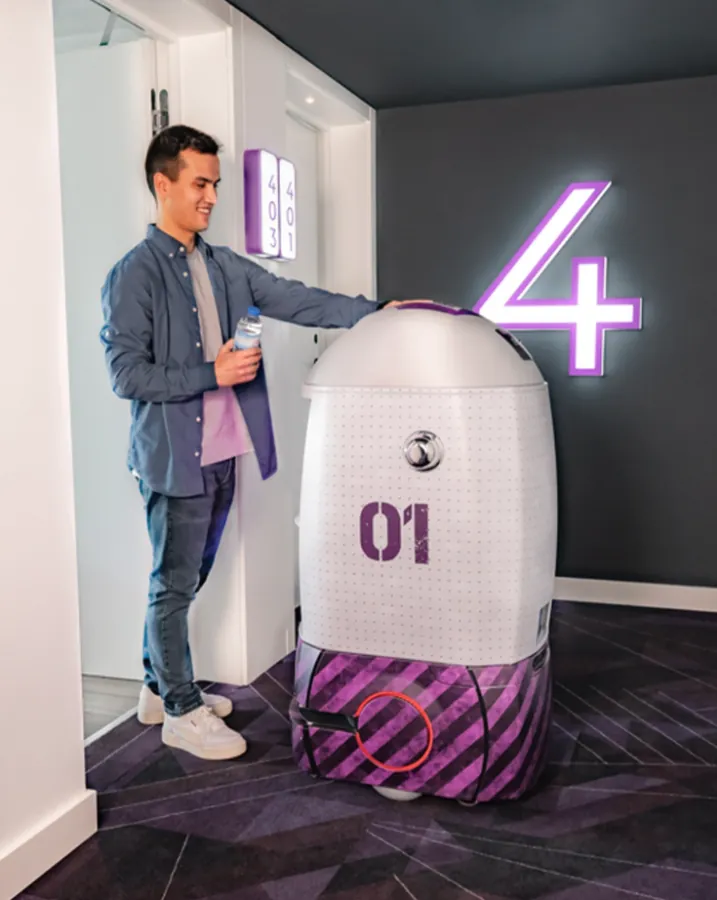
Yotel Porto Robot | Source: Yotel Porto Instagram
HiJiffy is a platform that automatically adjusts prices according to demand in real time. Clients report increases of 15 to 20% in revenue per available room, with no manual work at all.

HiJiffy AI platform | Source: Hijiffy.com
Pestana Group, the largest Portuguese hotel chain, has introduced a chatbot that resolves 70% of customer queries without human intervention, 24 hours a day, in 5 languages. Service costs fell significantly and satisfaction rose.
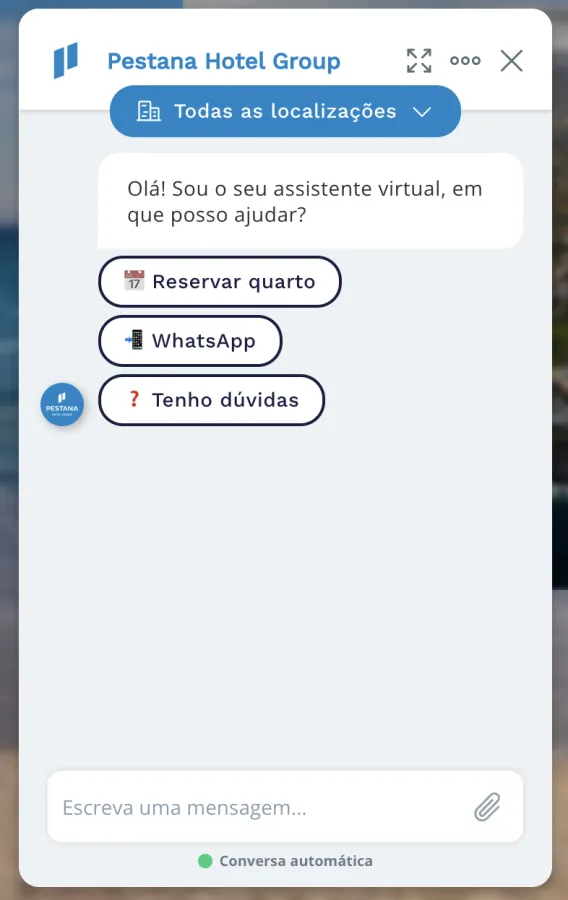
Pestana Group AI | Source: Pestana.com
Mind Trip generates fully personalised itineraries. Users report far higher satisfaction than with traditional generic routes.

Mindtrip AI itineraries | Source: Mindtrip.ia
Concrete Impact on Your Business
A hotel manager can expect a 25 to 30% reduction in operating costs, a 15 to 20% rise in occupancy and a 10 to 15% rise in revenue per available room. Agencies and tour operators achieve conversion 20 to 30% higher, with a 40%+ reduction in the time needed to prepare proposals and better customer retention. Destinations can see average length of stay increase, visitor distribution improve and overall satisfaction grow through word of mouth.
Where to Start: Practical Steps
The first step is an honest diagnosis. What is the biggest problem? Rising costs? A low conversion rate? Inadequate satisfaction? Where would implementing AI make the greatest difference? What is the maximum investment you can make?
Start small. Do not implement everything at once. Pick one element: a simple chatbot, a basic dynamic pricing system, or a recommendation platform as a pilot. Measure the results rigorously. If it works, scale it. If it does not, adjust it.
As for tools: Drift or Intercom for chatbots, Dynamic Yield for recommendations, Hjify for dynamic pricing, Mind Trip for itineraries, Tableau for data analysis.
Consider training. Nobody is born knowing how to use these tools. Online courses, supplier webinars, technical consultancy, in-house workshops. Investing in knowledge is almost always the best investment.
Scale up gradually. If the chatbot works, add recommendations. If recommendations generate revenue, bring in dynamic pricing. Then integrate everything into a single platform.
Funding and Support
Portugal offers specific support for the digital modernisation of tourism businesses. Horizon Europe funds smart tourism innovation projects run in partnership between companies and research centres. Every Portuguese region has regional programmes with funding lines for tourism digitalisation. Municipal councils have support lines for local tourism businesses. ADISA offers grants to innovative companies.
With well-structured support, advanced solutions can be implemented for a far smaller investment. Well-designed projects can attract 60 to 80% co-funding, meaning the company puts in only 20 to 40% of the total cost.
Sustainability and AI
AI in tourism improves sustainability. Intelligent systems automatically optimise the use of energy, water and heating based on actual occupancy. The reduction in consumption can reach 15 to 25%. Route optimisation cuts unnecessary journeys. Demand forecasting reduces food waste.
This benefits the planet and creates a commercial advantage. Conscientious travellers look for sustainable businesses. Regulators are applying growing pressure. Certification schemes favour sustainability. Implementing AI that improves sustainability means gaining a commercial edge, attracting conscientious customers and meeting regulatory requirements.
2026: The Window Is Open
Artificial intelligence in tourism is not a question of "whether" to implement it. It is a question of "when". By 2026, those who have invested will have far more efficient operations with lower costs, satisfied customers enjoying a personalised experience, optimised revenue, better margins and a reputation as an innovative business.
Those who do not act will face rising costs, lower conversion rates, tools that are not good enough to compete with and difficulty attracting talent. The difference will be visible and very hard to close afterwards
Next Steps
Contact your municipal council or regional tourism board about funding programmes for tourism digitalisation. Look for case studies from similar businesses that have already implemented AI. Talk to suppliers about costs and expected ROI. Consider training on AI in tourism. Set out an action plan: which element will you implement first? When? On what budget? What result do you expect? The future of your tourism business is not yet written. It is being built by the decisions you take today. Artificial intelligence is perhaps the most important of them in the years ahead.
Keep exploring

The Galega, the Cobrançosa and the Verdeal: The Portuguese Native Varieties Conquering the World
At a time when olive oil is establishing itself as one of the most studied and most highly valued foods of the Mediterranean diet, Portugal is emerging as one of the leading players in the global market.
Climate change in Portuguese vineyards: what is changing and how to adapt?
In 2024, the International Organisation of Vine and Wine (OIV) recorded the lowest level of world production since 1961.

Frequently Asked Questions: Artificial Intelligence in Tourism Course
What is the aim of the AgroB Business School course on Artificial Intelligence in Tourism?